The Meaning Behind 2 Wedding Bands and Engagement Ring Stacks
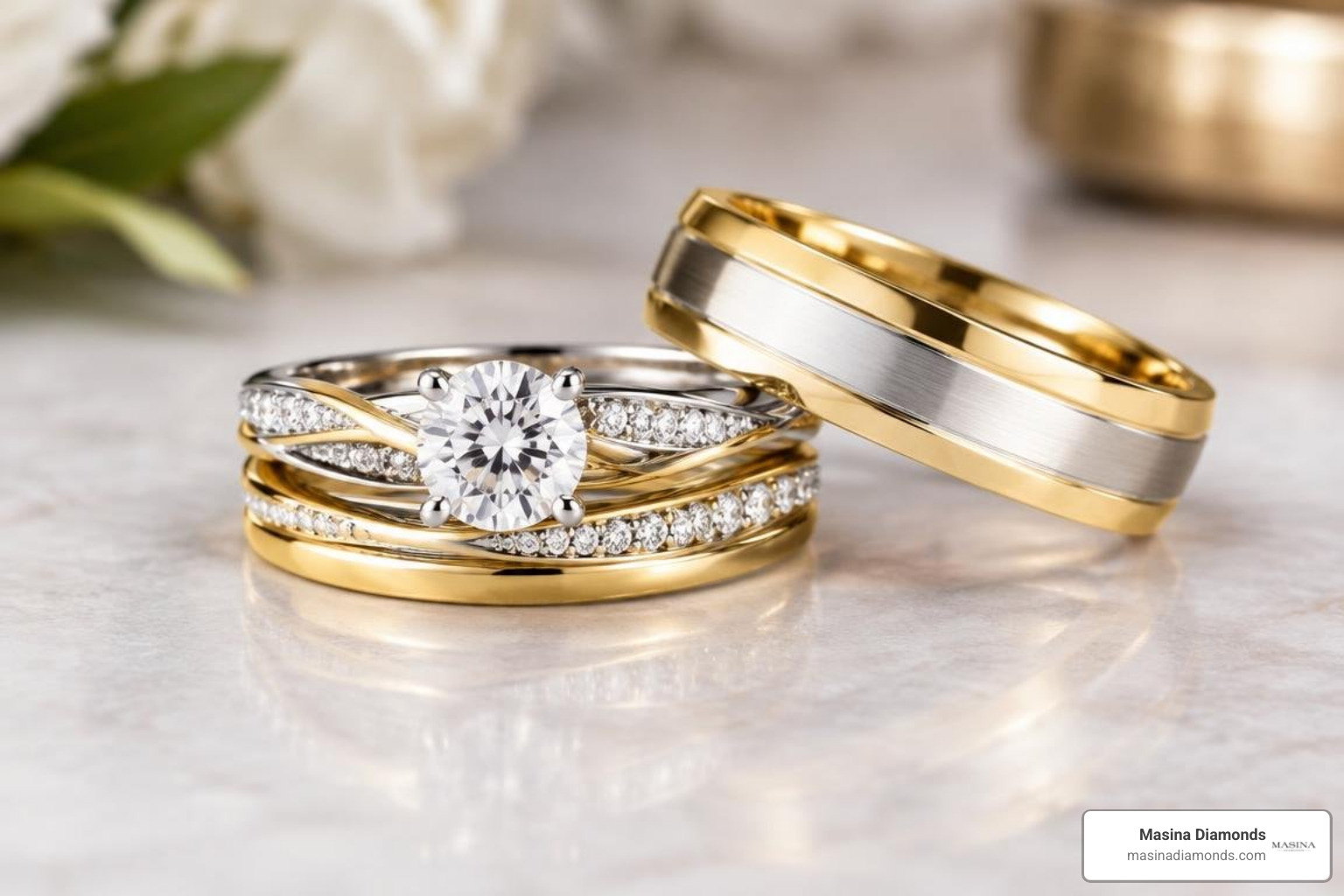
Wearing two wedding bands with an engagement ring is trending because it creates symmetrical balance around the center stone, helps prevent a top-heavy ring from spinning, and gives couples a meaningful way to mark later milestones such as anniversaries or the birth of a child. The modern stack tells a story far richer than tradition alone could ever script. While historical custom once dictated a single gold band slipped onto the left ring finger during the exchange of vows, contemporary bridal design has transformed the ring finger into a canvas of shared history, aesthetic balance, and evolving milestones. Choosing to wear a trio of rings is not merely about adding sparkle—it represents an intentional layering of sentiment, personal identity, and enduring commitment.

Many brides find that a single band can sometimes feel visually unbalanced beside a striking engagement stone, especially with high-profile solitaires, elongated oval diamonds, or three-stone arrangements. Adding a second band brings structural harmony, creating a deliberate aesthetic balance that feels substantial and grounded. Furthermore, our collection of stackable wedding rings allows couples to celebrate individual tastes without compromising on cohesive beauty.
A three-ring stack reflects the reality that relationships are dynamic. Over time, your shared life accumulates chapters, celebrations, challenges overcome, and new beginnings. Each ring can represent a distinct era: the promise of engagement, the legal and spiritual union of the wedding day, and a significant personal achievement or anniversary marked down the road.
Milestones, Anniversaries, and Heirloom Traditions
One of the most frequent reasons brides embrace the three-ring stack is the natural celebration of subsequent life milestones. Rather than keeping bridal jewelry frozen in time from your wedding day, a second band frequently enters the picture as a thoughtful anniversary gift. It is increasingly common for jewelers to help partners curate an engagement ring, a wedding band, and an upcoming first-year or fifth-year anniversary band designed to nest together seamlessly.
These milestone bands often take the form of brilliant eternity wedding rings, where an uninterrupted loop of diamonds signifies enduring love. Beyond anniversaries, second bands frequently serve as meaningful push presents to celebrate the birth of a child, marking a growing family with an added circle of light.
Family heirlooms also fit beautifully into this layered tradition. Many brides inherit a delicate vintage band from a mother or grandmother. While it might not match the primary engagement ring perfectly, framing it within an eclectic bridal stack honors familial roots while keeping cherished generational keepsakes close at hand every day.
Representing Multiple Ceremonies and Practical Lifestyles
In our modern, multicultural world, weddings are rarely one-size-fits-all events. Many couples host dual celebrations—such as a traditional civil ceremony followed by an elaborate cultural or religious wedding, or an intimate destination elopement followed by a reception with extended family. In these instances, two distinct wedding bands represent the unique vows spoken at each event, uniting two memorable days into one everyday ensemble.
There is also a very practical, lifestyle-driven motivation for maintaining two different wedding bands. Daily routines often demand flexibility:
- Active Work and Travel: A delicate pavé diamond band or an ornate vintage ring may not always suit high-impact outdoor hobbies, gym workouts, or hands-on professions. Many brides choose a sleek, durable metal band for daily chores, sports, and travel, keeping the diamond-encrusted band for social events and formal wear.
- Modular Styling: Having two bands allows you to switch between a full three-ring stack, a minimalist two-ring combination, or a solo wedding band depending on your day's agenda.
- Puzzle-Piece Nesting: For low-set center stones that do not allow a straight band to sit flush, pairing two contoured bands creates a snug "jacket" effect that keeps the center stone from shifting uncomfortably against bare skin.
Popular Ring Stacking Trends and Design Aesthetics
Ring stacking has surged in popularity across modern jewelry design, with searches for double-band ring sets and multi-band bridal looks rising steadily as brides seek greater personalization. The trend moves bridal fashion away from rigid conformity, inviting an artful mix of textures, geometry, and negative space.
Stacking allows you to experiment with visual weight. By surrounding an engagement ring with two bands, you draw the eye directly inward toward the center diamond while broadening the ring’s footprint across the finger for a bold, luxurious silhouette.
Designing Symmetrical 2 Wedding Bands and Engagement Ring Looks
Symmetry is one of the most timeless design principles in fine jewelry. When crafting a balanced bridal set, placing identical or complementary bands on either side of the engagement ring produces an architectural framing effect known as a ring jacket or ring guard.
Using custom-fitted curved wedding rings ensures that delicate pear, marquise, or emerald-cut diamonds are nestled snugly without awkward gaps. The two outer bands hug the center stone from top and bottom, locking it into visual alignment while creating the optical illusion of an even larger, more brilliant center setting. This sandwiching technique delivers a high-impact, red-carpet-worthy aesthetic while protecting the edges of the engagement ring’s setting from direct side impact.
Mixing Metals and Contrasting Diamond Shapes
For those drawn to modern, eclectic styling, uniform symmetry is only one path. An increasingly favored trend involves pairing contrasting metals and distinctive diamond cuts to craft a rich, textured collage.
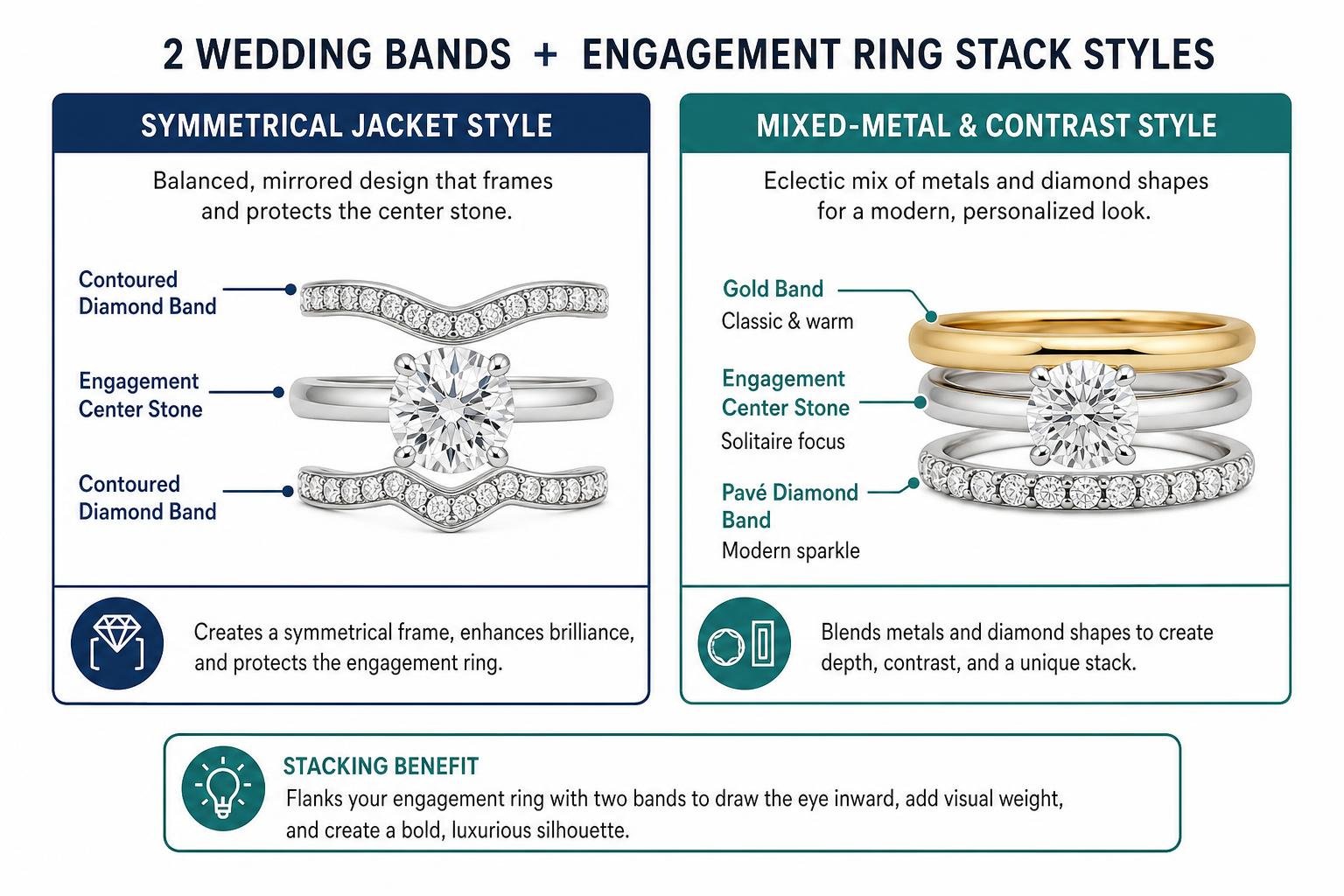
Brides are enthusiastically combining warm yellow gold or rose gold with icy white platinum. Pairing a solitaire engagement ring with one of our classic gold wedding bands on one side and a modern micro-pavé band on the other creates an organic, layered warmth.
You can also explore geometric variety by juxtaposing different stone cuts:
- Pair a round brilliant engagement ring with a step-cut baguette band for an art-deco twist.
- Contrast an oval center stone with a marquise-and-dot diamond band to introduce playful floral textures.
- Alternate between prong, channel, and protective bezel settings to add depth and dimension across the finger.
Practical Considerations: Fit, Comfort, and Longevity
| Stack Style | Visual Profile | Comfort & Sizing Impact | Best Suited For | Maintenance Needs |
|---|---|---|---|---|
| Symmetrical Ring Jacket | Cohesive, high-glamour, architectural | Moderate; requires precise finger alignment | Solitaires, oval, and pear stones needing balance | Regular alignment checks; matching prong retipping |
| Eclectic Mixed-Metal Stack | Artistic, textured, personalized | Highly flexible; bands can be swapped or split | Creative brides, milestone additions, heirlooms | Individual metal polishing; periodic rhodium replating |
| Dual Plain & Diamond Bands | Understated, versatile, practical | High comfort; minimal finger displacement | Active lifestyles, frequent travelers | Basic cleaning; periodic prong inspections |
Sizing and Comfort for 2 Wedding Bands and Engagement Ring Sets
A single 2mm band fits very differently on the finger than three stacked rings totaling 6mm to 8mm in width. As the total width of your jewelry stack increases, it displaces more skin and covers a broader portion of the lower phalanx, creating natural friction against the skin.

When three rings of identical size are pushed together, they will inevitably feel tighter than any single ring worn in isolation. In many cases, jewelers recommend sizing up by a quarter to a half size for the outer bands—or for all three rings—to accommodate this combined width and ensure effortless knuckle clearance. To find your ideal proportions before curating your stack, always reference a reliable ring sizing chart and test how wide bands behave during different seasons when finger swelling varies.
Metal Durability and Daily Wear Maintenance
When multiple rings sit side-by-side on one finger, constant microscopic movement causes the bands to rub against each other. Over years of daily wear, this metal-on-metal friction can wear down delicate prongs, thin the sides of shanks, or scratch high-polish finishes.
To keep your bridal stack in pristine condition:
- Match Metal Hardness: Pairing extremely hard platinum directly against softer 14k or 18k gold will cause the platinum to slowly wear away the gold over time. Keeping alloys uniform across contacting edges preserves shank thickness according to the Gemological Institute of America (GIA) guidelines for fine jewelry longevity.
- Consider Soldering: If you wear a symmetrical jacket set that you never plan to separate, having a jeweler solder the three rings together eliminates friction entirely, prevents spinning, and keeps center diamonds permanently upright.
- Schedule Routine Inspections: Routine checkups and professional jewelry care ensure that prongs remain tight, channel walls remain sturdy, and white gold receives regular rhodium refreshing to maintain its mirror-like shine.
Frequently Asked Questions About Double Wedding Bands
How do you order rings when wearing two wedding bands?
Traditional wedding ring etiquette suggests placing the wedding band closest to your palm—closest to the heart—followed by the engagement ring placed on the outside during the ceremony. When incorporating a second band, the most popular arrangement is the "symmetrical sandwich," where one wedding band rests below the engagement ring and the second band rests directly above it toward the fingertip. Alternatively, brides who prefer an asymmetrical aesthetic often stack both wedding bands flush together beneath the engagement ring for a modern, stacked foundation.
Should both wedding bands match each other?
Not at all. While matching bands offer a neat, mirror-like symmetry, choosing two different bands creates an eclectic, curated story. You can pair a simple, high-polish gold band with a glittering diamond eternity band, or mix complementary metal colors like white gold and rose gold. The only design rule is cohesion: ensure the band widths and setting profiles feel balanced beside your engagement stone so that no single piece overpowers the rest.
Can you wear one band on each side of the engagement ring?
Yes, wearing one wedding band on either side of the engagement ring is the most popular way to style a three-ring bridal set. This configuration frames the center diamond beautifully, locks the engagement ring comfortably in place, and prevents top-heavy solitaires from spinning sideways on your finger throughout the day.
Designing Your Bespoke Ring Stack with Masina Diamonds
Creating the perfect three-ring stack is an intimate, creative journey that blends timeless craftsmanship with personal milestones. Whether you are searching for identical curved enhancers to frame an heirloom diamond, combining mixed metals to celebrate an anniversary, or building a modular ring wardrobe from scratch, your bridal stack should feel effortless, comfortable, and distinctly yours.
At Masina Diamonds, we have brought master craftsmanship, diamond expertise, and custom jewelry design to Atlanta for over 40 years. Our interactive 3D Ring Builder and bespoke design consultations make it easy to visualize how each band hugs your center stone before bringing your vision to life. If you are ready to curate your ideal multi-band set, explore custom engagement rings in Atlanta and discover a bridal stack crafted to shine for a lifetime.