Bezel With Prongs: A Middle Ground for Your Engagement Ring
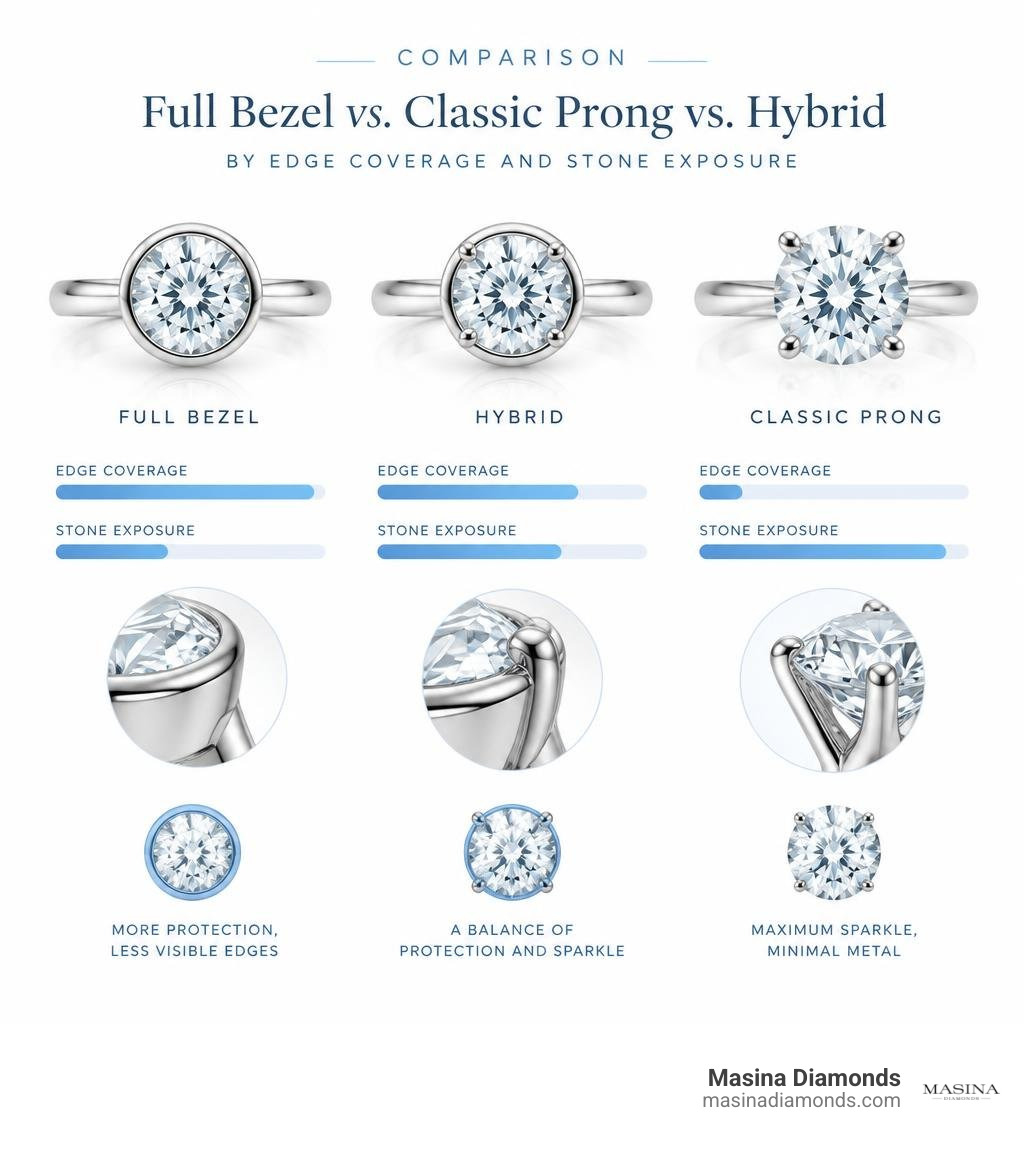
A bezel with prongs combines a metal rim around the stone with small claws that hold it in place. A full bezel covers more of the stone's edge and offers more protection. A classic prong setting leaves more of the stone visible. The hybrid gives you some of each, though the amount of protection and light exposure depends on its design.
That makes it worth considering if you love the clean look of a bezel but don't want to hide as much of your diamond. The right choice comes down to your stone's shape, how you wear your ring, and which look feels like yours.
We're Masina Diamonds, Atlanta jewelers with over 40 years of experience in custom engagement rings and fine jewelry. We can help you decide whether a bezel with prongs fits your stone, style, and daily life.
Understanding the Bezel with Prongs Hybrid Setting
When choosing a mounting for a diamond or colored gemstone, most people find themselves caught between two classic philosophies: maximum protection or maximum sparkle. A traditional bezel encircles the gem with a continuous collar of precious metal, keeping the girdle safe from accidental knocks. In contrast, classic engagement ring prongs elevate the diamond into the light, using four or six small claws to hold it with minimal metal coverage.
A bezel with prongs merges both engineering approaches into a unified architecture. By integrating an open metal collar or low-profile frame with dedicated prong tips, this hybrid design delivers stone security while preserving dynamic light performance. The Gemological Institute of America notes that a setting's protective structure is especially important for softer gemstones and stones with fragile edges, which is why hybrid mountings are valued for balancing durability with brilliance.
For anyone who leads an active lifestyle but refuses to compromise on brilliance, this hybrid concept eliminates the need to choose between delicate luxury and rugged durability. The structural framework shields vulnerable edges against everyday impact, while the elevated prongs allow ambient light to flood the diamond's side facets, creating an eye-catching, low-profile piece of jewelry.
Defining the Bezel with Prongs Design vs. Traditional Styles
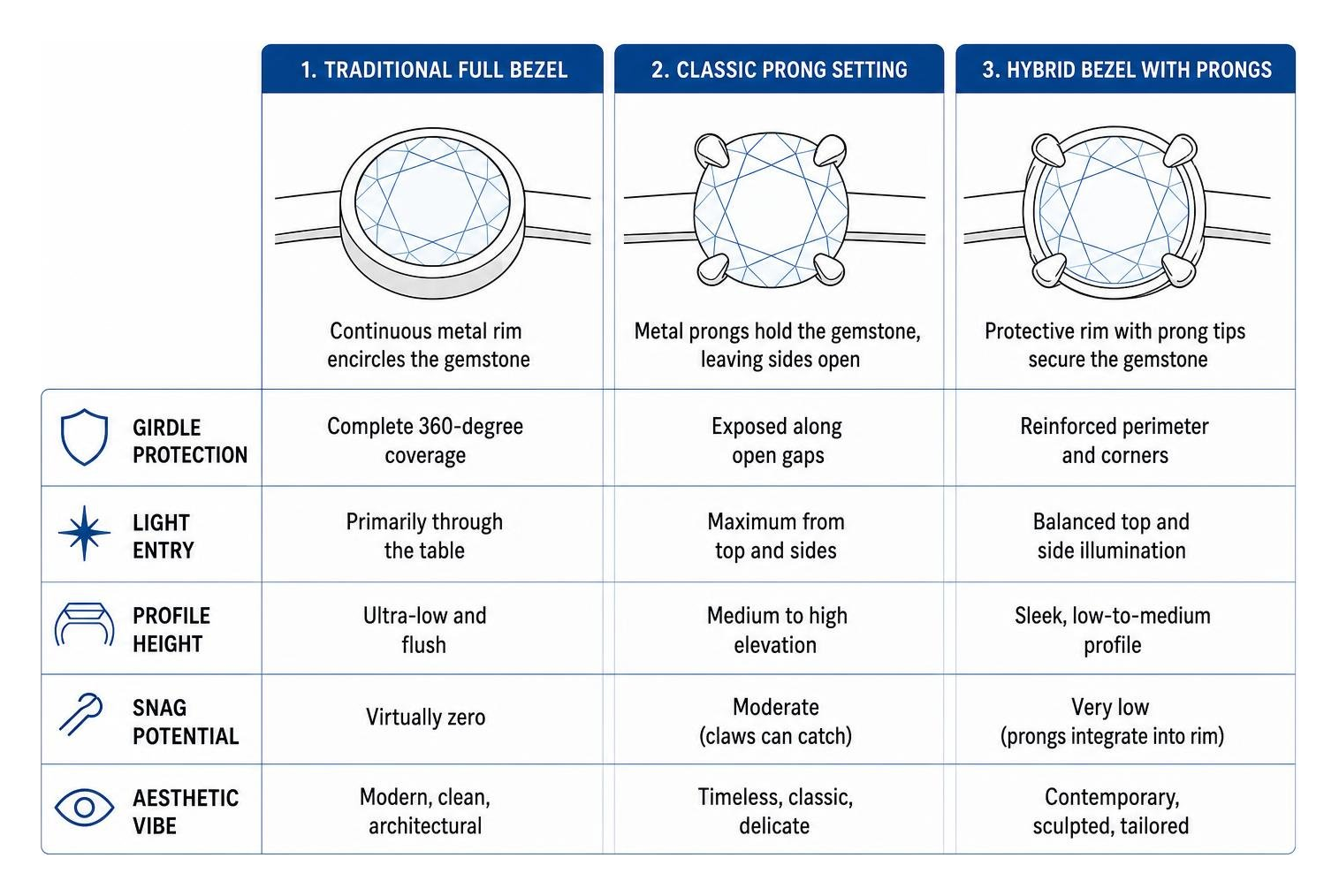
To understand how a hybrid setting functions, it helps to examine how traditional styles handle stone security:
- Traditional Bezel Setting: A continuous rim of metal wraps entirely around the perimeter of the gemstone's girdle. Metal is burnished over the edge, locking the gem in place without claws.
- Classic Prong Setting: Slender metal uprights rise from the base of the ring and bend over the crown of the gemstone, leaving the sides open.
- Hybrid Setting: A supportive metal perimeter surrounds the stone, while integrated claws or corner prongs lock the gem firmly into position. This structure keeps the stone low and protected without fully enclosing its pavilion or side profile.
| Feature | Traditional Full Bezel | Classic Prong Setting | Hybrid Bezel with Prongs |
|---|---|---|---|
| Girdle Protection | Complete 360-degree coverage | Exposed along open gaps | Reinforced perimeter and corners |
| Light Entry | Primarily through the table | Maximum from top and sides | Balanced top and side illumination |
| Profile Height | Ultra-low and flush | Medium to high elevation | Sleek, low-to-medium profile |
| Snag Potential | Virtually zero | Moderate (claws can catch) | Very low (prongs integrate into rim) |
| Aesthetic Vibe | Modern, clean, architectural | Timeless, classic, delicate | Contemporary, sculpted, tailored |
Structural Benefits: Rim Protection Meets Maximum Light Exposure
The real charm of this hybrid architecture is how it balances physical durability with optical brilliance. While full bezels can occasionally make smaller stones look slightly enclosed, a hybrid setting uses open metal galleries below the girdle to channel light directly into the center stone.
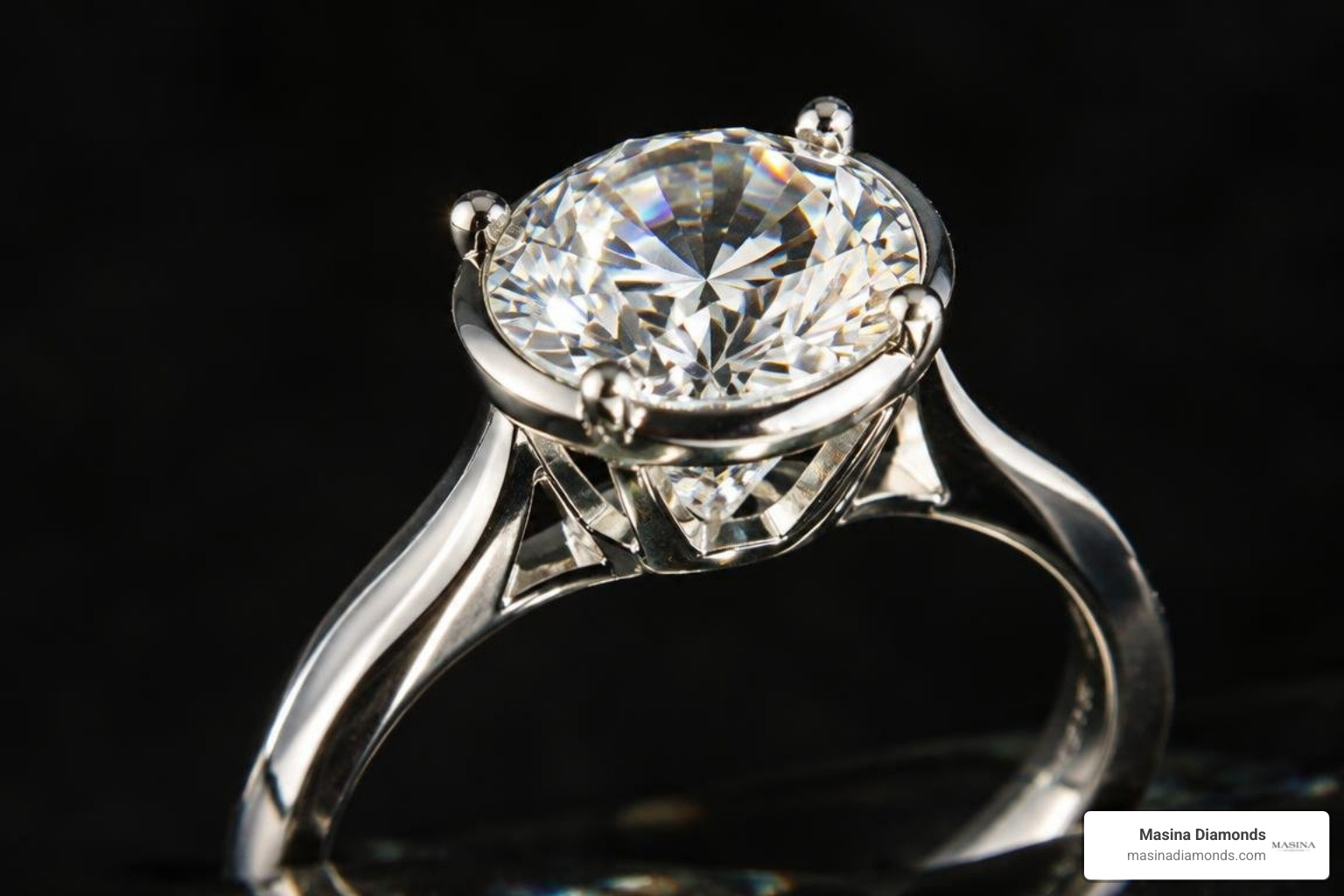
- Superior Chip Resistance: The metal rim absorbs accidental impacts that would otherwise strike fragile gemstone corners or thin girdles directly.
- Side Facet Illumination: Cutaways within the bezel frame allow light to pass through the pavilion and side facets, optimizing refraction and fire.
- Snag-Free Daily Wear: Because the prongs sit flush against or slightly inside the metal border, they are far less likely to catch on sweaters, pockets, or hair.
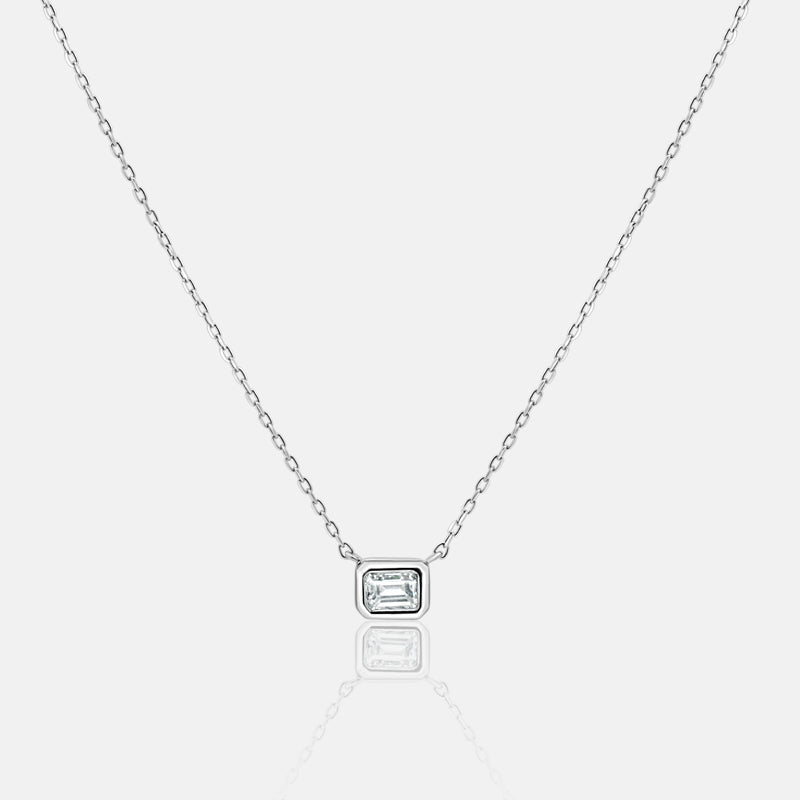
- Enhanced Center Stone Outline: The surrounding metal acts like a picture frame, accentuating fancy diamond shapes like emerald cuts, ovals, and pears.
Comparing Bezel, Prong, and Hybrid Settings Across Jewelry Styles
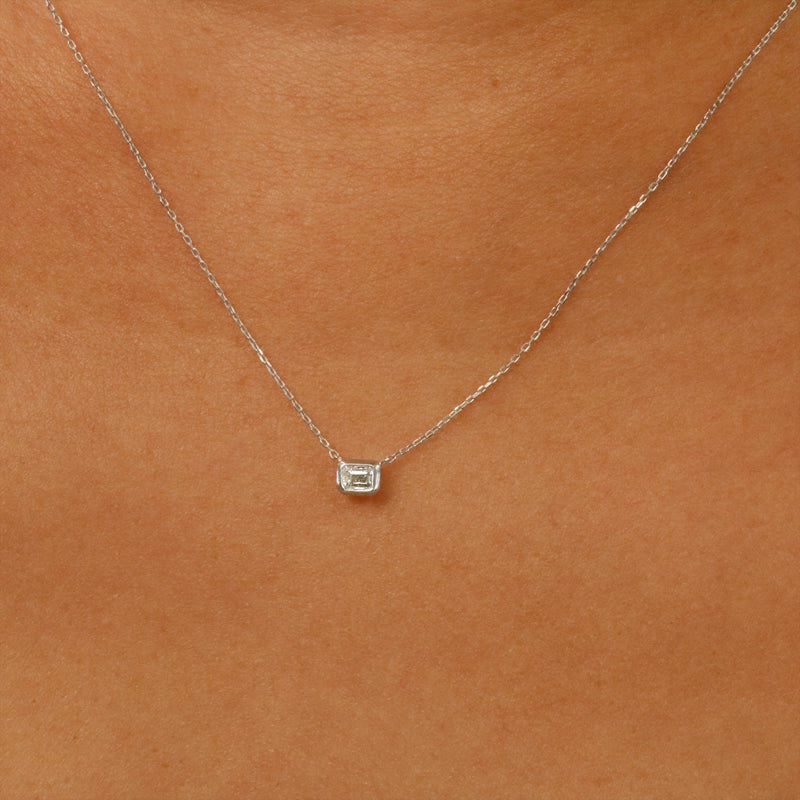
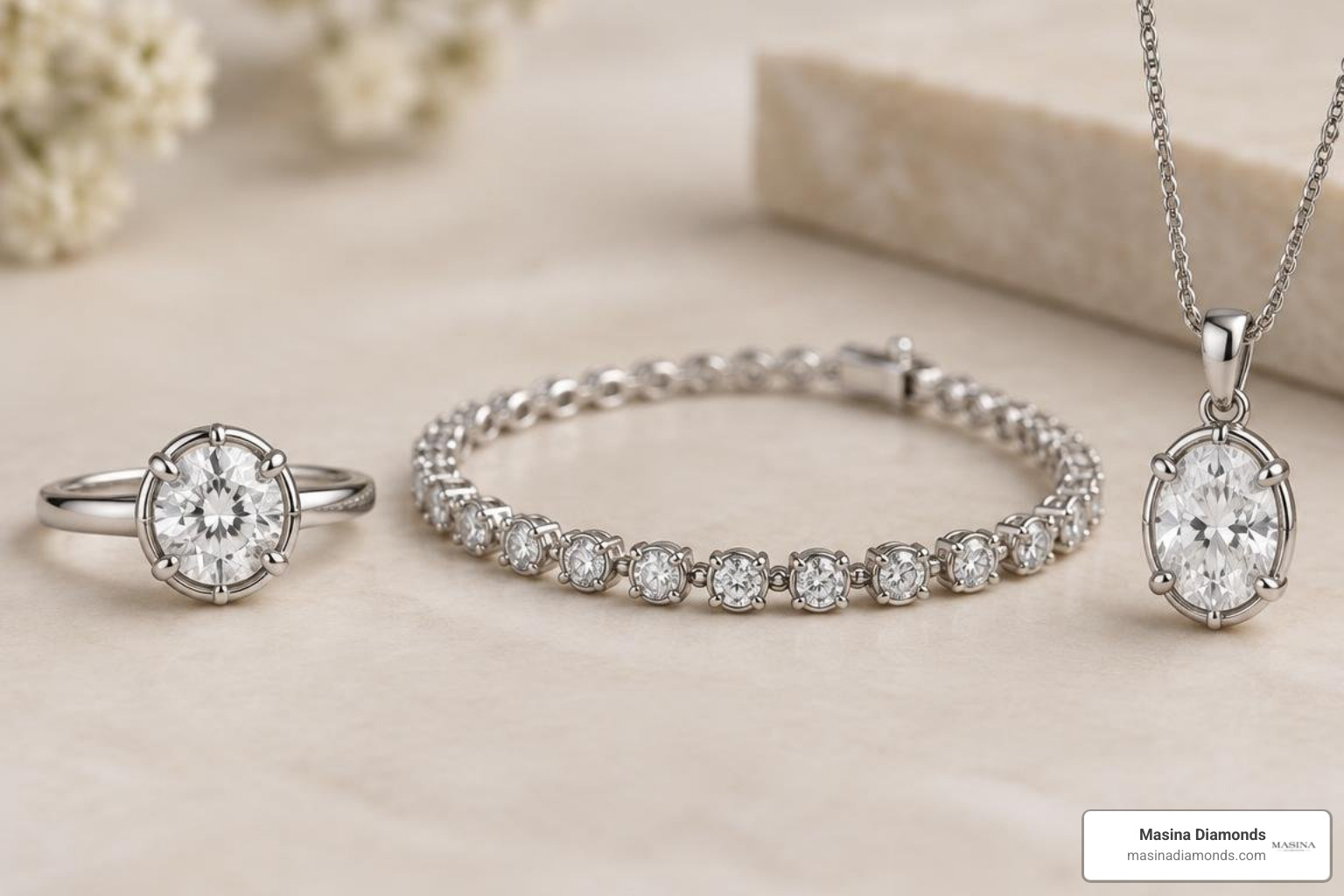
Hybrid mountings are not limited to engagement rings. Designers and bench jewelers apply these structural concepts across fine jewelry, creating everything from durable daily bands to modern heirloom necklaces and bracelets.
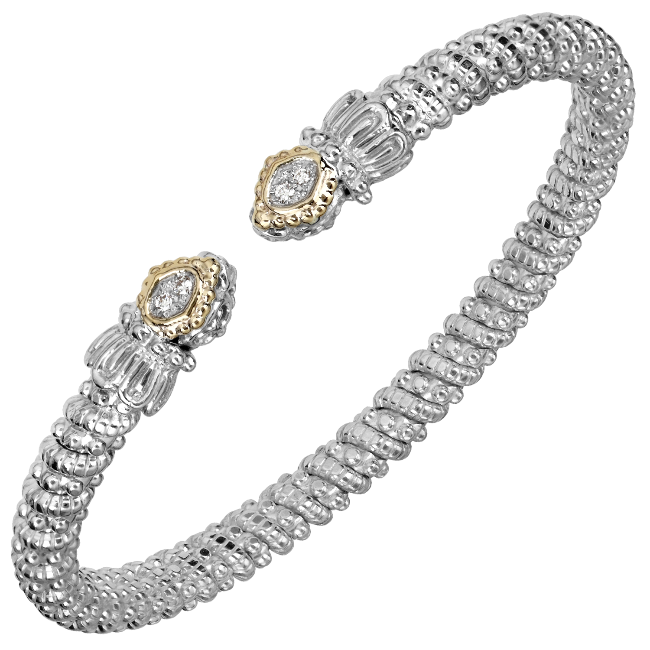
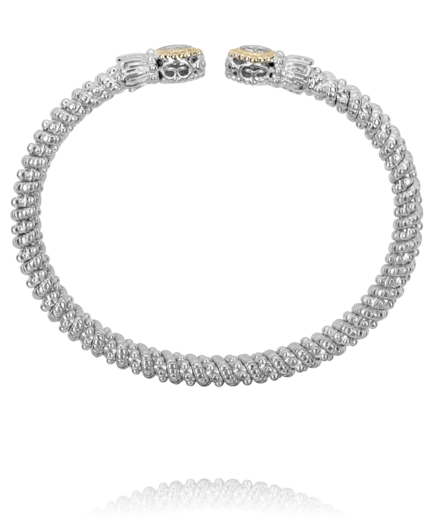
For everyday wristwear, pieces like an open cuff diamond bezel bracelet illustrate how framed diamonds resist the friction and bumps of desk work and daily movement. Introducing prongs into framed settings gives you the best of both worlds: crisp modern lines paired with high diamond visibility.
Rings and Bands: Security for High-Wear Pieces
Rings endure more daily contact than almost any other category of fine jewelry. For brides and jewelry enthusiasts looking for unique silhouettes, hybrid setting styles offer an exciting alternative to standard four-prong heads:
- Compass and Cardinal Prongs: If you love classic claws arranged in modern orientations, settings like a round diamond compass prong engagement ring or a radiant cut compass prong ring show how reimagined prong placements bring fresh character to traditional stones.
- Bezel-Framed Eternity Bands: A bezel set oval diamond band wraps each individual diamond in protective gold, pairing effortlessly alongside hybrid engagement rings.
- Contoured and Open Designs: Rings like the contour bezel diamond wedding ring and the negative space bezel set ring use perimeter framing to create floating, architectural shapes without compromising stone security.
Pendant Settings and Other Jewelry Variations
Beyond bridal rings, hybrid mountings are widely used in specialized neckwear and coin jewelry:
- Pre-Notched Pendant Mountings: Jewelers frequently utilize pre-notched pendant mountings that feature a bezel silhouette paired with integrated prong seats. These mountings range from affordable silver options up to high-end gold pieces (frequently priced from $22.85 to over $949.99 depending on metal weight and stone dimensions).
- Coin Bezels with Prongs: Classic coin pendants—such as 14k gold rope border designs—often utilize a secure 4-prong rear fastening system. This keeps valuable commemorative coins or heirlooms firmly anchored within the decorative outer bezel without damaging the coin's delicate edges.
- Low-Profile Body Jewelry: In titanium body jewelry, internally threaded and threadless components blend low-profile bezel rims with 4-prong gem seats (often starting around $20.00). This provides sensitive skin with comfortable, flush, snag-free gemstone tops.
Compatible Gemstone Shapes and Metal Selections
Not all gemstones behave the same way under pressure. Step-cut stones, delicate pointed tips, and rounded cabochons each have unique structural needs that influence whether a bezel, prong, or hybrid setting is ideal.
For architectural gems, designs like a modern bezel set asscher cut ring demonstrate how clean metal borders complement step facets.
Tailoring the Bezel with Prongs for Emerald Cuts and Fancy Shapes
Fancy shapes with vulnerable corners benefit the most from hybrid mountings:
- Emerald Cuts: With their cropped corners and open step facets, emerald cuts are prone to chipping if bumped directly on an edge. A showpiece like a 5.08ct emerald diamond bezel set engagement ring highlights the stunning balance of sharp geometry and security. Hybrid emerald-cut mountings often accommodate stones ranging from 8×6 mm up to 14×10 mm, using corner prongs integrated into an outer frame to protect every point.
- Marquise and Pear Cuts: The sharp tips of marquise and pear shapes require specialized V-prongs. Combining a partial bezel contour along the curved sides with protective V-claws at the points creates an ultra-durable silhouette.
- Oval and Cushion Cuts: Rounded fancy shapes gain structural definition from hybrid borders, keeping the gem straight and preventing twisting in the mounting over time.
Premium Metals: Gold Options for Hybrid Settings
Choosing the right metal alloy ensures your hybrid setting retains its shape and holds the stone reliably over decades of wear:
- 14 Karat Yellow Gold: An ideal balance of durability, warm color, and scratch resistance. Its higher alloy content makes it rigid enough to keep delicate prong tips firmly seated.
- 18 Karat Yellow Gold: Offers rich color and a classic feel. While slightly softer than 14k gold, its malleability allows jewelers to burnish borders closely against the stone for a seamless fit.
- White Gold and Platinum: Platinum provides exceptional density and holding power for prong tips, while white gold offers a crisp, mirror-like finish that blends smoothly with white diamonds.
Technical Considerations: Custom Fabrication
Setting a stone into a hybrid mounting requires precise bench craftsmanship. Unlike standard commercial heads where prongs can simply be bent over a stone's crown, a hybrid setting requires exact tolerances so the gemstone sits level against the surrounding frame.
Tailoring Prong Placement and Seat Fit
When crafting a custom piece, the jeweler must carefully align the stone's girdle with both the inner bezel seat and the securing claws:
- Precision Seat Cutting: The stone must rest on an internal bearing cut into the metal frame. If the seat is cut too deep, the stone loses its light return; if it is cut too shallow, the prongs will sit too high above the bezel rim.
- Leveling the Gemstone: Using optical magnification, the setter ensures the diamond's table is parallel to the top surface of the bezel.
- Securing the Claws: The prongs are shaped, folded over the crown facets at exact angles, and trimmed flush with the outer border for a clean, cohesive finish.
Frequently Asked Questions About Hybrid Settings
Can any gemstone shape be set in a hybrid bezel-prong mounting?
Yes, nearly any stone shape can be set in a hybrid mounting, provided the frame is tailored to the gem's exact dimensions. Cut-corner stones like emerald and radiant cuts, along with round brilliants, are especially well suited to this style. Fancy shapes with pointed tips (like pears and marquises) require specialized corner seats to ensure the points are shielded against impact.
How does custom fabrication help fit a gemstone in a hybrid setting?
Because every diamond and colored gem has slight variations in depth, girdle thickness, and corner angles, custom fabrication ensures the mounting matches your specific stone. Using CAD modeling and hand-finishing, jewelers carve an exact seat so the stone sits completely flush without rattling, uneven gaps, or excessive metal coverage.
Does a hybrid bezel setting make diamonds look smaller?
Unlike full, heavy bezels that can occasionally enclose a stone's perimeter, a hybrid setting highlights the diamond's outer dimensions. The metal rim defines the stone's profile, while the open prong structure lets light enter freely, often making the diamond look larger on the hand.
Conclusion
The debate between bezel and prong settings no longer requires a compromise. A hybrid bezel with prongs offers the best of both worlds: the clean lines and dependable protection of a bezel, paired with the brilliant light performance and classic charm of prongs.
At Masina Diamonds, we have specialized in custom-designed engagement rings and bespoke fine jewelry in Atlanta for over 40 years. Whether you want to customize your piece from scratch using our interactive 3D Ring Builder or explore our curated bridal collection, our team is here to help you design a ring tailored to your story.
Explore our complete guide to engagement ring prongs and hybrid settings to find the perfect setting for your diamond today.