July’s Birthstone Is Ruby
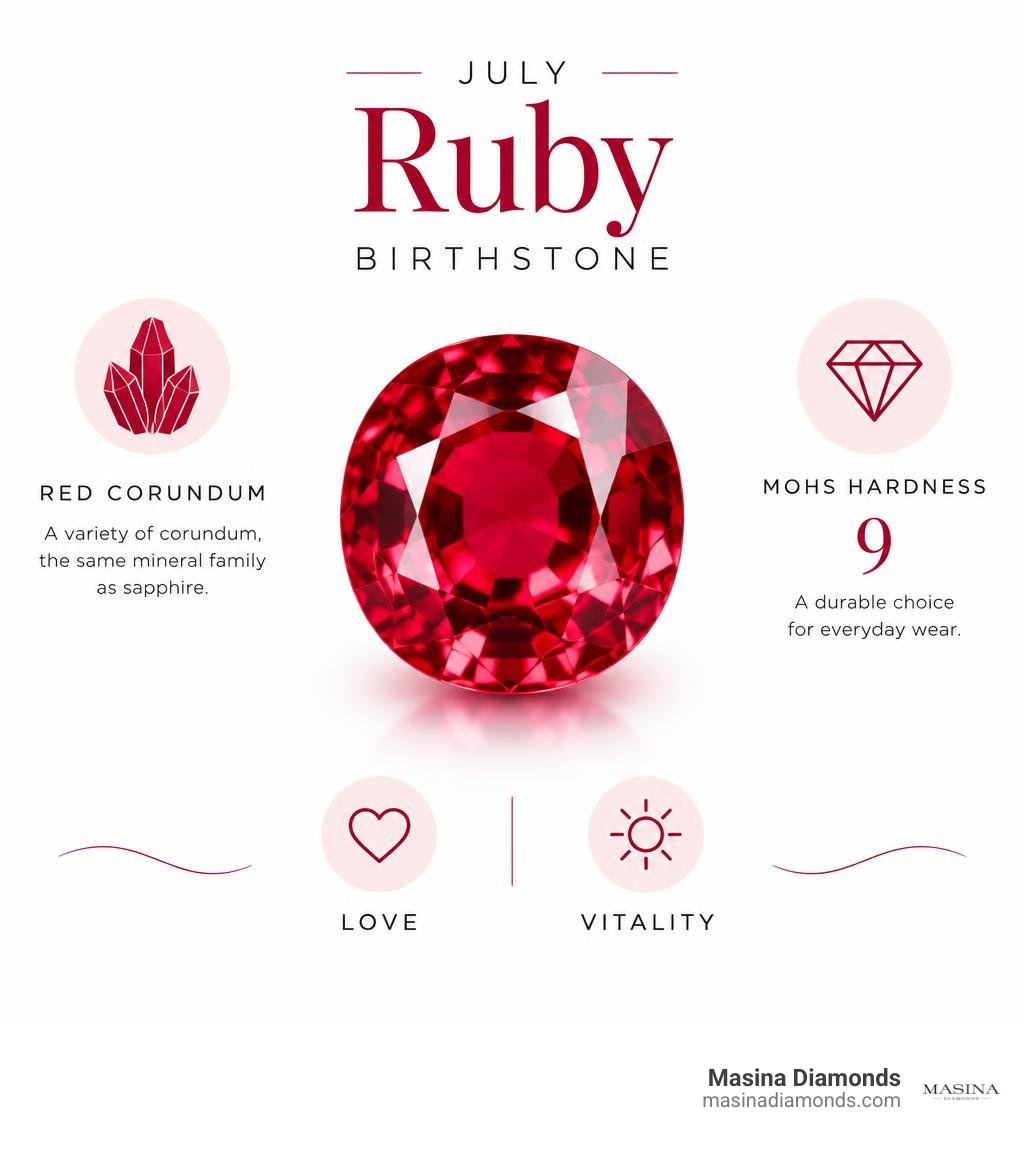
Ruby is the birthstone for July. It is a red variety of corundum, the same mineral family as sapphire. Ruby ranks 9 on the Mohs hardness scale, making it a durable choice for jewelry worn often.
Ruby has long stood for love, passion, and vitality. In ancient India, it was known as the “king of precious stones.” Today, those meanings make it a thoughtful choice for a July birthday or a ring that tells a personal story.
We’re Masina Diamonds, a family-owned Atlanta jeweler with over 40 years of experience in custom engagement rings and fine jewelry. Our birthstone ruby month guide draws on that experience to help you make a choice that feels like your own.
Why July Is the Birthstone Ruby Month
The tradition of assigning specific gems to months traces back to ancient times, beginning with the biblical Breastplate of Aaron. This sacred garment featured twelve distinct gemstones, each representing one of the twelve tribes of Israel and corresponding to the signs of the zodiac. Over the centuries, scholars, astrologers, and early gem enthusiasts began wearing a specific stone during its associated month, believing its protective powers and virtues peaked during that calendar window.
In 1912, the modern calendar list was standardized in the United States by the National Association of Jewelers (now Jewelers of America). This effort created consistency between traditional lore and modern gem availability, solidifying ruby as the definitive gem for July. As outlined in the GIA gemstone birthstone directory, modern lists focus on transparent, durable gemstones ideal for daily fine jewelry, while traditional charts occasionally included opaque or alternative stones.
If you are exploring the full calendar of gems, our curated birthstones by month list offers a clear look at how traditional and contemporary lists compare throughout the year.
Celebrating the Birthstone Ruby Month: Cultural Meaning and Folklore
Throughout history, ruby has inspired profound reverence. In ancient Sanskrit, it was called ratnaraj, translating to "king of precious stones." Ancient Indian lore held that offering fine rubies to the gods would grant the giver rebirth as an emperor.
In Burma (modern-day Myanmar), warriors took their belief in ruby's protective power a step further: they believed carrying rubies made them invincible in battle, with some even inserting the gems beneath their skin so the stone’s fiery energy would become part of their physical flesh. In ancient China, nobles traded rubies along the North Silk Road as early as 200 B.C., embedding them into armor and swords for courage and protection.
Medieval Europeans viewed the gem as an emblem of health, wealth, and romantic passion, believing it could banish dark thoughts and calm disputes. Today, ruby remains a cherished gift, celebrating not only July birthdays but also meaningful relationship milestones such as the 15th and 40th wedding anniversaries. You can learn more about historical gem associations in our guide to traditional stones for birthday months.
Gemological Profile: Color, Hardness, and Geographic Origins
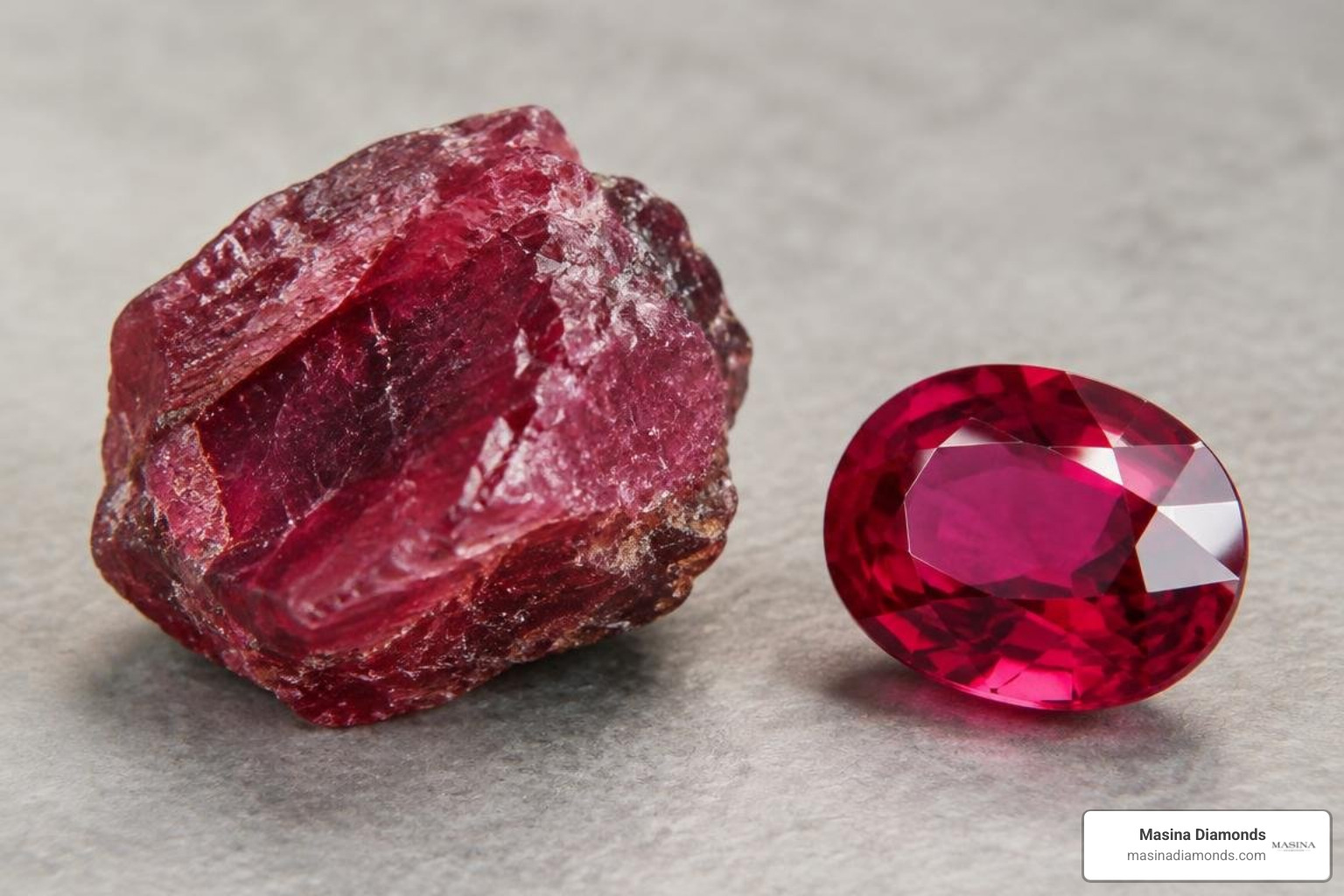
From a scientific perspective, ruby is the red variety of corundum (aluminum oxide). In its pure form, corundum is completely colorless. The rich red of a ruby occurs when trace amounts of chromium replace aluminum atoms in the crystal lattice.
Chromium is a fascinating element in gemology: while it imparts rich crimson hues, it also causes internal crystal strain, making large, inclusion-free natural rubies exceptionally rare. Furthermore, chromium causes many rubies to fluoresce a bright red under ultraviolet light (including natural sunlight), giving the gem an inner glow, as if lit by an internal flame.
Ranking at 9.0 on the Mohs hardness scale, ruby is second only to diamond in mineral hardness. As noted in the GIA July birthstone overview, this exceptional hardness makes ruby resistant to scratching and ideal for everyday wear.
| Gemstone | Mineral Variety | Mohs Hardness | Primary Color Cause | Relative Scarcity (Fine Quality) |
|---|---|---|---|---|
| Ruby | Corundum | 9.0 | Chromium | Extremely Rare |
| Diamond | Pure Carbon | 10.0 | Carbon lattice / trace nitrogen | Rare |
| Emerald | Beryl | 7.5 – 8.0 | Chromium & Vanadium | Extremely Rare |
| Sapphire | Corundum | 9.0 | Iron & Titanium | Rare to Very Rare |
Which Color Variety Defines the Birthstone Ruby Month?
Color is the single most important factor determining a ruby's beauty and market value. The most coveted shade is known in the trade as "pigeon's blood"—a vivid, pure red with a subtle hint of blue or purple that enhances its visual depth without darkening the stone.
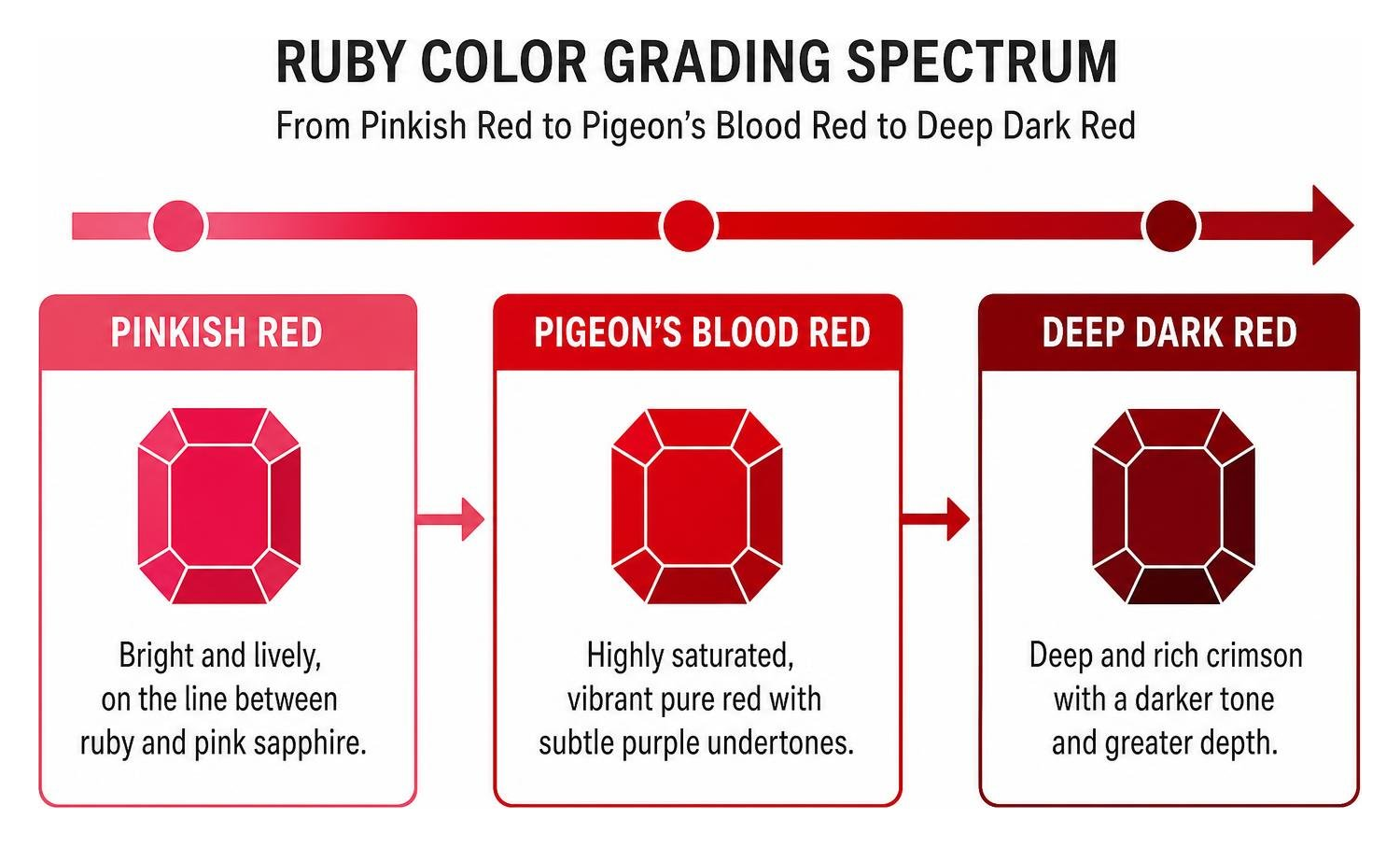
While pure red is the gold standard, natural rubies display a spectrum of secondary tones:
- Pigeon's Blood Red: Highly saturated, vibrant pure red with subtle purple undertones.
- Pinkish-Red: Bright and lively, sitting right on the line between ruby and pink sapphire.
- Purplish-Red: Deep and regal, common in stones from various Asian and African deposits.
- Brownish or Orangey-Red: Earthy, warm crimson tones often associated with specific basalt-related mining regions.
When corundum exhibits blue, yellow, or pink hues without dominant red, it is classified as sapphire, a distinction detailed in our gemstone for september birthday guide. For an overview of every month's signature hue, explore our birthstone colors guide for 2026.
Historic and Modern Global Ruby Sources
For more than five centuries, the Mogok Valley in upper Myanmar (Burma) has produced some of the world's most legendary rubies, celebrated for their strong chromium content, minimal iron, and intense natural fluorescence.
In recent decades, new deposits have expanded the market:
- Montepuez, Mozambique: Discovered in 2009, this region has become a leading modern source, yielding clean crystals with rich crimson saturation.
- Luc Yen, Vietnam: Known for producing vivid pinkish-red and purplish-red rubies alongside fine spinels.
- Sri Lanka and Madagascar: Historic alluvial deposits that produce lighter, bright red to raspberry-colored gems.
Throughout history, extraordinary specimens have captured global attention. Notable record-holders include the massive unpolished 125West Ruby (weighing over 18,000 carats) and the historic carved Liberty Bell Ruby (weighing roughly 8,500 carats).
Gemstone Treatments, Valuation, and Durability Comparisons
Because fine natural rubies are among the rarest gems on Earth, stones larger than one carat with eye-clean clarity and top color can command higher per-carat prices than colorless diamonds, with record auction sales exceeding $1,000,000 per carat.
To improve color and dissolve microscopic rutile needle inclusions (known as "silk"), the vast majority of commercial rubies undergo traditional heat treatment. Heat treatment is permanent, stable, and widely accepted across the jewelry industry, provided it is fully disclosed.
Other treatments require greater caution:
- Lattice Diffusion: Introduces foreign elements (like beryllium) at high heat to alter surface color.
- Lead-Glass Filling / Flux Healing: Fills surface fractures with high-refractive-index glass to mask clarity flaws. These stones are fragile and cannot withstand heat, acids, or ultrasonic cleaning.
Under Federal Trade Commission (FTC) guidelines, all gemstone treatments must be disclosed at the point of sale. When comparing durability against the enduring birthstone diamond meaning, ruby's 9.0 hardness makes it a close second for lifetime longevity.
Caring for and Styling Ruby Birthstone Jewelry
Caring for untreated and standard heat-treated ruby jewelry is straightforward:
- Clean with warm water, mild liquid dish soap, and a soft-bristled toothbrush.
- Rinse thoroughly and dry with a lint-free microfiber cloth.
- Avoid steam or ultrasonic cleaners if your stone has clarity-enhancing glass fillings or heavy fractures.
- Store ruby jewelry in separate soft pouches to prevent it from scratching softer gemstones or being scratched by diamonds.
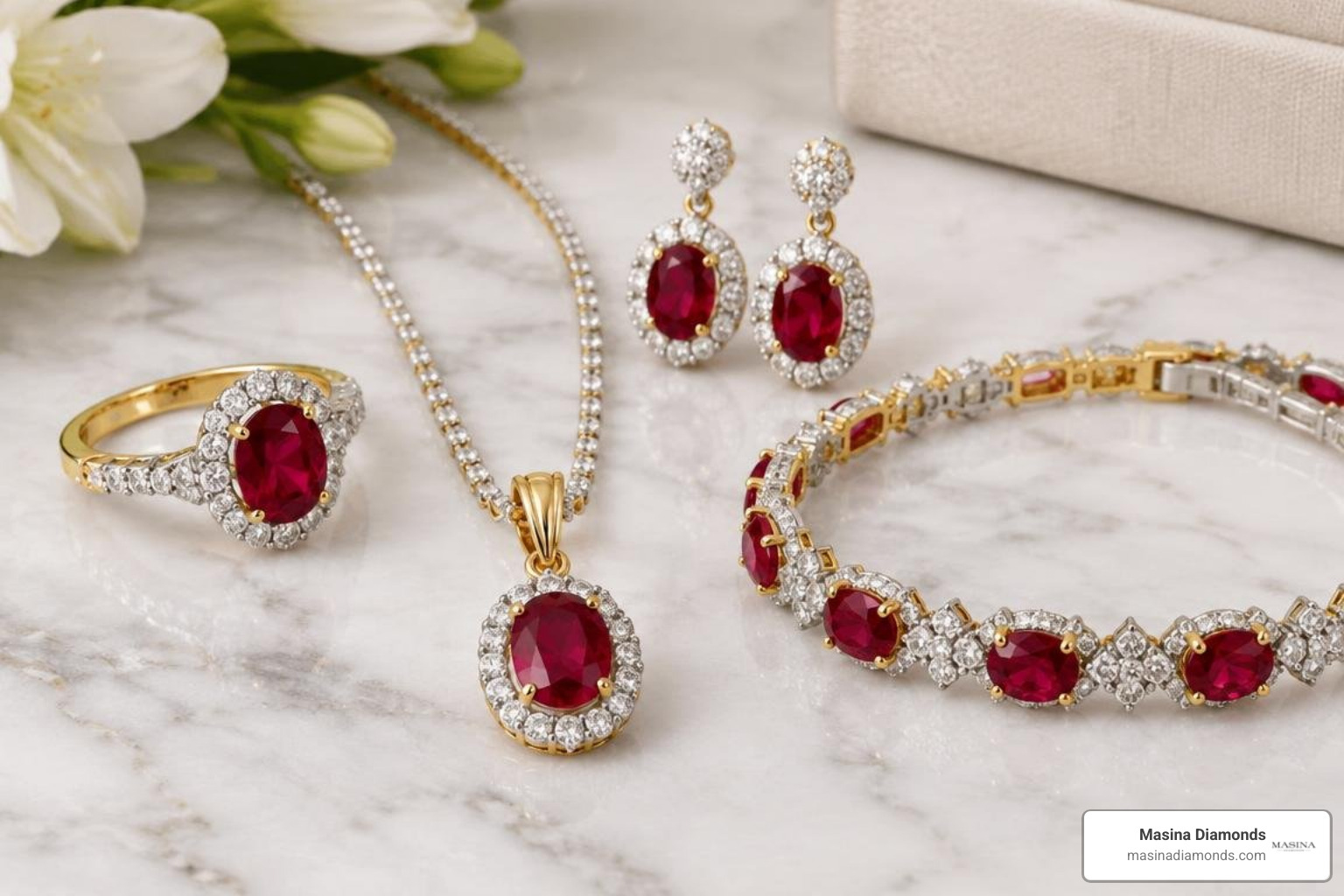
Ruby’s vibrant red pairs well with many fine metals. Set in rich 18k yellow gold, rubies take on an antique warmth; in platinum or white gold, the contrast emphasizes the stone's crisp, cool crimson tones. Whether designed as a solo solitaire, an alternating diamond-and-ruby wedding band, or a custom heirloom pendant, fine birthstone jewelry provides an expressive way to honor life's milestones.
Frequently Asked Questions About the July Ruby Birthstone
What is the most prized color shade for a July ruby?
The most sought-after and valuable ruby color is "pigeon's blood," characterized by a vivid, highly saturated red with a soft, glowing fluorescence and a faint blue or purple secondary hue. You can discover more about how color influences gemstone desirability in our birthstone colors ultimate guide.
Are rubies durable enough for daily engagement ring wear?
Yes. Ranking 9.0 on the Mohs scale, rubies are tough and lack cleavage planes, making them resistant to chipping and ideal for everyday wear in custom engagement rings and fine jewelry settings.
How can buyers distinguish natural rubies from treated stones?
Trained gemologists analyze microscopic internal crystal structures, growth lines, and spectral data to verify origin and treatment. Independent grading reports from reputable laboratories, such as the GIA or the American Gem Society guide to July birthstones, provide clear authentication of a stone's natural origin and any treatments applied.
Conclusion
With its rich crimson hues, fascinating history, and remarkable durability, ruby remains one of the world's most captivating gemstones. At Masina Diamonds, our family has spent over 40 years handcrafting bespoke jewelry in Atlanta. Whether you are looking to design a one-of-a-kind engagement ring or celebrate a July birthday, our interactive 3D Ring Builder and master artisans are here to bring your vision to life.
Explore our comprehensive birthstones by month and jewelry guide to find inspiration for your next custom jewelry piece.