Why White Gold Engagement Rings Are a Smart Choice
White gold engagement rings offer a bright, modern look at a lower cost than platinum. They are made from gold mixed with white metals, then usually finished with rhodium plating for a crisp, silvery-white shine. Choose 14K for stronger everyday wear or 18K for higher gold content, and plan on occasional re-plating as the finish wears.
White gold pairs especially well with colorless diamonds, pavé details, halos, and classic solitaire settings. It is also generally 10-15% less expensive than platinum, giving many couples a balance of luxury, durability, and budget control. If you have sensitive skin, ask about nickel-free or palladium-alloy options before choosing a setting.
Masina Diamonds has served Atlanta clients for more than 40 years with custom jewelry, engagement rings, and luxury watches, including thoughtfully designed white gold engagement rings. Next, learn what makes this metal unique, from karat choices to the rhodium finish that creates its signature color.
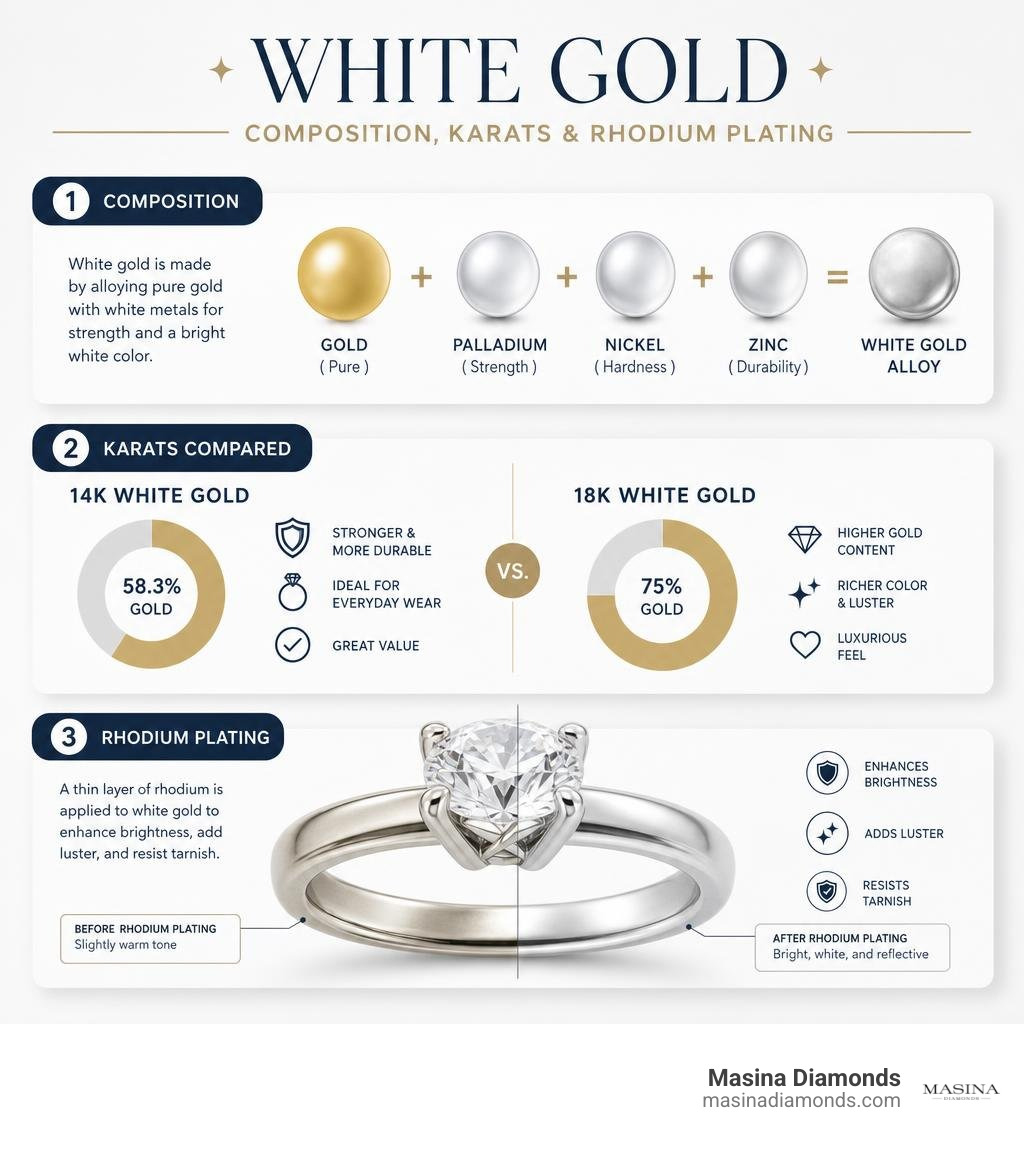
Today, white gold is the second most popular metal for bridal jewelry, accounting for roughly 30% of all engagement ring sales. Over the last five years, it has enjoyed a 15% surge in demand as couples seek a sleek, luminous aesthetic without the steep price tag of denser metals. In fact, approximately 40% of couples select white gold when exploring alternatives to classic yellow gold.
What Makes White Gold Unique: Composition, Karats, and Rhodium Plating
To truly appreciate white gold, it helps to start with the basics of what is white gold and how it is crafted. Pure gold mined from the earth is naturally a deep, warm yellow. It is also quite soft—far too pliable on its own to withstand the daily knocks, bumps, and hand sanitizers of modern life.
To create white gold, jewelers blend pure yellow gold with strong, silvery-white metals such as nickel, silver, zinc, and palladium. This alloying process achieves two crucial goals: it shifts the metal's natural yellow hue toward a cool, creamy tone, and it dramatically increases its structural strength. When exploring different metal types for jewelry, white gold consistently stands out for balancing precious metal pedigree with functional, everyday durability.
Understanding Karat Options for White Gold Engagement Rings
When shopping for bridal jewelry, you will primarily encounter two karat purities: 14K and 18K. The karat stamp indicates the proportion of pure gold present in the alloy:
- 14K White Gold: Composed of 58.3% pure gold and 41.7% alloy metals. Because it features a higher percentage of harder metals, 14K is remarkably resistant to scratches, dents, and prong wear. It is the go-to recommendation for people with active lifestyles or hands-on professions.
- 18K White Gold: Composed of 75% pure gold and 25% alloy metals. This blend offers higher precious metal purity and a slightly heavier, richer feel. While marginally softer than 14K, fine 18k white gold jewelry provides an exceptional balance of prestige and beauty.
For a deeper look into how metal purities influence daily wear and value, exploring our guide to understanding karats will help you pinpoint the best option for your ring.
The Role of Rhodium Plating and Metal Alloys
Even after mixing pure gold with white metals, the resulting alloy retains a faint, warm undertone. To achieve that signature mirror-like, ultra-bright chrome finish, the ring undergoes an electroplating process using rhodium—a rare, precious metal from the platinum family.
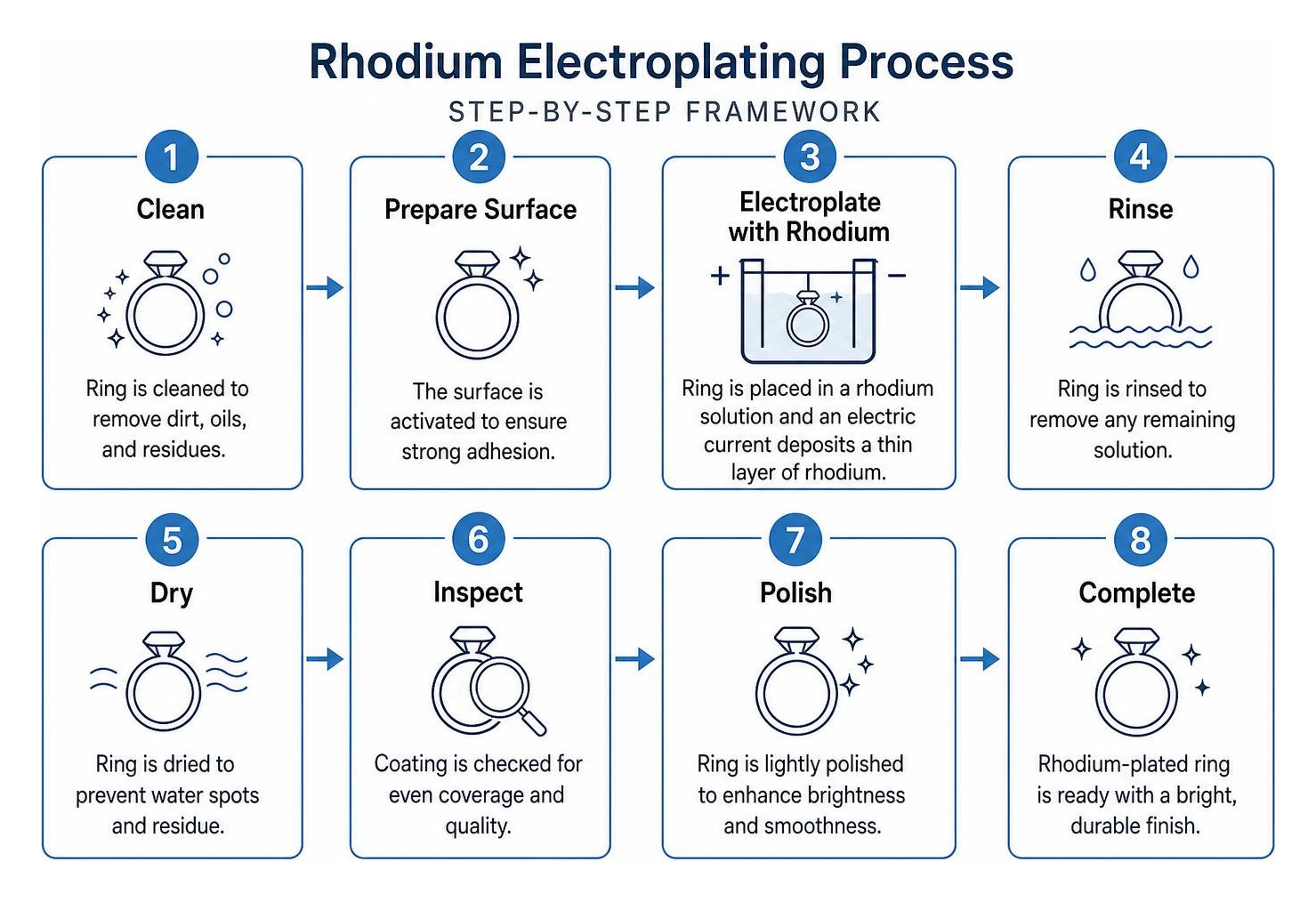
Rhodium is exceptionally hard and reflective. Applying a micro-thin layer of rhodium over the gold alloy delivers three significant benefits:
- A Brilliant Sheen: It imparts a stark, icy white color that reflects maximum light back into your center diamond.
- Surface Protection: It adds an extra shield against micro-abrasions and everyday surface scuffs.
- Hypoallergenic Barrier: For alloys containing trace amounts of nickel, the rhodium coating acts as a physical barrier between the alloy and your skin.
Comparing White Gold Engagement Rings to Platinum and Yellow Gold
Choosing the right precious metal comes down to evaluating durability, aesthetic preferences, maintenance habits, and budget. Here is how the most popular metal options compare:
| Feature | White Gold (14K / 18K) | Platinum | Yellow Gold (14K / 18K) |
|---|---|---|---|
| Color Profile | Crisp, radiant cool white | Cool greyish-white | Rich, classic warm yellow |
| Durability / Hardness | High surface hardness; scratch-resistant | Malleable but dense; displaces rather than loses metal | High surface hardness; scratch-resistant |
| Finish Over Time | Retains bright polish; warms as plating thins | Develops a soft, matte "patina" | Retains polished warmth |
| Maintenance | Re-plating every 12–18 months | Periodic polishing to restore shine | Periodic cleaning and polishing |
| Weight on Finger | Lightweight to medium feel | Noticeably dense and heavy | Lightweight to medium feel |
| Relative Cost | Accessible luxury (10–15% below platinum) | Premium cost due to density and purity | Comparable to white gold |
When managing your engagement ring costs, selecting white gold allows you to allocate more of your overall budget toward a higher carat weight or superior cut grade for your center diamond.
White Gold vs. Platinum: Durability, Cost, and Weight
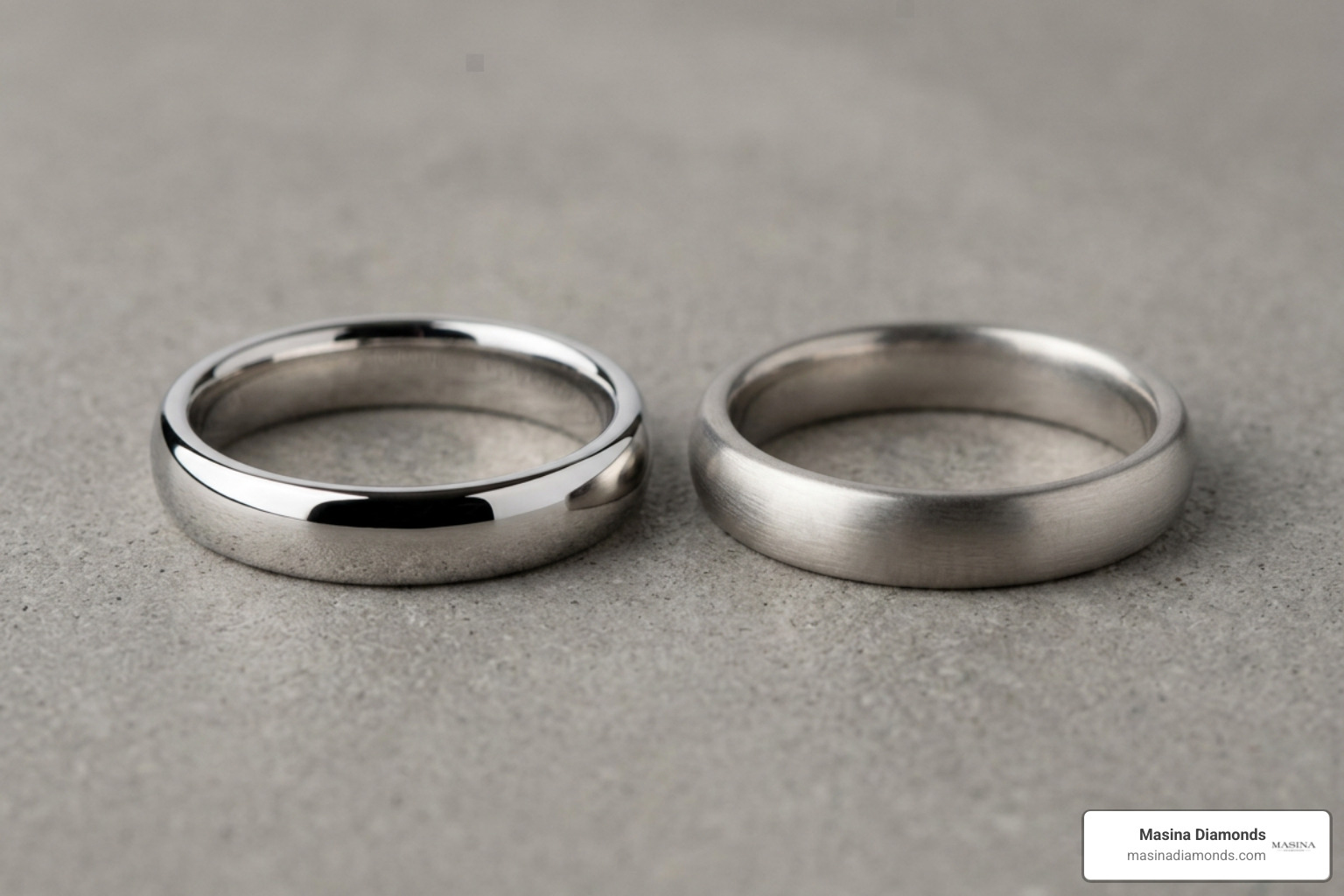
The choice between white gold vs platinum is one of the most common decisions couples face. While they appear nearly identical when brand new, they behave quite differently over years of wear.
Platinum is naturally white and hypoallergenic, requiring no rhodium plating. It is also significantly denser—a platinum band will feel roughly 30–40% heavier on the finger than the exact same ring crafted in 14K white gold. However, platinum is a softer metal on the surface. When it gets scratched, the metal merely shifts (developing a soft, vintage look known as a patina) rather than wearing away.
By contrast, 14K white gold has a harder outer surface that resists micro-scratches better than platinum, retaining its high-gloss polish for longer between cleanings. Because white gold is less dense and uses less pure precious metal by weight, it costs roughly 10–15% less than a comparable platinum setting. If you are weighing the long-term pros and cons of both white metals, check out our in-depth comparison of platinum vs white gold to see which fits your daily routine best.
White Gold vs. Yellow Gold: Aesthetics and Maintenance
While white gold delivers a sleek, architectural presence, yellow gold engagement rings provide an enduring, vintage warmth. Yellow gold does not require rhodium plating, meaning its maintenance is limited to routine cleanings and light polishing.
Aesthetically, white gold complements cool skin undertones (rosy, pink, or bluish hues) and emphasizes the pure iciness of D-to-F color diamonds. Yellow gold, along with classic gold wedding bands, beautifully accentuates olive and warmer skin tones, offering an eye-catching contrast against white gemstones.
Popular Settings and Center Stone Pairings

Because white gold is neutral and highly reflective, it acts as a chameleon in jewelry design, elevating nearly every gemstone and setting style. Exploring different engagement ring styles will help you visualize how this metal highlights various center stones.
Choosing Settings for White Gold Engagement Rings
When deciding how to choose a diamond ring setting, consider how white gold interacts with both the center gem and accent stones:
- Solitaire Settings: A polished white gold band keeps the spotlight firmly on the center stone. Because white gold blends seamlessly with the stone, the prongs visually disappear against a colorless diamond.
- Halo and Pavé Mountings: Adding pavé diamonds along a white gold band creates an unbroken river of sparkle. The white metal behind the accent stones amplifies light reflection without casting warm reflections into the diamonds.
- Bezel Mountings: For active individuals, bezel engagement rings offer unmatched security by wrapping a slim collar of white gold around the diamond's perimeter.
- Prong Security: To keep your center stone safe, careful engineering of engagement ring prongs ensures the prongs hold tight against wear without overpowering delicate gemstone cuts.
Center Stone Pairings: Diamonds and Colored Gemstones
White gold's neutral, silvery backdrop makes it an exceptional partner for a wide variety of stones:
- Colorless & Near-Colorless Diamonds: If you are selecting a diamond in the D–H color range (as detailed in our diamond color guide), white gold ensures no yellow tint bleeds into the diamond's facets. This holds true whether you select natural diamonds or choose between lab grown diamonds vs natural gems.
- Vibrant Gemstones: White gold provides an electric contrast for deeply saturated colored gems. The cool tone makes royal blue gems pop in fine sapphire rings, and brings crisp definition to emeralds and rubies.
Long-Term Maintenance: Cleaning, Wear, and Re-Plating
Taking care of your white gold ring ensures it sparkles brightly for a lifetime. Because the exterior is finished with rhodium plating, maintaining your piece involves a mix of easy home habits and occasional professional visits.
At-Home Cleaning Tips
- Gentle Soap Solution: Soak your ring for 10–15 minutes in a bowl of warm water mixed with a few drops of mild dish soap.
- Soft Bristle Brush: Use a baby toothbrush to gently clean beneath the diamond basket and between prongs where lotions and oils collect.
- Rinse and Dry: Rinse under lukewarm water (remember to plug the drain first!) and pat dry with a soft microfiber cloth.
- Avoid Harsh Chemicals: Never expose white gold to chlorine, bleach, or abrasive scrubbing powders, as these can pit the alloy and accelerate rhodium wear.
Professional Maintenance
Over time, daily contact with hard surfaces, steering wheels, and door handles will naturally wear down the thin rhodium layer on the underside of your band. To keep your ring in pristine condition, take advantage of professional jewelry care in Atlanta.
Routine checkups give our master jewelers the opportunity to inspect prong tension, check for loose stones, and perform expert jewelry repair in Atlanta before minor wear turns into lost stones.
Frequently Asked Questions About White Gold Rings
Will my white gold ring turn yellow over time?
A white gold ring will not turn bright yellow, but the areas that experience friction (such as the bottom of the band) will gradually reveal the natural, warm champagne undertone of the gold alloy beneath the rhodium. This subtle warm hue is completely normal. If you are curious about the mechanics of this wear, our breakdown on does white gold turn yellow explains how a quick, inexpensive rhodium dip fully restores that brilliant showroom finish.
Is white gold safe for sensitive skin or nickel allergies?
Standard white gold alloys often use nickel to strengthen the gold and bleach its yellow color. While the rhodium plating provides a solid barrier, sensitive wearers may experience mild skin irritation once the plating wears thin. If you have known nickel allergies, we can easily custom-craft your ring using hypoallergenic palladium-based white gold alloys or pure platinum.
How often should I have my ring re-plated?
Most wearers re-plate their rings every 12 to 18 months, and roughly 70% of white gold owners stick to this regular maintenance schedule. Re-plating is a standard, affordable service that takes minimal time and leaves your ring looking brand new.
Conclusion
White gold continues to captivate couples because it delivers the perfect balance of modern luxury, bright reflectivity, and budget-conscious value. Whether you love the minimalist profile of a four-prong solitaire or the vintage charm of an intricate halo, white gold lets your center diamond shine without compromise.
At Masina Diamonds, our family has provided over 40 years of hands-on jewelry craftsmanship to clients across Atlanta. Whether you want to view loose diamonds in person or design a completely bespoke setting from scratch using our interactive 3D Ring Builder, our team is here to guide every step of your journey. To discover more about selecting the right metal alloy for your dream ring, dive deeper into our guide on choosing white gold engagement rings or visit our Atlanta showroom today.