Key Factors When Choosing a Diamond Necklace for Women
Finding the right piece involves looking past surface brilliance to examine how materials, settings, and diamond proportions work together. Whether you want a delicate pendant for daily wear or a multi-carat statement for special occasions, your choice comes down to balancing beauty, structural integrity, and value.
When evaluating any necklace, consider these foundational elements:
- Diamond Quality and Grading: Diamond color, clarity, and cut dictate how light moves through the piece. High clarity standards ensure the stones remain clear and fiery even under direct sunlight.
- Total Carat Weight vs. Individual Stone Size: A necklace featuring 6.00 carats spread across hundreds of pavé or prong-set stones offers an expansive, glittering surface. In contrast, a single 0.50-carat solitaire draws the eye to one central focal point.
- Metal Choice and Purity: The balance between 14K and 18K gold affects color depth, daily scratch resistance, and overall weight.
- Setting Security: Prongs elevate stones to let in maximum ambient light, whereas bezel settings encase diamonds in protective gold rims that eliminate snagging on clothing.
| Feature | Solitaire Pendant | Continuous Tennis Necklace | Multi-Stone Collar / Statement |
|---|---|---|---|
| Typical Carat Range | 0.10 ct – 2.00+ ct | 5.00 ct – 15.00+ ct | 3.00 ct – 10.00+ ct |
| Common Settings | Bezel, 3-prong, 4-prong | 3-prong, 4-prong, bezel-link | Micro-prong, pavé, channel |
| Best Use Case | Daily wear, modular layering | Formal galas, milestone luxury | Evening wear, bridal statement |
| Metal Weight | Lightweight (approx. 2–5g) | Substantial (approx. 15–30g) | Heavy (approx. 25–40g) |
| Maintenance Need | Low to moderate | Moderate (check individual links) | High (multiple prongs to inspect) |
Diamond Quality and Grading in a Diamond Necklace for Women
Understanding grading terminology helps you verify that a necklace delivers the sparkle you expect. In the fine jewelry world, you will often encounter grades like EF-VVS or traditional classifications like Top Wesselton VVS.
EF describes diamonds in the colorless bracket of the standard grading scale. VVS (Very, Very Slightly Included) means internal inclusions are so minuscule that even trained gemologists struggle to locate them under 10x magnification. Top Wesselton is a classic European grading term corresponding to F or G color grades, denoting a crisp, bright white stone free from distracting yellow tints.
Independent certification provides clear verification of these qualities. Reliable institutions like the International Gemological Institute (IGI) and the Solitaire Gemological Laboratories (SGL) assess individual stones for cut symmetry, color accuracy, and clarity.
For international gold standards, hallmarks such as the BIS (Bureau of Indian Standards) hallmark verify precious metal purity, just as standard karat stamps (such as 14K or 18K) do in the United States. Choosing certified stones ensures you receive authenticated materials that retain their heirloom value.
Setting Styles and Silhouette Options for a Diamond Necklace for Women
The setting style defines both the visual personality and the physical durability of a necklace.
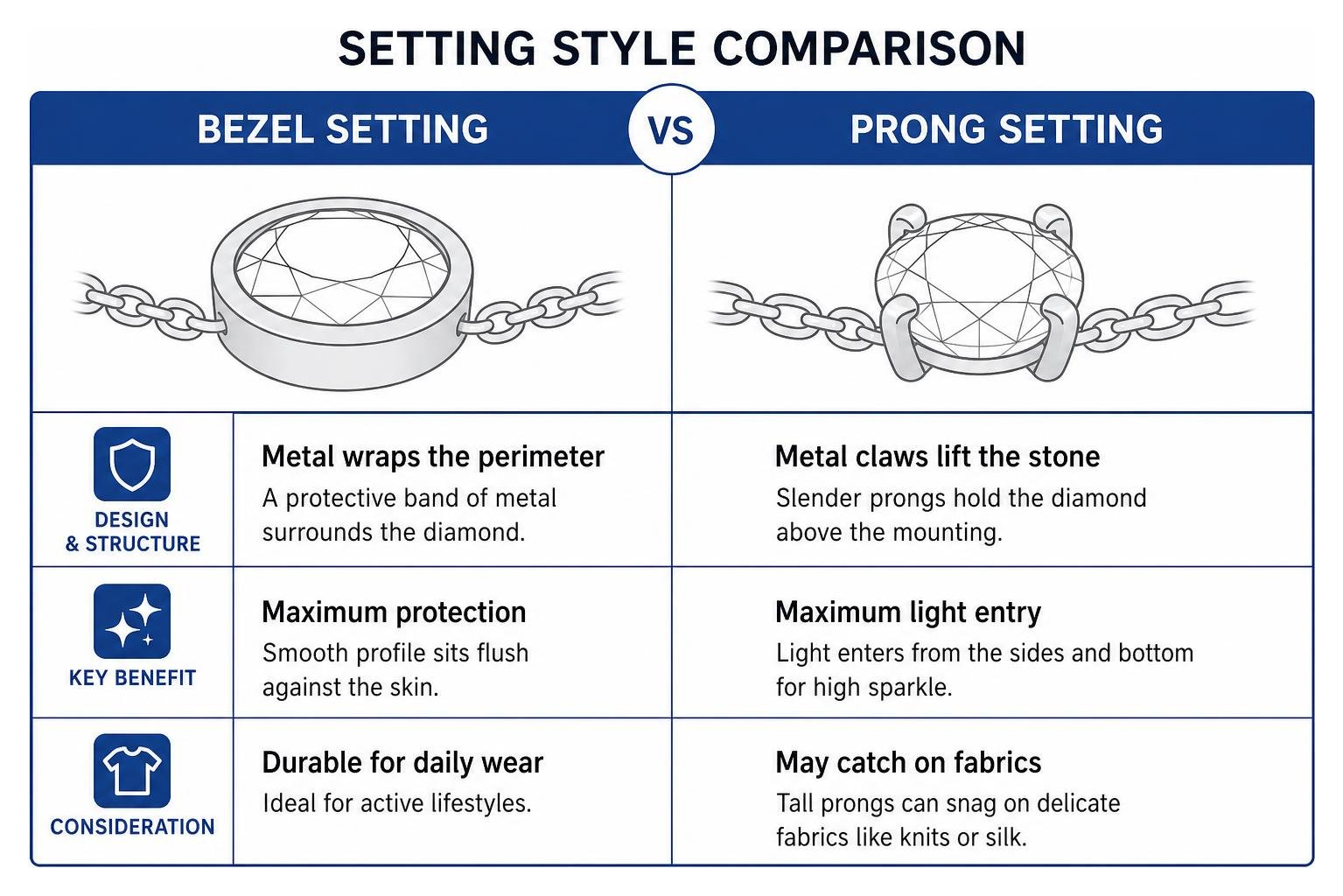
Prong settings use slender metal claws to hold each diamond in place. By lifting the stone above the mounting, prongs let light enter from the sides and bottom, maximizing fire and scintillation. However, tall prongs can occasionally catch on delicate fabrics like knit sweaters or silk.
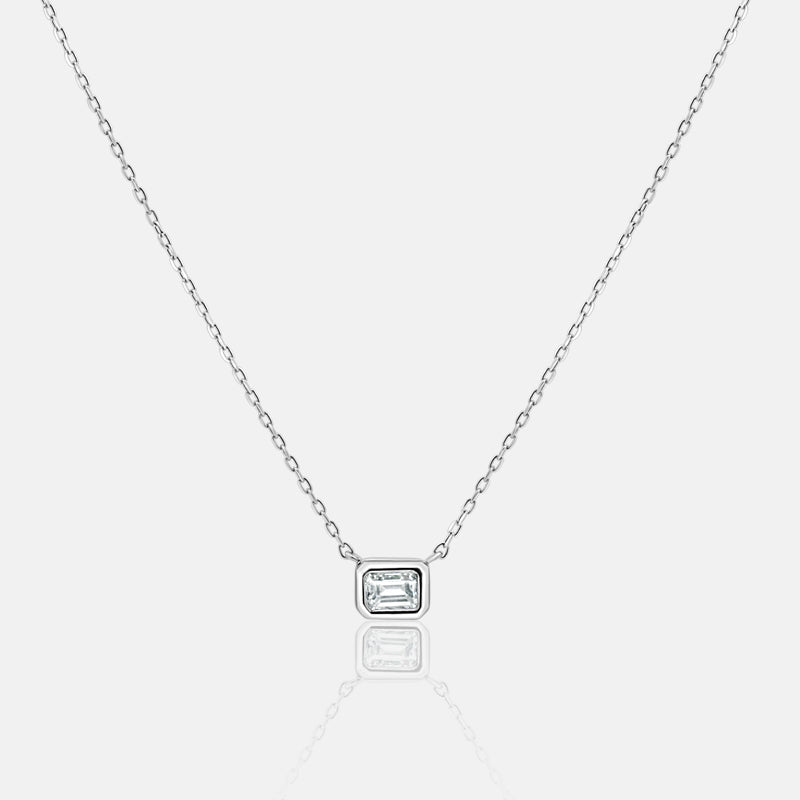
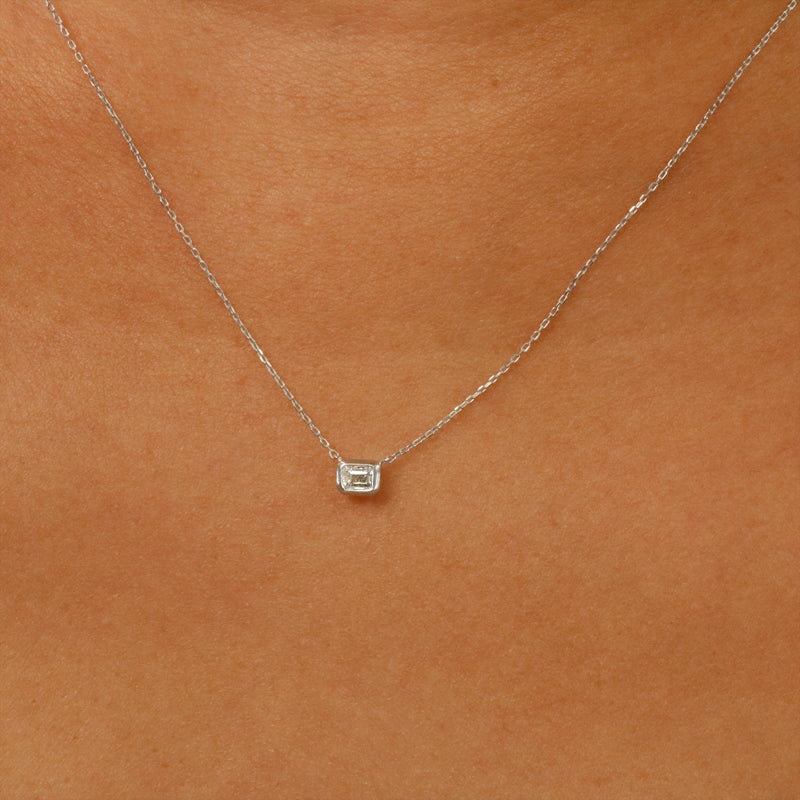
Bezel settings wrap a protective band of gold around the perimeter of the stone. A bezel-set diamond pendant creates a sleek, contemporary aesthetic that sits flush against the skin, making it an excellent option for active lifestyles.
Pavé and micro-prong arrangements group smaller diamonds closely together, minimizing visible metal to create the look of a continuous, diamond-paved surface.
Comparing Solitaire Pendants, Tennis Necklaces, and Statement Designs
Every necklace silhouette serves a different role in a jewelry collection. Deciding between a minimalist pendant, an articulated tennis necklace, or an elaborate multi-stone collar depends on how you plan to wear it.

Minimalist Solitaires and Bezel Pendants
A solitaire pendant remains the most versatile diamond necklace you can own. It transitions seamlessly from morning meetings to evening dinners without feeling overstated.
When choosing a solitaire, the mounting sets the tone:
- A white gold solitaire pendant offers a monochromatic, icy look that blends seamlessly with the diamond’s natural brilliance.
- A yellow gold solitaire necklace creates a warm, vintage-inspired contrast that highlights the stone's crisp edges.
Because solitaires center on a single diamond, cut quality is paramount. A well-cut round brilliant stone will throw flashes of white light (brightness) and colored fire across the room, making even modest carat sizes command attention.
Continuous Tennis Necklaces and Multi-Stone Collars
For unmatched presence, continuous multi-stone designs distribute brilliance all the way around the neck.
A classic diamond tennis necklace features individually set diamonds connected by flexible, articulated links. This flexibility allows the necklace to rest naturally against the contours of the collarbone without twisting.
For those seeking an icy, continuous line of light, a classic white gold tennis necklace provides a timeless bridal or black-tie accessory.
If you prefer geometric variety, a multi-shape diamond necklace combines rounds, pears, and emerald cuts to produce an eye-catching, textured play of light.
Statement collars often feature 6.00 to 15.00+ total carats of diamonds set in substantial gold mountings weighing 25 to 40 grams. These pieces are engineered for major milestones and formal gatherings where maximum visual impact is the goal.
Precious Metal Choices, Chain Lengths, and Everyday Wearability
A necklace must feel as good as it looks. The metal alloy, chain structure, and total drape determine whether a piece stays in your jewelry box or becomes your signature daily accessory.

Gold Purity and Color Comparisons
Gold purity is measured in karats, with 24K representing pure elemental gold. Because pure gold is too soft for secure stone setting, it is alloyed with other metals to increase strength and achieve different colors:
- 14K Gold (58.3% pure gold): Offers higher tensile strength and greater resistance to everyday scratching. It is ideal for tennis necklaces, prongs, and everyday chains that encounter routine wear.
- 18K Gold (75% pure gold): Features a richer, more saturated golden tone and a heavier, luxurious feel on the neck. It is naturally hypoallergenic and pairs beautifully with high-end solitaires.
- Color Nuances: Yellow gold delivers a classic, warm radiance; white gold provides a sleek mirror finish through rhodium plating; and rose gold uses copper alloys to impart a romantic blush hue.
- Distinctive Gems: Pairing unique center stones—such as a fancy yellow diamond pendant—with matching yellow gold prongs enhances the stone's natural undertones.
Chain Sizing and Proper Maintenance
Chain length determines where your pendant rests and how it interacts with different shirt collars and necklines:

Opting for a sliding adjustable chain gives you the versatility to alter the drop between 16 and 18 inches to match different necklines. For a snugger, higher drape, pairing a pendant with a textured gold choker necklace creates an on-trend, layered look.
To keep your diamonds bright and clear:
- Avoid Chemical Contact: Apply perfumes, lotions, and hairsprays before putting on your necklace. Cosmetics leave thin films that dull diamond sparkle.
- Safe Storage: Always store diamond necklaces flat or hung individually. Diamonds can scratch other diamonds, pearls, and precious metals if stored loose in a pouch.
- Routine Inspection: Check clasps, safety catches, and prongs periodically to ensure stones remain firmly seated.
Frequently Asked Questions About Diamond Necklaces
What is the ideal chain length for everyday wear?
For most women, a 16-inch (approx. 40 cm) or 18-inch (approx. 45 cm) chain is the most flattering and comfortable choice for daily wear. A 16-inch chain positions the pendant neatly within the hollow of the throat, resting gracefully above high-collared tops and crewneck sweaters.
An 18-inch chain drops slightly lower, sitting just below the collarbone, which pairs naturally with V-necks, button-downs, and open collars. Adjustable chains that can toggle between these lengths offer the best day-to-day flexibility.
How do EF-VVS and Top Wesselton grades compare?
Both EF-VVS and Top Wesselton VVS denote high-tier diamond quality. EF-VVS refers to the top of the modern GIA/IGI color grading scale—Colorless (E or F)—paired with Very, Very Slightly Included clarity. Under magnification, these stones show virtually zero body color and imperceptible inclusions.
Top Wesselton is an older Scandinavian/European grading term that correlates to the F and G color grades (Rare White). When combined with VVS clarity, a Top Wesselton stone will look bright white, clean, and radiant to the naked eye.
How should a fine diamond necklace be cleaned at home?
You can clean your diamond necklace safely at home with warm water, mild liquid dish soap, and a soft-bristled baby toothbrush:
- Soak the necklace in the warm, soapy water for 10 to 15 minutes to loosen oils and residue.
- Gently brush around the diamond facets, paying close attention to the underside of the setting where skin oils accumulate.
- Rinse the necklace thoroughly under clean, lukewarm running water (remember to plug the drain first!).
- Pat dry with a lint-free microfiber cloth. Avoid using paper towels, which can leave lint or scratch softer gold surfaces.
Conclusion
Choosing the right diamond necklace comes down to how well the design fits your personal style, wardrobe, and lifestyle. A fine necklace should feel comfortable, sit securely on the neckline, and deliver enduring brilliance for decades to come.
Whether you are drawn to the simplicity of a classic solitaire, the symmetry of a bezel-set pendant, or the full sparkle of a tennis necklace, focusing on certified diamond quality and structural craftsmanship ensures you make a confident investment.
At Masina Diamonds, we bring more than 40 years of hands-on jewelry craftsmanship to our Atlanta showroom. Explore our complete collection of Masina Diamonds fine jewelry or schedule a custom design consultation with our master jewelers to create an heirloom piece tailored just for you.