Why a 2 Carat Oval Diamond Ring With Side Stones Flatters the Hand
A 2-carat oval diamond gives the finger a longer look, while side stones add sparkle and frame the center. For a sleek style, try tapered baguettes. For more sparkle, try round brilliant accents. The best choice is one that looks balanced on your hand and sits comfortably for daily wear.
We're Masina Diamonds, Atlanta jewelers with over 40 years of experience in engagement rings and custom design. We can help you make a 2 carat oval diamond ring with side stones feel like your own, starting with the shapes and proportions that suit you. According to the Gemological Institute of America, oval diamonds are among the most popular fancy shapes for engagement rings because their elongated outline creates a flattering, slenderizing effect on the finger.
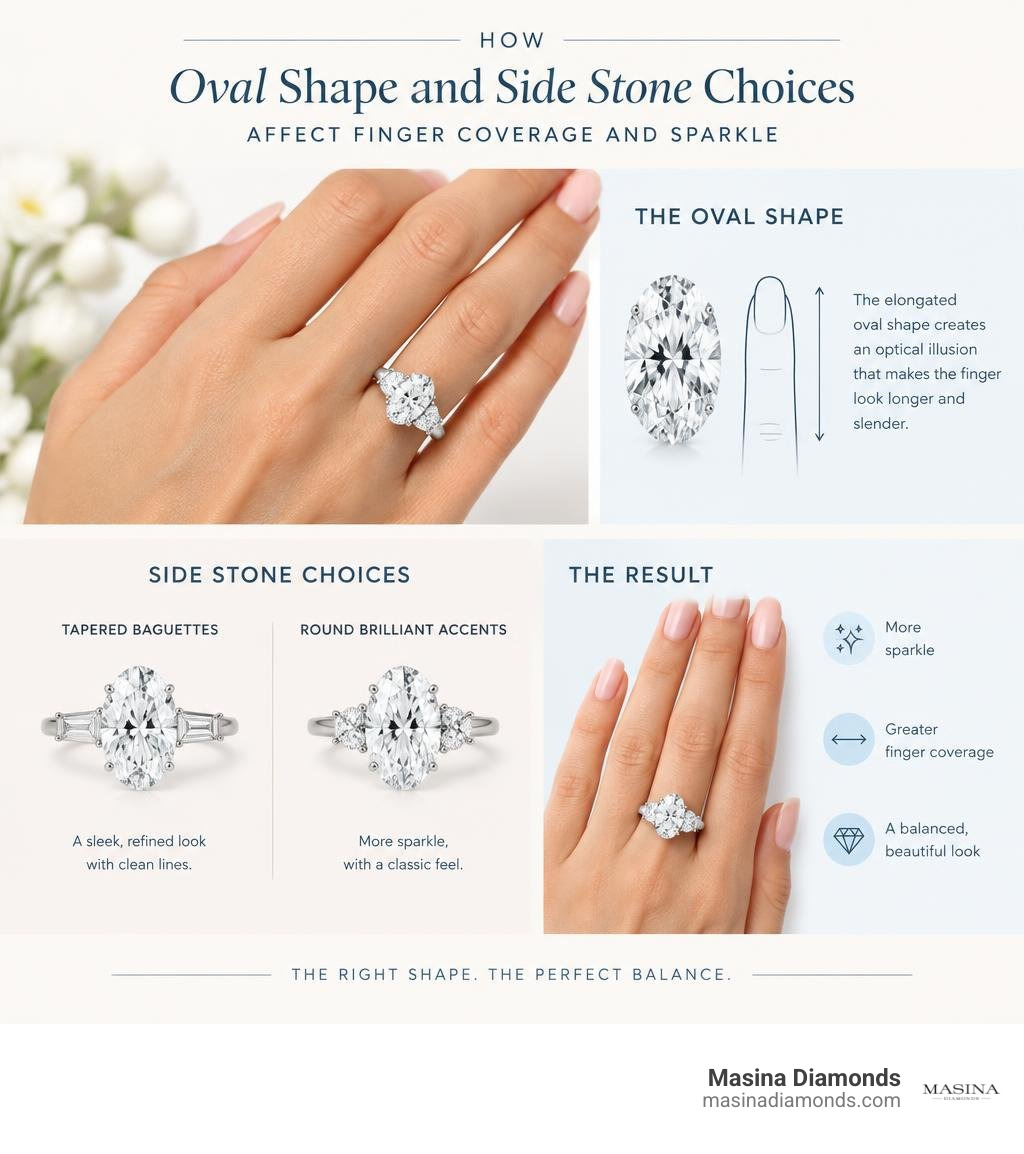
The Visual Appeal of a 2 Carat Oval Diamond Ring with Side Stones
When you slip an oval diamond onto your finger, something magical happens. The gentle, elongated curve creates an optical illusion that naturally lengthens and slenders the hand. Over the past five years, search interest for oval cuts has surged by over 30%, and for good reason: an oval cut distributes more of its rough weight across its surface table. Because of this shallow depth profile, a 2-carat oval center diamond offers up to a 15% larger surface spread compared to a traditional round brilliant of identical carat weight.
Adding flanking accents takes this visual advantage even further. Approximately 70% of oval diamond rings sold feature side stones, transforming a solitary gem into a cohesive architectural statement. In our curated three stone oval engagement ring designs, side stones bridge the visual gap between the bold 2-carat centerpiece and the band, creating smooth knuckle-to-knuckle coverage that looks balanced from every angle.
| Diamond Shape | Relative Surface Spread (Finger Coverage) | Brilliance & Sparkle Profile | Elongation / Slenderizing Effect |
|---|---|---|---|
| Oval Brilliant | Very High (Up to 15% larger visual spread) | Modified Brilliant Fire & Scintillation | Exceptional (Soft, curved elongation) |
| Round Brilliant | Moderate (Standard baseline spread) | Maximum Optical Brilliance | None (Symmetrical 1.00 ratio) |
| Cushion Cut | Low to Moderate (Deep weight retention) | Soft, Romantic Sparkle (Pillow effect) | Subtle (Depending on elongated ratios) |
| Princess Cut | Moderate (Sharp corner distribution) | Bright Geometric Scintillation | None to Minimal (Square profile) |
Side Stone Shapes That Elevate the Oval Center
Choosing side stones is like choosing the perfect frame for a masterpiece painting. You want accents that complement, direct the eye inward, and accentuate the soft curves of the center stone.
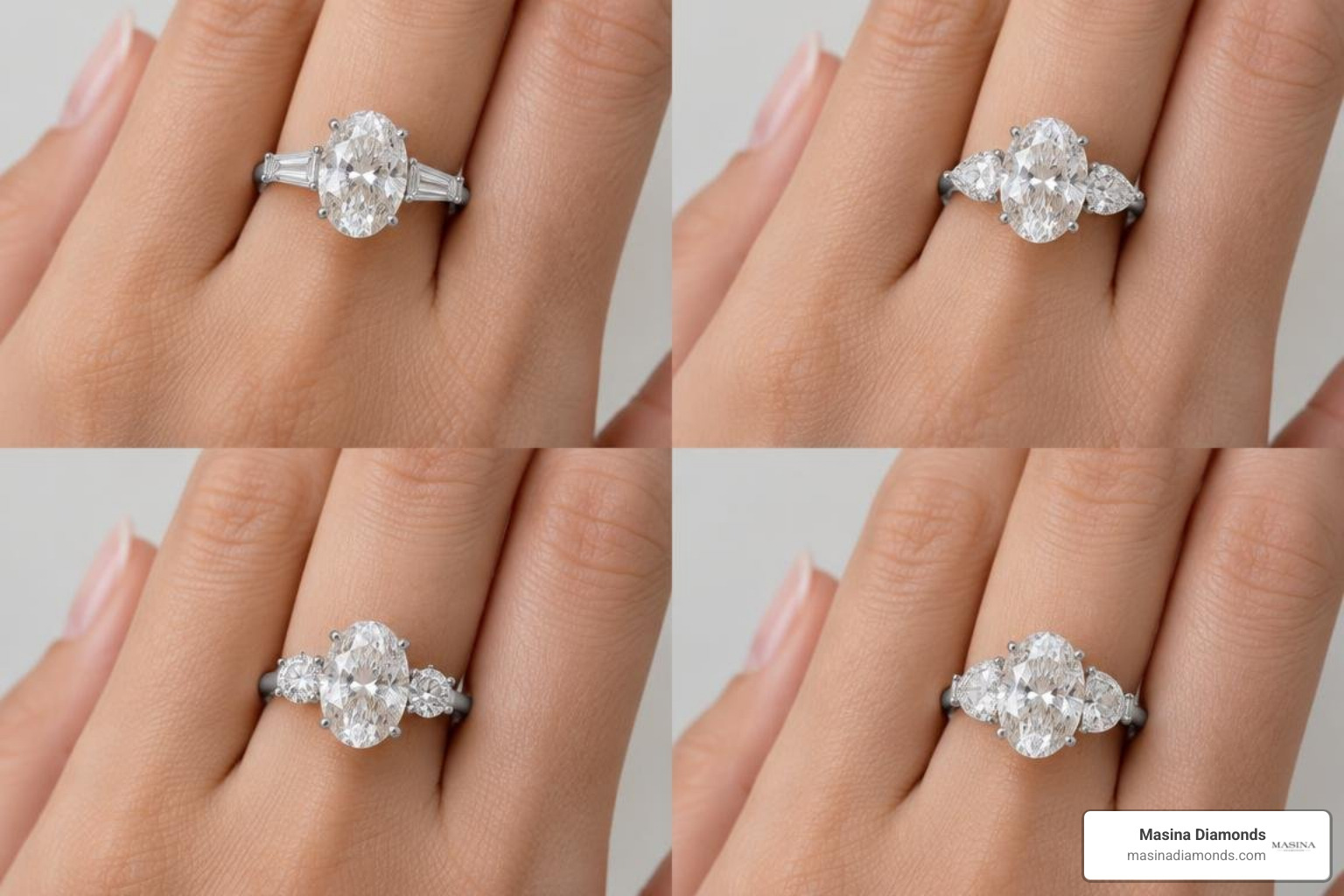
- Tapered Baguettes: A quintessential mid-century choice that remains timeless. The step-cut facets of tapered baguettes contrast with the modified brilliant sparkle of the oval, narrowing toward the band to draw all focus directly to the center.
- Pear Cut Accents: Pointing outward, pear side stones mirror the organic curves of the oval while tapering gracefully down the finger.
- Round Brilliant Stones: Matching the sparkle pattern of the oval, small round side diamonds create an uninterrupted ribbon of fire.
- Half-Moon Accents: The straight inner edge rests flush against the oval's flank while the curved outer edge smoothly transitions into the shank, offering an integrated, custom look.
Achieving Proportional Balance Across Different Hand Sizes
The secret to why this style looks stunning on every finger lies in finding the ideal length-to-width (L/W) ratio. For most hand sizes, an oval ratio between 1.35 and 1.50 hits the sweet spot.
A ratio near 1.35 offers a fuller, softer silhouette that flatters wider fingers or larger knuckles. A ratio closer to 1.50 creates a slender, elongated profile ideal for petite hands. For those who prefer a clean, understated aesthetic, exploring simple oval engagement rings helps you appreciate how subtle adjustments in stone proportions provide effortless knuckle-to-knuckle balance without overwhelming the hand.
Selecting the Best Side Stone Settings and Metal Combinations
A well-crafted ring must balance beauty with everyday wearability. Side stones should sit securely at a height that complements the center gem, protecting the girdle edges while allowing maximum light entry.
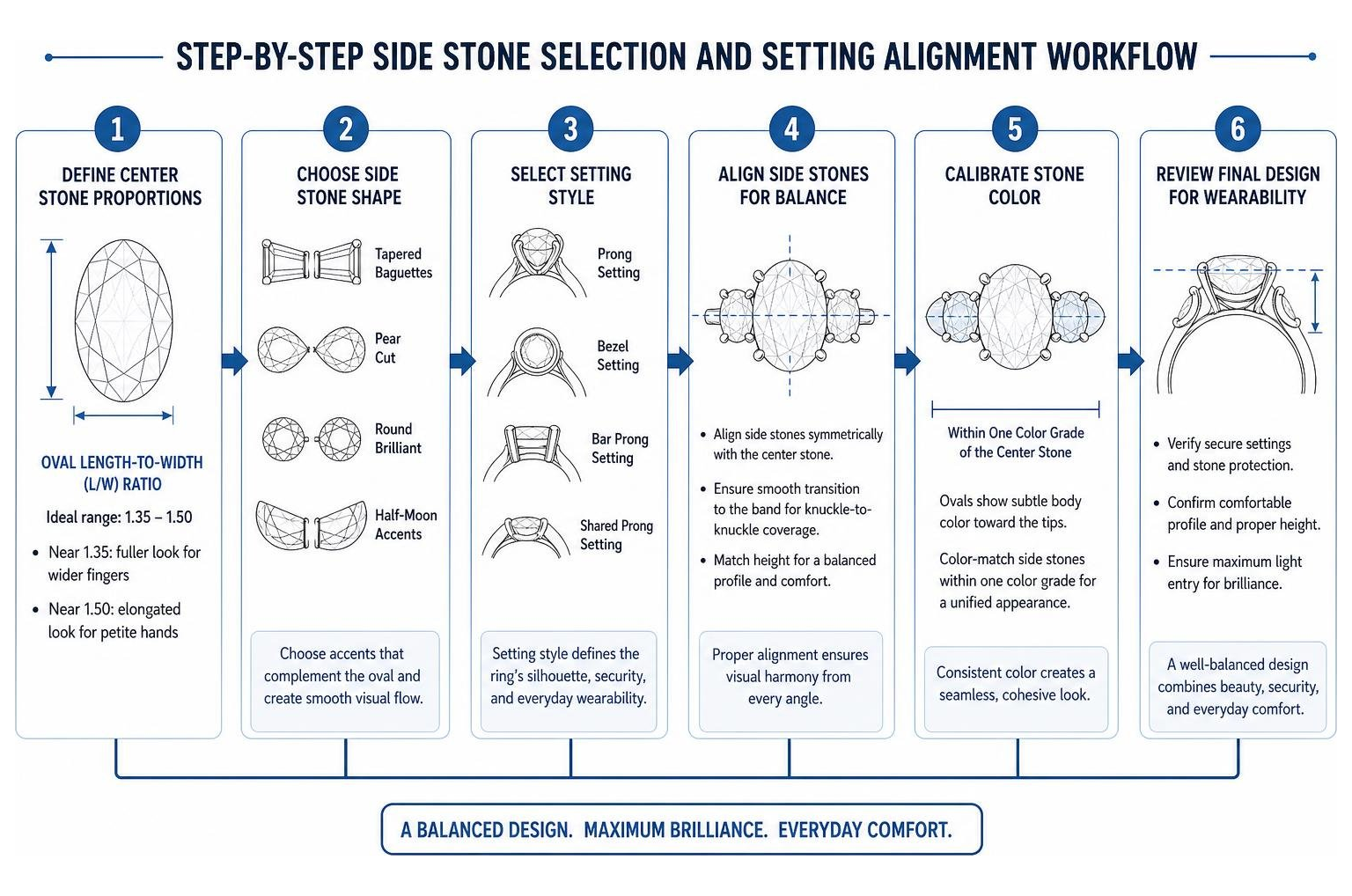
When designing a classic 2 carat oval diamond platinum engagement ring, stone color calibration is paramount. Because ovals hold subtle body color toward their tips, side stones should be carefully color-matched within one color grade of the center diamond to ensure a unified appearance across the setting.
Setting Styles for a 2 Carat Oval Diamond Ring with Side Stones
How your diamonds are mounted defines the personality and silhouette of your ring:
- Classic Three-Stone Basket: Uses individual shared prongs or low baskets to cradle each stone, allowing light to pour through the pavilion facets.
- Pavé Diamond Band: Extends the sparkle beyond the primary side stones, micro-setting tiny diamonds along the shank for continuous brilliance.
- Hidden Halo Accents: A modern favorite where a delicate ring of diamonds wraps around the base of the center prongs, offering an unexpected glimmer from the profile view.
If you have a distinct vision for your mounting, our team creates custom engagement rings in Atlanta using interactive 3D modeling so you can see every prong and angle before casting.
Precious Metals: Platinum vs. Yellow, White, and Rose Gold
The metal you choose provides the foundation for your design:
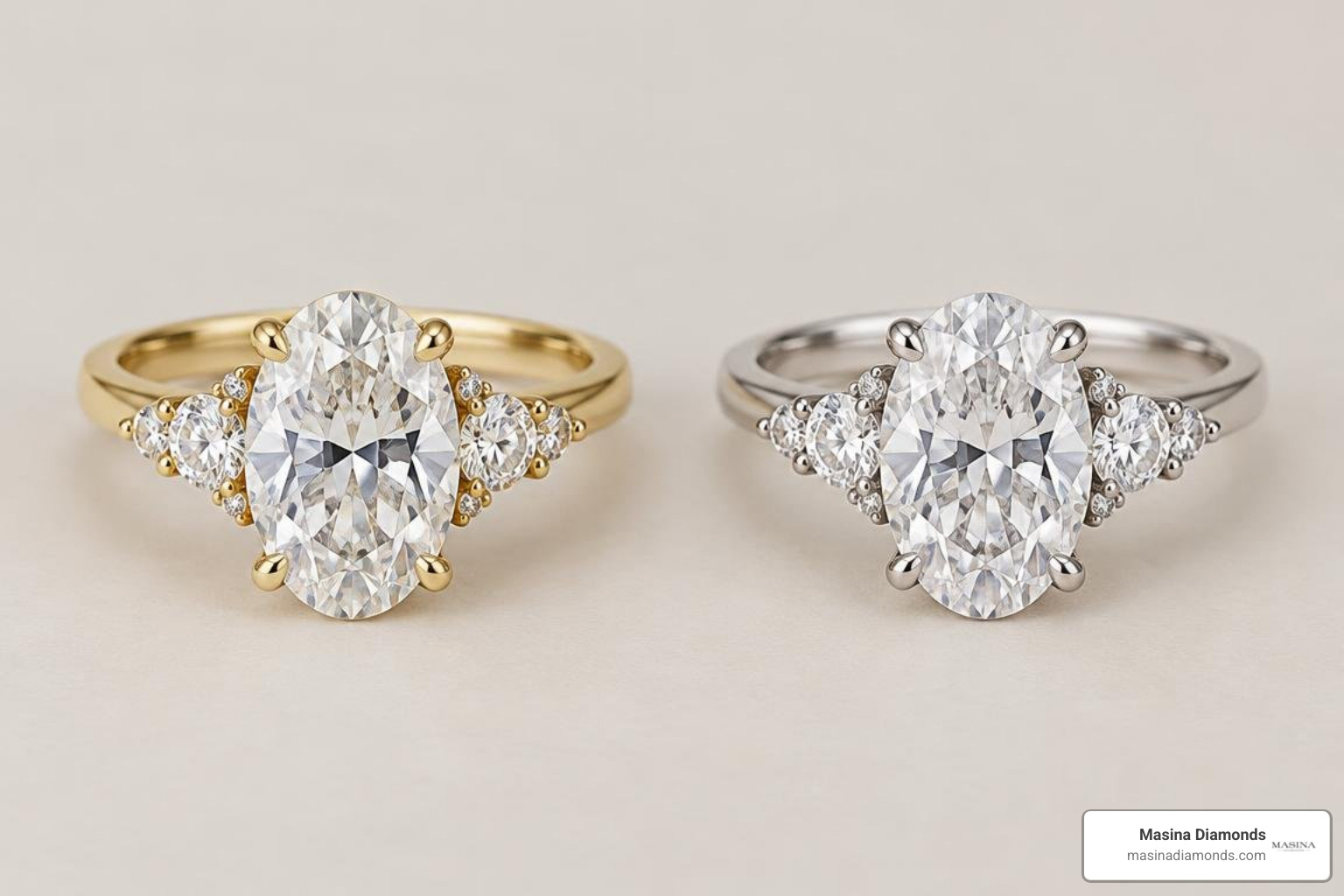
- Platinum: Naturally hypoallergenic and dense, platinum provides unmatched prong security. Its cool, mirror-bright sheen makes high-color diamonds (D–F) look crisp and icy.
- Yellow Gold (14k & 18k): Brings warmth and vintage charm. Pairing a rich yellow gold band with platinum prongs is a popular technique that keeps the diamond's body bright white while enjoying golden tones on the shank.
- White Gold: Offers the bright, modern look of platinum at a lighter weight, finished with a rhodium plating for enhanced shine.
- Rose Gold: Delivers a romantic blush tone that complements near-colorless diamonds and all skin tones.
Diamond Specifications and Quality Guide for Oval Centers
Evaluating an oval diamond involves looking beyond basic numbers. Because the GIA does not issue standard cut grades for fancy shapes, understanding critical quality factors ensures you pick a vibrant, fiery stone. Browse our collection of oval engagement rings to explore how these specifications translate into real-world brilliance.
- The Bow-Tie Effect: Almost all oval cuts exhibit some degree of shadow across the center facets due to light blockage from the viewer's head and shoulders. A well-cut oval minimizes this dark pattern, dispersing light evenly across the entire surface.
- Clarity: The brilliant facet pattern of an oval diamond naturally hides minor imperfections. A VS2 or eye-clean SI1 clarity grade offers fantastic value, giving you a visually flawless stone without paying the premium for VVS or Flawless grades.
- Color: Ovals concentrate slight tint near their rounded ends. If setting your stone in platinum or white gold, target G to H color for a bright, white look. For yellow or rose gold settings, an I or J color diamond looks clean and warm while saving on budget.
Maximizing Value: Lab-Grown vs. Natural Diamonds
Today's couples enjoy unprecedented flexibility when selecting their centerpiece. Chemically, physically, and optically identical to mined diamonds, lab-created gems allow you to prioritize size and pristine cut quality within your desired investment range. The Gemological Institute of America confirms that lab-grown diamonds have the same crystal structure and optical properties as natural diamonds, making them a legitimate choice for engagement rings.
A complete ring with a natural 2-carat center and fine side stones generally ranges from $8,000 to $25,000 depending on the 4Cs, whereas lab-created options offer dramatic savings for identical visual presence. You can browse our dedicated collections of lab grown diamond rings and learn more about sourcing lab grown diamonds in Atlanta, GA to find the right balance of origin, size, and budget for your ring.
Certification and Diamond Authenticity Standards
Never compromise on certification. An independent grading report from an accredited laboratory—such as the Gemological Institute of America (GIA) or the American Gem Society (AGS)—provides an unbiased assessment of your stone's color, clarity, dimensions, and polish symmetry.
When reviewing your report, examine depth percentage (ideally 58% to 63%) and table percentage (53% to 63%). These proportions help guarantee that your oval delivers crisp return of light rather than dull light leakage.
Pricing, Sizing, and Daily Wear Considerations
A 2-carat oval diamond ring with side stones adds roughly 20% to 40% in total carat weight (TCW) to your ring. Because smaller accent stones command a much lower per-carat price than a large single diamond, side stones significantly expand your ring's overall visual footprint without exponentially increasing your total spend.
When wearing a substantial ring every day, comfort is key:
- Low-Profile Engineering: Request a gallery basket that sits as flush to the finger as possible to prevent catching on knitwear, pockets, or bags.
- Accurate Sizing: Rings with wide side stone shoulders require precise sizing to prevent the heavier 2-carat center from spinning. A European-style comfort-fit shank or sizing beads provide extra stability.
- Lifestyle Assessment: If you lead an active lifestyle, consider sturdy V-end prongs for pointed side stones (like pears or marquis cuts) to shield vulnerable tips.
If you are shopping locally, explore our selection of 2 carat engagement rings in Buckhead, Atlanta to try on various setting heights and find what feels natural on your hand.
How to Budget for a 2 Carat Oval Diamond Ring with Side Stones
Smart budgeting begins with prioritizing what you see with the naked eye. We recommend allocating 75% to 80% of your total ring budget to the center stone's cut quality and carat weight, with the remaining 20% to 25% dedicated to the setting, precious metal, and calibrated accent stones.
For expert assistance in balancing cut precision and mounting details, explore our full gallery of diamond engagement rings in Atlanta, GA.
Frequently Asked Questions About Oval Diamond Rings with Side Stones
Do side stones make a 2 carat oval diamond look bigger?
Yes. Side stones create visual width across the top of the finger, tricking the eye into perceiving the entire ring face as one continuous surface of brilliance. Tapered accents also provide a contrast effect, making the 2-carat center stone appear even taller and more prominent by comparison.
What is the best side stone pairing for an oval cut diamond?
Tapered baguettes remain the most popular choice for clean, vintage elegance because their quiet step-cut facets highlight the center stone's sparkle. For a seamless flow of brilliant fire, pear-shaped diamonds or round brilliant clusters provide an organic, romantic silhouette.
How do I prevent the bow-tie effect in a 2 carat oval diamond?
While all oval diamonds exhibit subtle central contrast, you can avoid a dark, distracting bow-tie by choosing stones with well-proportioned pavilion angles and depth percentages between 58% and 63%. Working directly with an experienced jeweler who evaluates stones in person under varied lighting ensures your diamond displays balanced brilliance across every facet.
Conclusion
A 2-carat oval diamond flanked by fine side stones combines finger-flattering proportions with timeless elegance. Its elongated surface spread, generous finger coverage, and versatile styling options make it an effortless choice for hands of all shapes and sizes.
At Masina Diamonds, our family has brought custom engagement dreams to life for over 40 years in Atlanta. Whether you wish to build your ring from scratch using our interactive 3D Ring Builder or view loose center stones in person, we are here to guide you through every cut, facet, and setting. To explore all of your accent and center stone possibilities, check out our guide to ring stone types and diamond options.