Design a Custom Ring With Basket Setting for Beauty and Security
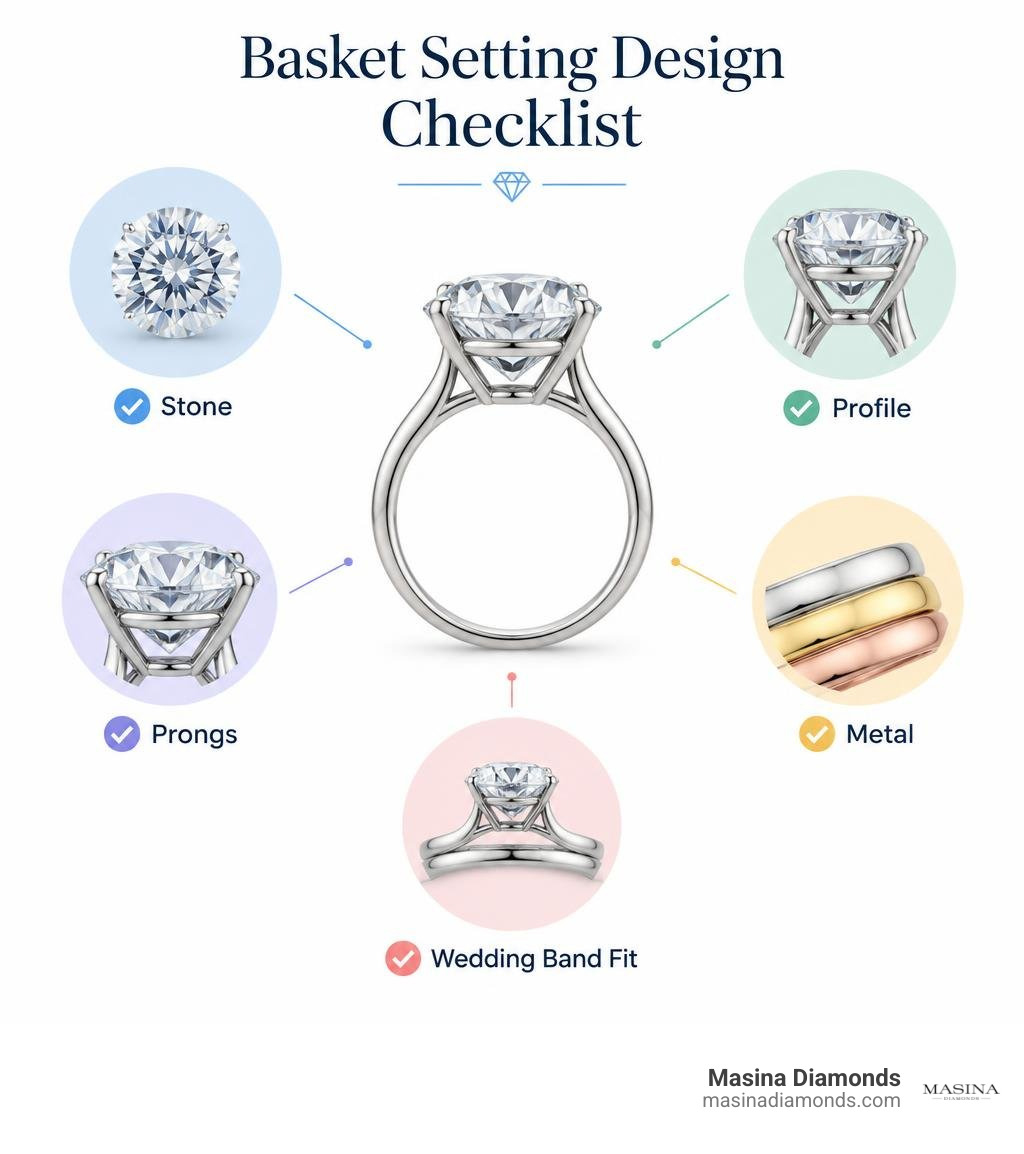
A custom ring with basket setting is a strong choice if you want a center stone that sits securely, shows plenty of light, and has a refined side profile. Start by choosing your stone shape, then decide how low you want it to sit, select a metal, and ask your jeweler to design prongs and gallery supports that protect the stone without blocking its view.
A basket setting uses prongs joined by horizontal supports beneath the center stone. Unlike a simple peg head, this structure gives the prongs added stability. Unlike a full bezel, it leaves more of the stone open, which can help preserve its visible sparkle. It can also use less metal than a full bezel, making it a lighter option for many custom designs.
For an engagement ring, the key is balance: choose a basket that is low enough for comfortable daily wear but high enough to work with your preferred wedding band. Details such as claw prongs, a hidden halo, open gallery work, or a cathedral-style band can make the design feel personal without sacrificing security. For a broader look at how basket settings compare with other mounting styles, the ring setting overview explains the structural differences between prong, bezel, and tension designs.
Masina Diamonds has served Atlanta clients with diamond engagement rings, custom jewelry, and luxury watches for more than 40 years. Our team helps couples create a custom ring with basket setting that fits their stone, lifestyle, and story.
What Is a Basket Setting and How Does It Compare to Other Mountings?
When designing a bespoke ring, the head—the structure that holds your gemstone—determines how your ring feels, sits, and performs every day. A basket setting features vertical prongs linked by one or more horizontal gallery wires beneath the stone. This creates an open "basket" framework that cradles the pavilion (the lower portion of the gem) while keeping the center of gravity comfortably low on the finger.
Because this open framework requires less dense metal work than an all-metal rim, basket mounts typically use 30% to 40% less metal than full bezel settings. This provides significant design flexibility while maintaining structural integrity.
| Setting Type | Profile Height | Center Stone Security | Light Entry | Wedding Band Compatibility | Metal Weight |
|---|---|---|---|---|---|
| Basket Setting | Low to Medium | High (lateral & vertical support) | High (open gallery) | High (with undercut) / Moderate | Moderate |
| Peg Head Setting | High | Moderate (vulnerable to lateral hits) | Maximum (minimal metal below) | High (flush fit easy) | Low |
| Bezel Setting | Low | Maximum (complete rim protection) | Moderate to Low | Moderate to High | High |
Basket vs. Traditional Peg Head Settings
A traditional peg head involves individual prongs soldered directly to a single point at the top of the ring shank. While it allows light to flood the diamond, it holds the stone high above the finger. This elevated position acts like a lever: if you bump your hand against a countertop or car door, the lateral force can bend the prongs or snap the head off entirely.
In contrast, a basket setting integrates horizontal crossbars between the prongs. These struts reinforce the entire architecture, preventing individual prongs from shifting independently. The center stone rests lower against the finger, drastically minimizing snagging against knit sweaters, coat pockets, and athletic wear.
Basket vs. Full Bezel Settings
Full bezel mountings wrap a continuous collar of metal around the gem's perimeter. While bezels offer exceptional rim defense, they cover the diamond's profile, limiting side light and concealing the intricate facets below the girdle.
Basket mountings provide a happy medium. The open gallery lets light pass freely through the pavilion and table facets, maximizing diamond brilliance. Choosing a basket allows you to explore delicate aesthetics—such as refined white gold engagement ring designs—without sacrificing daily peace of mind or hiding the craftsmanship of your gem.
Why Choose a Custom Ring With Basket Setting?
Basket settings represent roughly 20% of all custom ring mountings, with demand climbing 15% over the past two years. Nearly 45% of fine jewelry buyers prioritize the setting type above all else when balancing beauty and wearability.
Designing through our bespoke custom jewelry design process allows you to customize every curve, wire thickness, and profile element to match your everyday habits.

Center Stone Security and Daily Durability
Daily life can be rough on fine jewelry. Whether you work with your hands, exercise regularly, or simply navigate a busy schedule, your ring will experience bumps and friction. The horizontal gallery wire of a basket acts as an internal brace. If one prong receives a blow, the structural load is distributed across the entire framework rather than pushing a single prong out of alignment.
This added protection shields the diamond's girdle (its thinnest, most vulnerable edge) from accidental chipping.
Light Performance and Profile Elegance
While a top-down view shows off your diamond's shape, you and everyone around you will often view your ring from the side. A basket setting provides a canvas for delicate architectural touches:
- Cathedral shoulders that sweep upward to merge seamlessly with the basket walls.
- Trellis crossover prongs that create graceful, intertwining lines beneath the stone.
- Hidden halos placed along the horizontal gallery rail to add subtle sparkle visible only from side angles.
- Open-wire filigree that allows maximum ambient light to bounce through the stone while maintaining low-profile comfort.
Step-by-Step Guide to Customizing Your Basket Mount Ring

Designing a custom basket setting allows you to tailor the mounting to your chosen gemstone and daily routine. Custom setting prices typically range from $200 to $900 for the mounting work, depending on the metal choice, architectural complexity, and whether you include accent stones.
Step 1: Choosing the Right Diamond for a Custom Ring With Basket Setting
Because a basket setting is custom-cast to exact millimeter measurements, it works beautifully with any center stone shape:
- Round Brilliant: The classic choice, perfectly framed by 4-prong or 6-prong basket frameworks.
- Oval and Marquise Cuts: Benefit greatly from the stabilizing crossbars, which support their elongated ends and prevent snagging.
- Emerald and Radiant Cuts: Look striking in four-corner or double-claw basket mountings that mirror their geometric symmetry.
- Cushion Cuts: Rest naturally in soft-cornered baskets with open galleries that highlight their deep pavilions.
When browsing our gemstone and diamond selections, keep in mind that a well-crafted basket allows you to select stones with deeper cuts without ending up with an awkwardly top-heavy ring, complementing cut guidelines from the Gemological Institute of America.
Step 2: Selecting Metal Types and Basket Architecture
The metal you choose affects both the look and structural maintenance of your ring:
- Platinum: Dense, hypoallergenic, and naturally white. It holds prongs firmly in place and does not wear away over time.
- 14k White Gold: An excellent, durable choice that offers high scratch resistance. Explore our 14k white gold diamond mounts for timeless inspiration.
- 18k Yellow or Rose Gold: Adds rich warmth. Many clients choose a yellow gold shank paired with a platinum or white gold basket to ensure the center stone reflects bright white light.
For the basket structure itself, you can choose between minimalist 4-prong wire baskets, vintage-inspired scrollwork, or modern split-shank integrations.
Step 3: Coordinating with Wedding Bands
One common oversight when designing a low-profile basket is how it interacts with a future wedding band. If the basket extends directly to the base of the shank, a straight wedding band cannot slide underneath, resulting in a small gap between the two rings.
If you prefer a seamless, gap-free look, we can design an undercut basket (a floating gallery raised just 1.5 to 2 millimeters above the finger) or create a custom contoured wedding band tailored to hug the curve of your engagement ring. Discover how to balance matching engagement and wedding bands early in the design phase.
Common Mistakes to Avoid in Custom Basket Ring Design
- Setting the Stone Too Low for the Wedding Band: If you want a straight, flush-fitting band, let your jeweler know before casting so the basket base can be elevated slightly.
- Choosing Prongs That Are Too Thin: While ultra-thin wire looks delicate in digital renders, daily wear requires substantial metal thickness (at least 0.8mm to 1.0mm per prong) to keep your stone safe.
- Overcrowding the Gallery: Adding too many filigree wires, bezels, and hidden gems beneath the stone can trap lotions and hand soaps, making cleaning difficult.
- Ignoring Lifestyle Needs: If you wear medical gloves or work in high-contact fields, opt for rounded button prongs or flat petite claw prongs rather than tall, sharp decorative prongs.
Cleaning and Maintenance Essentials
A basket setting's open geometry keeps diamond facets bright, but the space between the gallery wires can collect hand lotion, dust, and oils over time.
Maintaining Your Custom Ring With Basket Setting Over Time
- At-Home Soak: Soak your ring weekly in warm water mixed with a few drops of mild dish soap for 15 minutes.
- Gentle Brushing: Use a soft-bristled baby toothbrush to gently clean beneath the basket and between the gallery wires where residue gathers.
- Avoid Harsh Chemicals: Avoid chlorine, bleach, and abrasive cleaners, which can degrade gold alloys and erode prong tips.
- Check for Snags: Periodically run your ring over a woven micro-fiber cloth. If a thread catches on a prong, have the setting inspected.
- Professional Inspections: Visit your jeweler once a year for ultrasonic cleaning, steam sanitization, and a prong tightness check.
Frequently Asked Questions About Basket Settings
Does a basket setting make a diamond look smaller?
No. Because the basket uses slender horizontal wires beneath the stone rather than a thick border of metal around the top edge, the full surface area and girdle diameter of your diamond remain completely visible.
Can a wedding band sit flush against a basket setting?
Yes, provided the basket is designed with an undercut or cathedral elevation. If the basket is built completely flush to the finger, a straight band will sit with a gentle gap, or you can pair it with a custom curved or notched band.
How much does it cost to custom build a basket setting?
Custom basket mountings typically range between $200 and $900 for the setting and casting labor, depending on the precious metal selected and the intricacy of the gallery wirework.
Conclusion
A basket setting offers the ideal balance of timeless style, everyday durability, and diamond security. By securing your center stone close to the hand with supportive gallery wire, you get a ring that feels comfortable, resists snags, and looks brilliant from every angle.
Whether you are looking for a sleek platinum wire basket or an ornate vintage cathedral design, our family-owned team in Atlanta brings more than four decades of dedicated expertise to every piece. Explore our 3D Ring Builder and start your bespoke journey with custom ring design at Masina Diamonds today.