Beautiful Diamond Wedding Rings: Find a Band You'll Love Wearing
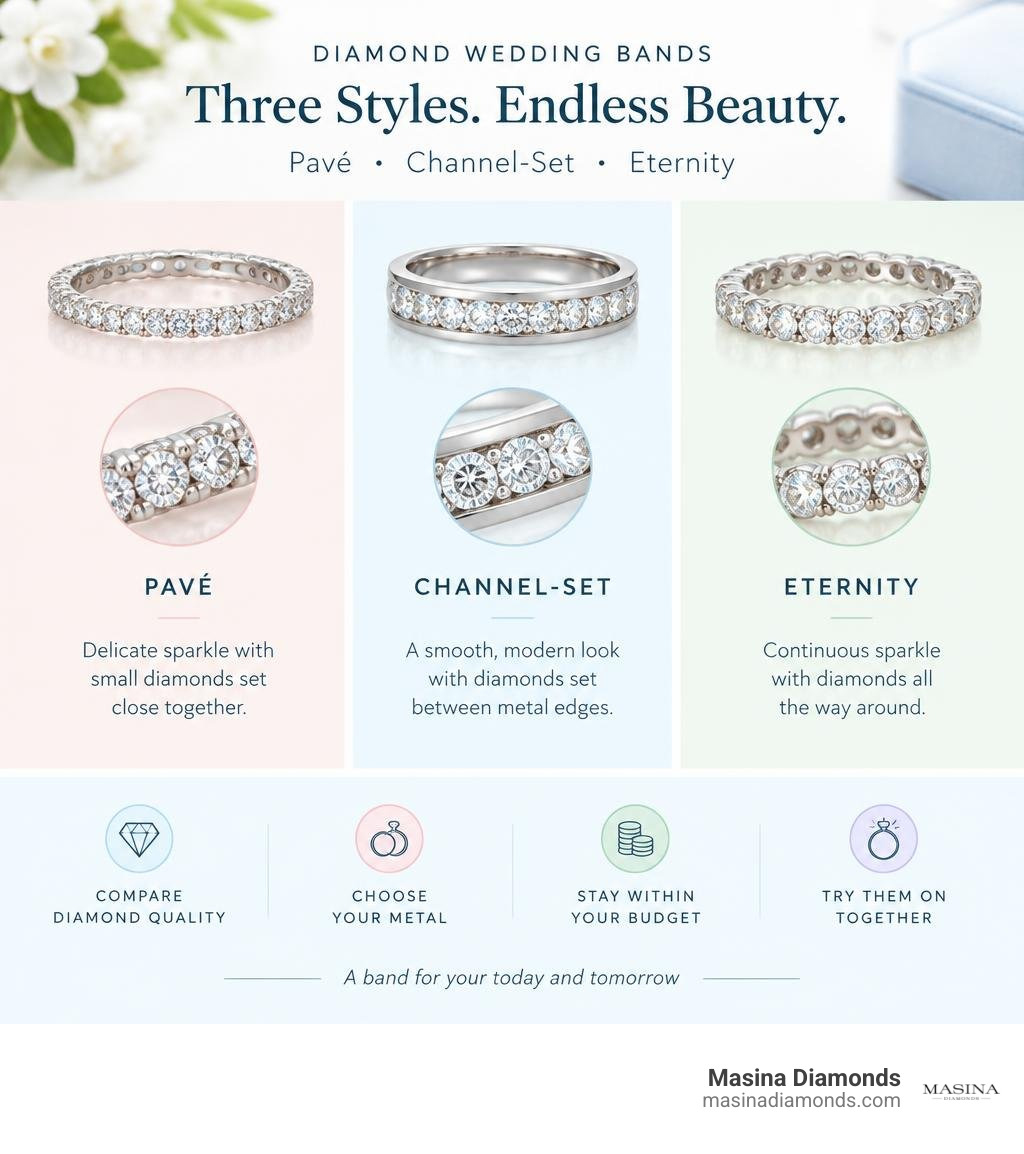
For beautiful diamond wedding rings, start with the look you love and the fit you need. A pavé band adds delicate sparkle, a channel-set band gives the stones a smooth edge, and an eternity band places diamonds all the way around. If you'll wear it beside an engagement ring, try them on together to check for gaps and rubbing. Then compare diamond quality, metal, and total price within your budget.
We're Masina Diamonds, and we've helped Atlanta customers choose and design fine jewelry for over 40 years. Our work with custom rings helps us guide you toward beautiful diamond wedding rings that feel personal and comfortable.
Essential Factors: The 4 Cs, Diamond Cuts, and Settings
Selecting the perfect wedding band is just as important as finding your engagement ring. While an engagement ring traditionally focuses on a single hero stone, a diamond wedding band balances practical daily durability, comfort, and harmonious sparkle across multiple diamonds.
Nearly 80% of brides prefer a diamond as the focal point of their bridal jewelry, and finding the right setting ensures that sparkle lasts for decades without catching on sweaters or losing stones along the way.
Popular Cuts and Settings for Beautiful Diamond Wedding Rings
Different settings alter not only the silhouette of your band but also how securely the stones are held in place. The round brilliant cut remains the undisputed classic, accounting for nearly 75% of all diamonds sold for bridal jewelry due to its unmatched light dispersion. However, fancy shapes like emerald, marquise, and oval cuts bring distinct character to modern bands.
When pairing cut with setting, consider how each design functions:
- Pavé Setting: Small round diamonds are set closely together with micro-prongs, creating a continuous pavement of light.
- Channel Setting: Diamonds are suspended between two parallel walls of precious metal. This creates a snag-free edge that is ideal for active lifestyles.
- Prong / Shared-Prong Setting: Traditional prongs elevate each stone to let maximum light enter from the sides, producing vivid brilliance.
- Bezel Setting: A fine rim of gold or platinum encircles each diamond, offering top-tier protection against bumps and accidental impacts.
- Eternity Band: Diamonds wrap 360 degrees around the finger, symbolizing never-ending love.
Whether you are designing a bespoke piece or selecting a classic 14k white gold diamond ring, the table below highlights how the most common cuts and settings compare:
| Setting Style | Best Paired Diamond Cuts | Security Level | Resizing Difficulty | Daily Comfort |
|---|---|---|---|---|
| Micro-Pavé | Round Brilliant | Moderate | Moderate | High (Smooth texture) |
| Channel | Round, Baguette, Princess | Very High | Easy to Moderate | Highest (No snagging) |
| Shared Prong | Round, Oval, Marquise | Moderate to High | Moderate | High |
| Bezel | Round, Emerald, Pear | Highest | Easy | Highest |
| Full Eternity | Round, Emerald, Radiant | High | Extremely Difficult | Moderate (Bulk on palm) |
Evaluating the 4 Cs for Maximum Sparkle
When shopping for wedding bands containing several smaller diamonds (known in the trade as melee), the 4 Cs—Cut, Color, Clarity, and Carat weight—apply slightly differently than they do for a large solitary centerpiece.

- Cut: This is the most crucial factor for brilliance. Even tiny diamonds need precise symmetry and proportions to bounce light back to the eye rather than leaking it out the bottom. Always prioritize an "Excellent" or "Very Good" cut grade.
- Color: Because melee diamonds sit side-by-side, color consistency across every stone is vital. We recommend staying in the near-colorless range (G to H) for white metals to ensure bright, icy sparkle. If your band is set in yellow or rose gold, stones in the I to J range blend warm tones naturally while saving on cost.
- Clarity: Wedding band diamonds do not need to be flawless to look stunning. Eye-clean diamonds in the VS1 to SI1 range appear crisp and free of visible inclusions to the naked eye, allowing you to maximize value without compromising appearance.
- Carat Weight: Total Carat Weight (TCW) measures the combined weight of all diamonds in the band. For a deeper breakdown of how stone proportions impact visual size, explore our guide to understanding diamond carat weight.
Top Trends in Beautiful Diamond Wedding Rings for 2026
The global diamond jewelry market was valued at over $79 billion in 2022, and bridal fashion continues to evolve toward self-expression and individualized design. In 2026, couples are moving away from cookie-cutter matching and embracing artistic, multi-dimensional styles.
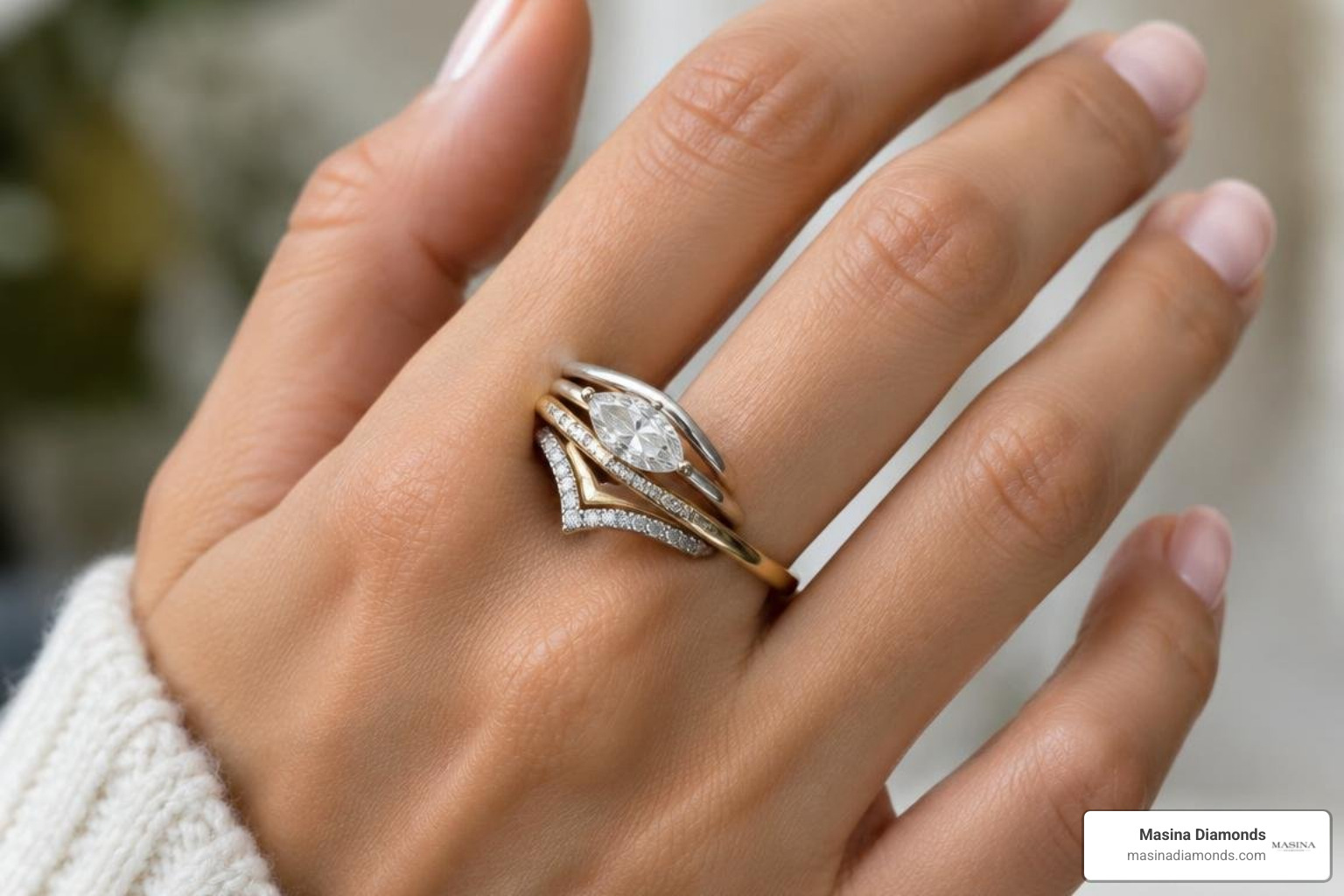
- East-West Settings: Setting elongated stones horizontally—such as baguettes, ovals, or emerald cuts—creates a sleek, low-profile line of brilliance across the finger.
- Curved and Chevron V-Bands: Designed with a pointed or contoured curve, these rings hug low-profile engagement settings cleanly while making a bold geometric statement when worn alone.
- Mixed Metals and Warm Tones: Stacking yellow gold bands with white gold or platinum engagement rings has become a sought-after aesthetic, adding warmth and visual contrast. If you are balancing design with value, there are many stunning and affordable white gold wedding bands that provide an enduring, high-end finish.
Comparing Lab-Grown and Natural Stones in Beautiful Diamond Wedding Rings
A significant shift in fine jewelry is the rising popularity of created stones. Lab-grown diamonds now account for approximately 10-15% of the diamond wedding ring market, growing rapidly each year as couples realize they share the exact physical, optical, and chemical properties of mined stones.
Natural diamonds form deep within the Earth's mantle over billions of years, prized for their finite rarity and traditional heirloom appeal. Lab-grown diamonds, on the other hand, are cultivated in advanced laboratories using High Pressure High Temperature (HPHT) or Chemical Vapor Deposition (CVD) methods that replicate those natural conditions.
| Feature | Natural Diamonds | Lab-Grown Diamonds |
|---|---|---|
| Chemical Composition | 100% Pure Carbon (10 on Mohs scale) | 100% Pure Carbon (10 on Mohs scale) |
| Visual Brilliance & Sparkle | Identical fire, brilliance, and scintillation | Identical fire, brilliance, and scintillation |
| Origin | Mined from natural geological formations | Created via advanced CVD or HPHT lab processes |
| Price Point | Higher market cost due to natural rarity | Typically 60–80% lower cost for equal specifications |
| Resale Value Retention | Retains long-term market value history | Lower secondary market resale value |
| Durability | Exceptional (Lifetime daily wear) | Exceptional (Lifetime daily wear) |
Both options yield breathtaking results. Your choice ultimately depends on whether you value geological rarity or the ability to maximize total carat weight within your target budget.
How to Match Your Wedding Ring with an Engagement Ring
Your wedding ring and engagement ring will spend years side by side. Ensuring they sit flush and complement one another prevents uneven metal wear and keeps your rings comfortable on your finger.
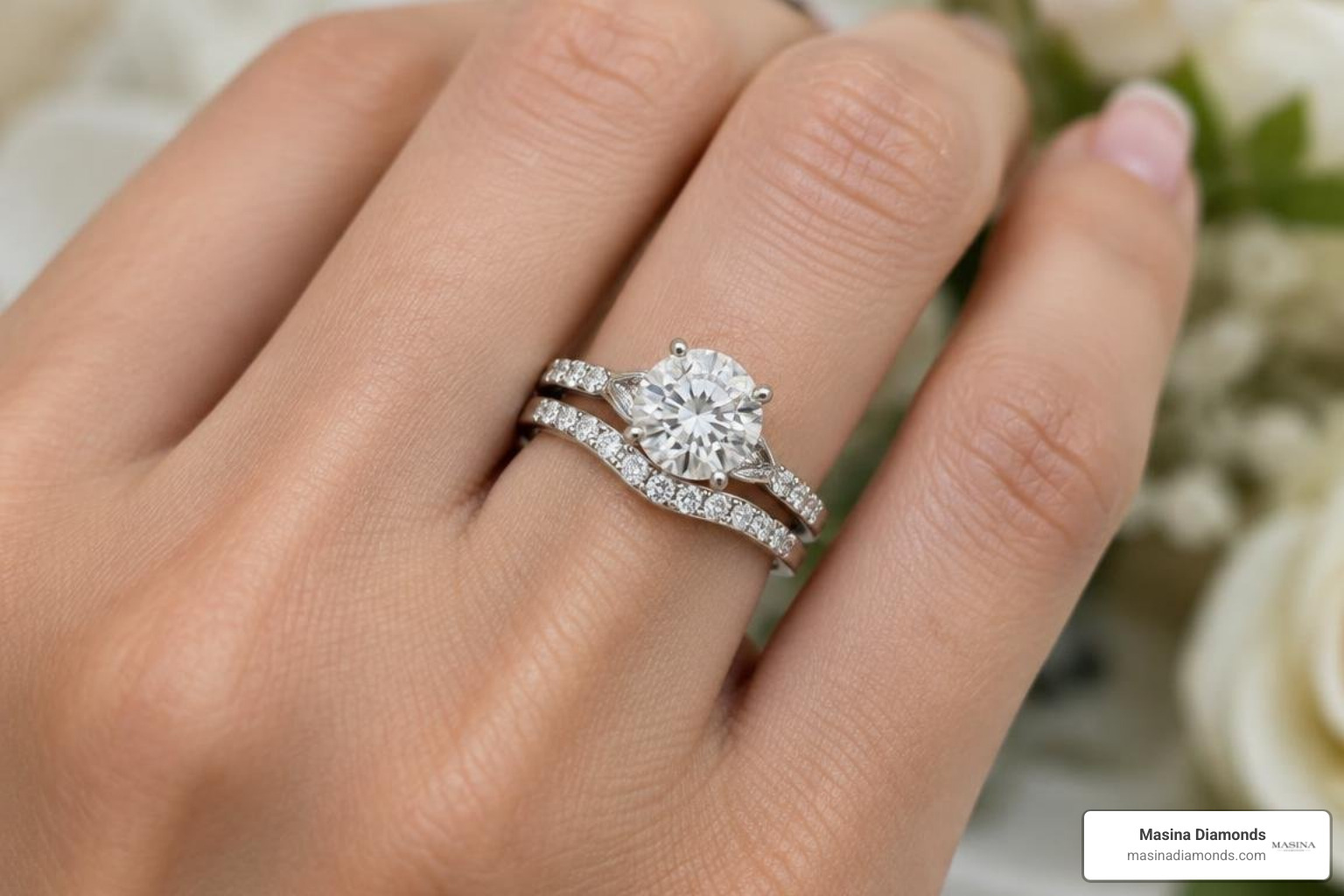
When pairing your engagement ring and marriage ring, first evaluate the setting height of your center stone:
- High-Set Engagement Rings: These feature a basket that sits elevated above the finger, allowing straight wedding bands (like classic pavé or eternity rings) to slide directly underneath for a seamless, flush fit.
- Low-Set Engagement Rings: If the center basket rests directly on your finger, a straight band will leave an open gap. Opting for a contoured or curved band ensures the diamonds trace the outline of your center stone without rubbing.
- Multi-Band Stacking: Many brides now prefer stacking two wedding bands and an engagement ring, framing the center ring with symmetrical sparkle on both top and bottom for milestone anniversaries.
Coordinating Matching Sets for Couples
Modern bridal sets are no longer limited to carbon-copy rings. Instead, couples frequently coordinate complementary design motifs, matching metal colors, or shared textures.
When exploring bride and groom matching rings, you might echo the pavé accents of a bridal band by adding subtle channel-set diamonds or brushed bevels to a groom's ring. A wide selection of men's white gold wedding bands offers sleek, comfortable profiles that harmonize effortlessly with brilliant bridal sets.
Budgeting, Sizing, and Long-Term Maintenance
In the U.S., the average cost of a diamond wedding ring is approximately $5,500 to $6,000, though beautiful options exist across a wide range of price points depending on metal selection, diamond type, and total carat weight.
Getting the Perfect Ring Size
Because wedding rings have wider profiles than slender engagement shanks, precision sizing is vital:
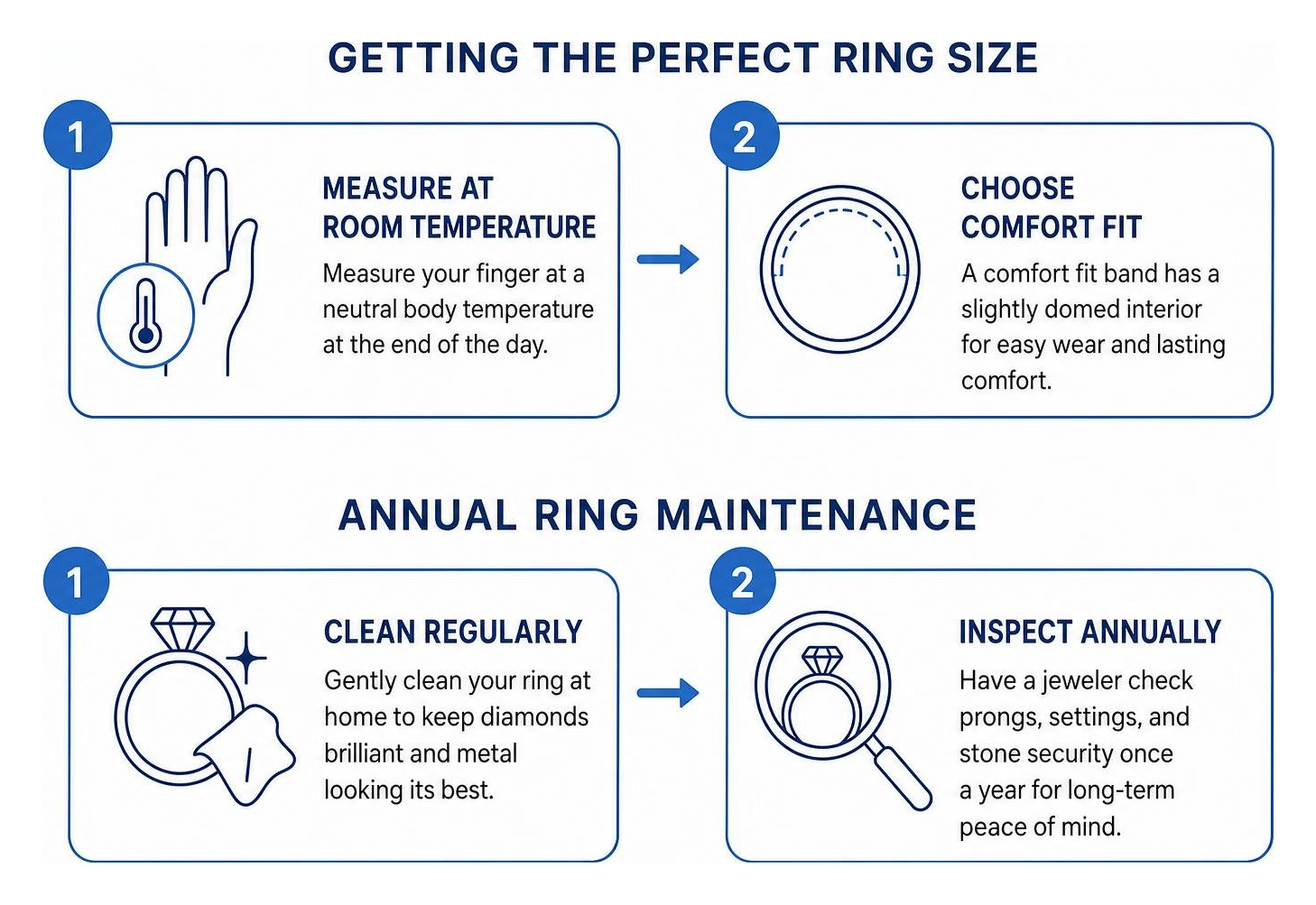
- Measure at Room Temperature: Fingers swell in warm weather and contract in the cold. Measure your finger at a neutral body temperature at the end of the day.
- Choose Comfort Fit: A "comfort fit" band features a slightly domed interior surface, allowing the ring to slide over knuckles with ease and sit softly against your skin.
Maintaining Your Sparkle for a Lifetime
Lotions, soaps, and natural skin oils create a thin film over diamonds, muting their refractive brilliance over time.
- Home Cleaning: Soak your ring in warm water mixed with a few drops of mild dish soap for 15 minutes. Gently scrub behind the stones using an extra-soft toothbrush, rinse with clean water, and dry with a lint-free microfiber cloth.
- Professional Inspections: Schedule a checkup with trusted fine jewelers annually. An artisan will use ultrasonic cleaners, check prong tension, and polish out minor surface scratches. If you're exploring custom fine jewelry craftsmanship or looking for premier local Atlanta area fine jewelers, an expert touch keeps your heirloom pieces secure and luminous.
Frequently Asked Questions About Diamond Wedding Rings
How much should you spend on a diamond wedding band in 2026?
There is no mandatory rule for ring budgets. Spend what feels comfortable for your financial situation. Simple diamond-accented bands generally start between $800 and $1,500, while substantial multi-carat eternity bands and intricate platinum settings range from $3,000 to over $7,000.
Can you resize a diamond eternity wedding band?
Full eternity bands cannot be traditionally resized because diamonds and prongs encircle the entire circumference. If your ring size changes, sizing beads can make a loose ring fit more snugly, but enlarging it requires remaking the setting. For this reason, 3/4 eternity or half-eternity bands are popular alternatives that leave a smooth metal sizing bar at the base.
How do you clean and protect a diamond wedding ring daily?
Remove your diamond rings before lifting heavy weights, gardening, using harsh household bleach, or swimming in chlorinated pools. For day-to-day cleaning, warm soapy water and a soft-bristled brush will safely remove everyday residues and keep your stones brilliant.
Conclusion
Your wedding ring is more than a piece of fine jewelry—it is an enduring reflection of your shared story and commitment. Whether you fall in love with a delicate pavé chevron, a bold emerald-cut eternity band, or a custom-designed matching bridal set, prioritizing quality craftsmanship ensures your ring shines for generations.
At Masina Diamonds, our family brings more than 40 years of dedicated jewelry expertise to help you build a piece tailored to your vision. Using our interactive 3D Ring Builder and bespoke design services, we make it effortless to turn your dream ring into reality.
Ready to begin your journey? Take the next step and explore custom engagement and wedding rings in Atlanta with us today.