How to Choose a Solitaire Engagement Ring
Solitaire engagement rings feature one center stone without side stones. To choose one, start with the stone you love, then compare how different settings hold and show it. A prong setting leaves more of the stone visible; a bezel wraps its edge in metal for a more protected, low-profile look. The band’s metal and shape complete the design.
We’re Masina Diamonds, a family-owned Atlanta jeweler with over 40 years of experience crafting engagement rings, including solitaire engagement rings. In this guide, we’ll help you weigh the choices that matter most for your style, daily life, and budget.
What Defines Classic Solitaire Engagement Rings?
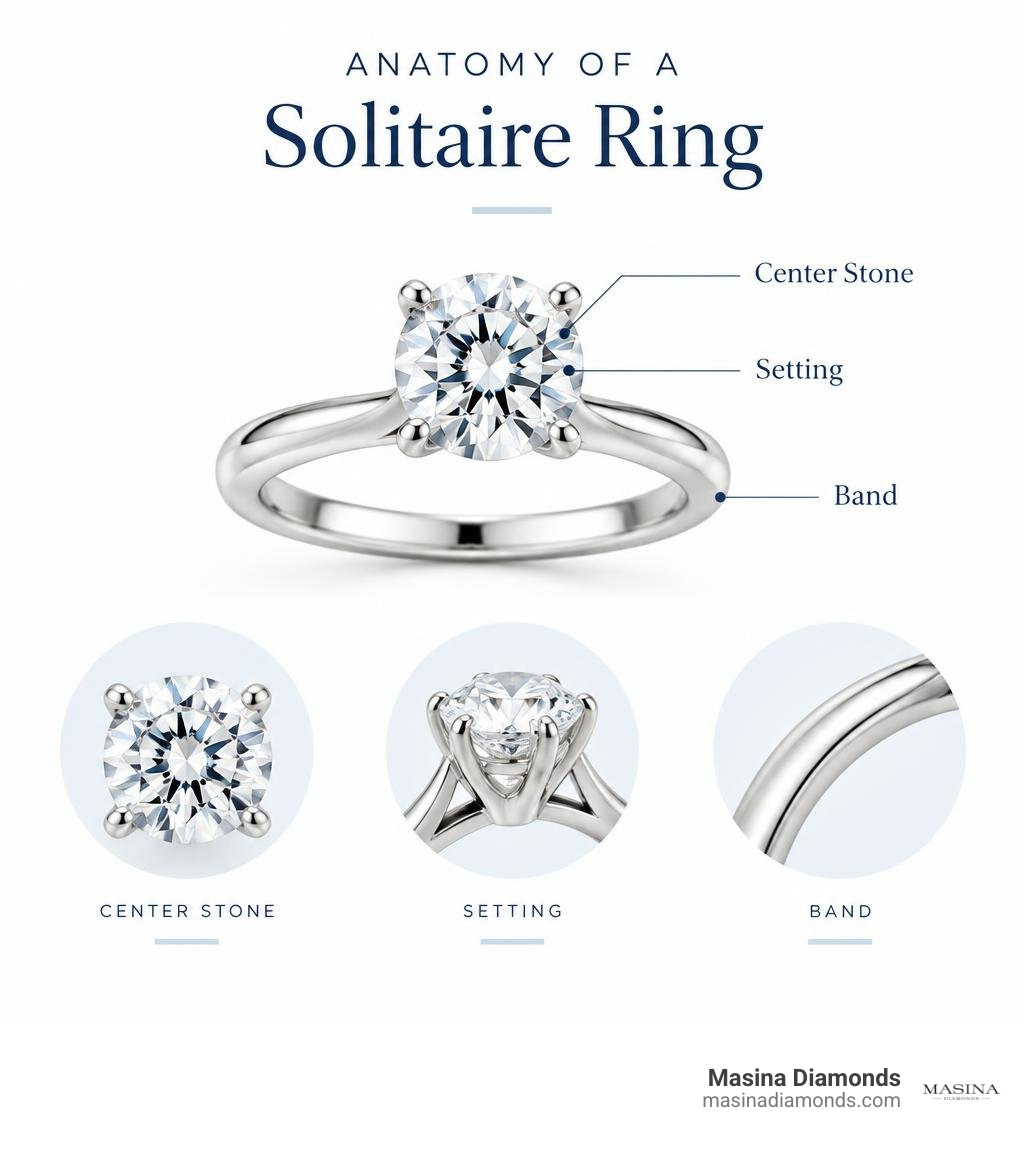
A solitaire engagement ring is the purest expression of fine jewelry design. Its hallmark is a single focal gemstone set cleanly onto a precious metal band without side stones, halos, or pave clusters distracting the eye. This minimalist approach places every ounce of attention on the center gem, creating an uncluttered aesthetic that feels both modern and enduring.
The structural anatomy of a solitaire is deceptively simple: it consists of the center stone, the head or mounting that secures the gem, and the shank (the band that encircles the finger). Despite this streamlined design, subtle variations in bridge height, prong curvature, and band profile can dramatically alter the look and feel of the piece. If you are exploring the foundational elements of bridal jewelry, reviewing a comprehensive engagement ring guide can help you understand how these structural choices come together.
Defining Characteristics and Timeless Appeal
Solitaire mountings have reigned as the world's most coveted bridal style for over a century, with roughly 40% of brides-to-be continuing to prefer this iconic design. Today, solitaire rings account for approximately 25% of all engagement ring sales in the United States.
Their lasting popularity comes down to versatility and elegance. Because there are no contrasting accent stones, the design works effortlessly with any personal fashion sense—from understated and athletic to bold and glamorous. A solitaire also offers maximum versatility for future anniversaries, pairing smoothly with everything from ultra-thin micropave bands to dramatic gemstone jackets. Exploring diverse beautiful diamond ring designs shows how a single focal stone can adapt across generations without ever feeling dated.
Pros and Cons of Solitaire Engagement Rings
While the solitaire is undeniably iconic, it is important to evaluate how its distinct structure aligns with your lifestyle and preferences.
| Aspect | Advantages | Disadvantages |
|---|---|---|
| Aesthetics | Unobstructed view of the stone; clean, timeless silhouette | No side stones to add extra surface area or sparkle |
| Maintenance | Fewer prongs and crevices; quick and straightforward to clean | The elevated center stone can be vulnerable to direct impact |
| Budget | More of your budget goes directly toward the quality of the center diamond | Requires a higher clarity and cut grade since flaws cannot hide among accent gems |
| Styling | Seamlessly pairs with almost any wedding band design | Minimalist bands can look delicate next to very heavy statement bands |
Comparing Solitaire Setting and Mounting Options
The mounting style you choose controls both the visual character and the structural durability of your ring. The setting dictates how high the gem rests off your hand, how much light passes through the facets, and how securely the gem is held during daily activities.
Prong Settings: Classic Four-Prong vs. Six-Prong
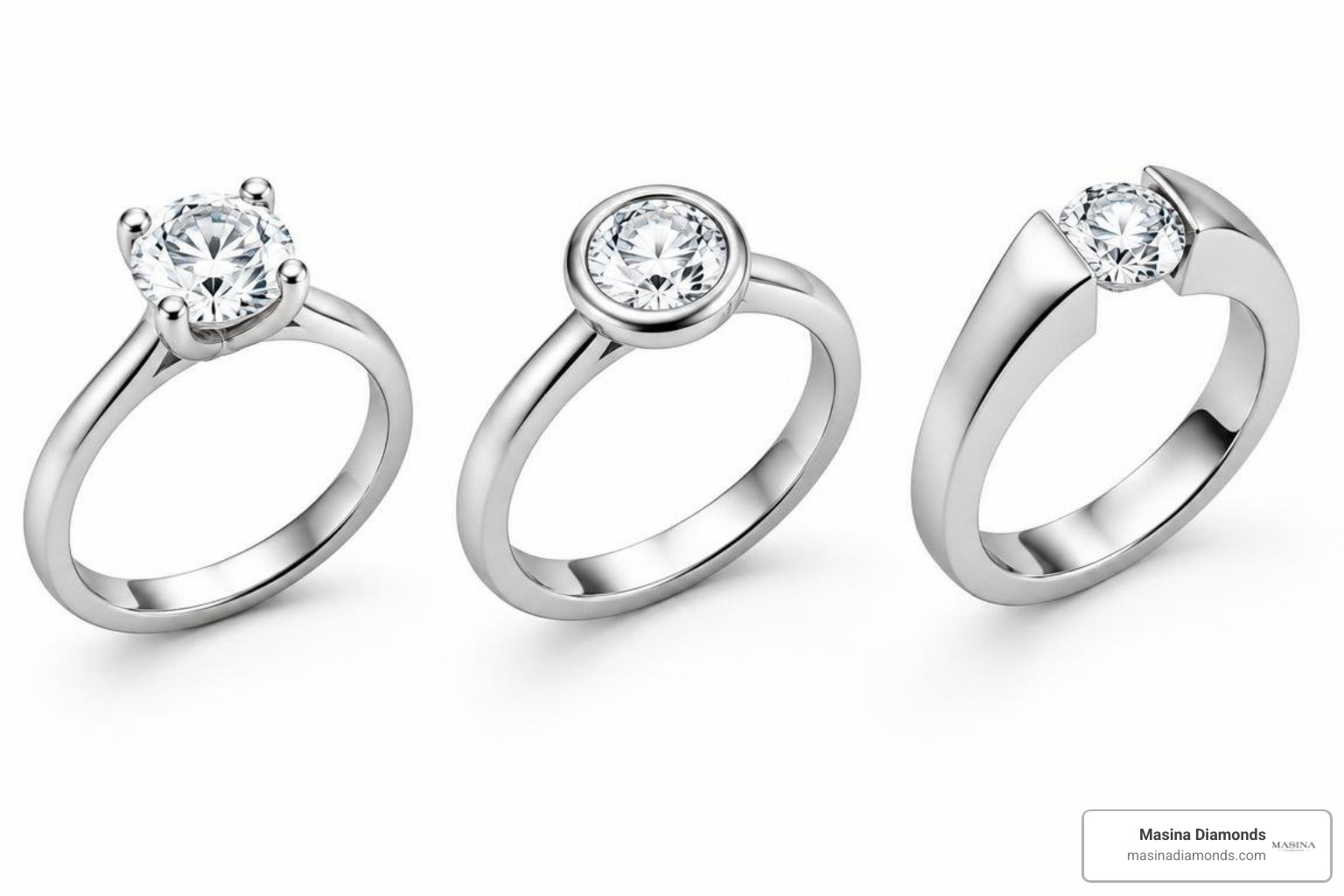
Prong mountings use slim metal claws to hold the gemstone securely at its girdle while exposing the maximum surface area to incoming light.
- Four-Prong Mountings: This style provides a breezy, open view that lets light enter through the sides of the diamond. On a round brilliant gem, four prongs can give the stone a subtle, squared-off silhouette. While it leaves more diamond surface visible, losing or bending one prong poses an immediate risk of the stone dislodging.
- Six-Prong Mountings: Famous for maximum security, six evenly spaced prongs create a rounder, softer outline that mirrors the circular shape of round brilliant cuts. If a single prong is damaged, the remaining five prongs will usually keep the diamond in place until you reach a jeweler. The trade-off is slightly more metal coverage over the stone.
Bezel, Tension, and Cathedral Mountings
Beyond traditional prongs, several mounting variations offer distinct benefits for daily wear:
- Bezel Settings: A smooth rim of precious metal entirely encircles the diamond's perimeter. It creates a modern, snag-free profile that offers superior protection against chips and bumps, making it the premier choice for healthcare professionals, athletes, and hands-on lifestyles.
- Tension Settings: By using the natural spring tension of the metal band to hold the diamond in place, this setting creates the breathtaking illusion that the gem is floating in mid-air.
- Cathedral Mountings: Featuring elegant metal arches that sweep up from the shank to flank the center basket, cathedral settings elevate the stone, add architectural depth, and provide extra structural stability.
| Mounting Style | Security Level | Profile Height | Sparkle / Light Exposure | Best Suited For |
|---|---|---|---|---|
| Classic Prong | Moderate to High | High | Maximum | Traditionalists who want maximum light and sparkle |
| Bezel | Exceptional | Low to Medium | Moderate (top-focused) | Active lifestyles, athletes, and minimalists |
| Tension | High (when custom fit) | Medium to High | High | Modern design lovers seeking an artistic look |
| Cathedral | Very High | High | Maximum | Those who want a taller, regal profile with extra stability |
Selecting the Center Stone and Precious Metals
Because a solitaire strips away secondary distractions, your choice of center stone and metal foundation takes center stage. Navigating our engagement ring stones guide helps clarify the physical differences between natural diamonds, lab-grown diamonds, and vibrant colored gemstones like sapphires and emeralds.
Evaluating Diamond 4Cs for Solitaire Engagement Rings
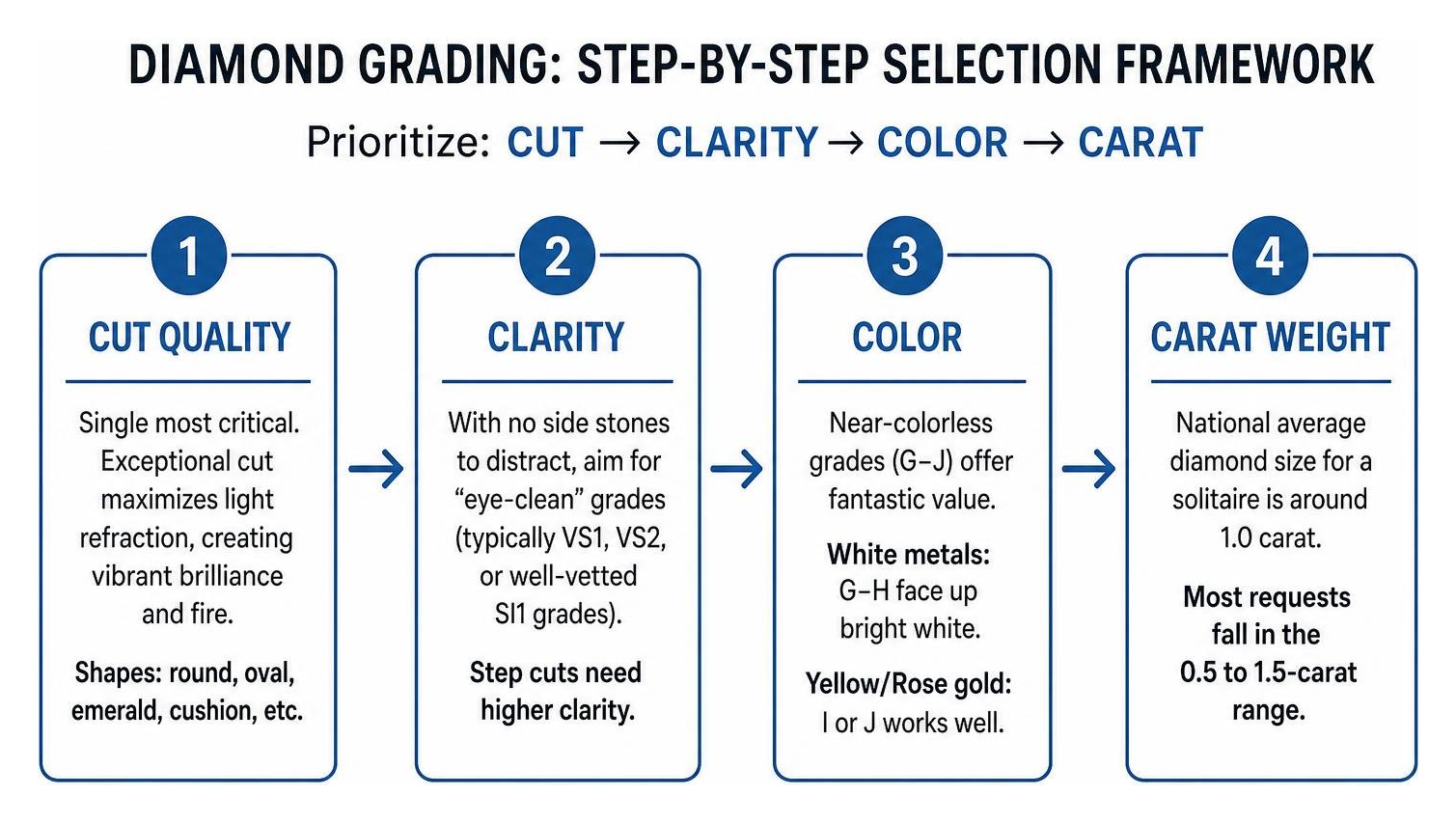
When choosing a diamond for a solitaire, the 4Cs—Cut, Clarity, Color, and Carat weight—must be balanced carefully:
- Cut Quality: Cut is the single most critical factor. An exceptional cut maximizes light refraction, creating vibrant brilliance and fire that can mask slight body color and microscopic inclusions. Familiarizing yourself with different types of diamond cuts ensures you select a shape—such as round, oval, emerald, or cushion—that matches your style.
- Clarity: Because there are no side stones to distract the eye, aim for an "eye-clean" grade (typically VS1, VS2, or well-vetted SI1 grades). Step cuts like emerald and Asscher shapes have wide, clear tables that require higher clarity grades than brilliant cuts.
- Color: Near-colorless grades (G through J) offer fantastic value. When set in white gold or platinum, stones in the G–H range face up bright white without the premium price tag of D–F grades. If you choose yellow or rose gold, you can comfortably drop to an I or J grade, as the metal’s warm hue naturally masks warm body tones.
- Carat Weight: The national average diamond size for a solitaire sits right around 1.0 carat, with the 0.5 to 1.5-carat range representing the bulk of bridal requests. Reviewing our diamond carat weight guide alongside our overview of 1 to 3 carat diamond ring options helps balance visual finger coverage against your overall budget.
Choosing Precious Metals: Platinum, White Gold, and Yellow Gold
The metal band serves as both the physical anchor and the artistic frame for your center gem:
- Platinum: A naturally white, dense metal that is hypoallergenic and exceptionally durable. Rather than losing metal when scratched, platinum develops a soft, satin patina over time that can easily be polished back to a mirror finish.
- Yellow Gold: A warm, classic option that contrasts crisply against bright white diamonds. Opting for durable 14kt engagement rings provides great scratch resistance for daily wear, while 18kt yellow gold offers a richer, more saturated golden tone.
- White Gold: Created by alloying pure gold with white metals and plating it with rhodium, white gold provides a sleek, bright look similar to platinum at a more accessible price point. You can read more in our white gold engagement rings guide regarding regular rhodium replating to maintain its icy white sheen.
- Rose Gold: Alloyed with copper to achieve its blush tint, rose gold brings romantic, vintage warmth that looks striking on any skin tone.
Solitaire vs. Halo and Three-Stone Ring Styles
When narrowing down your silhouette, comparing a solitaire against other pillar styles helps put its unique strengths into perspective.
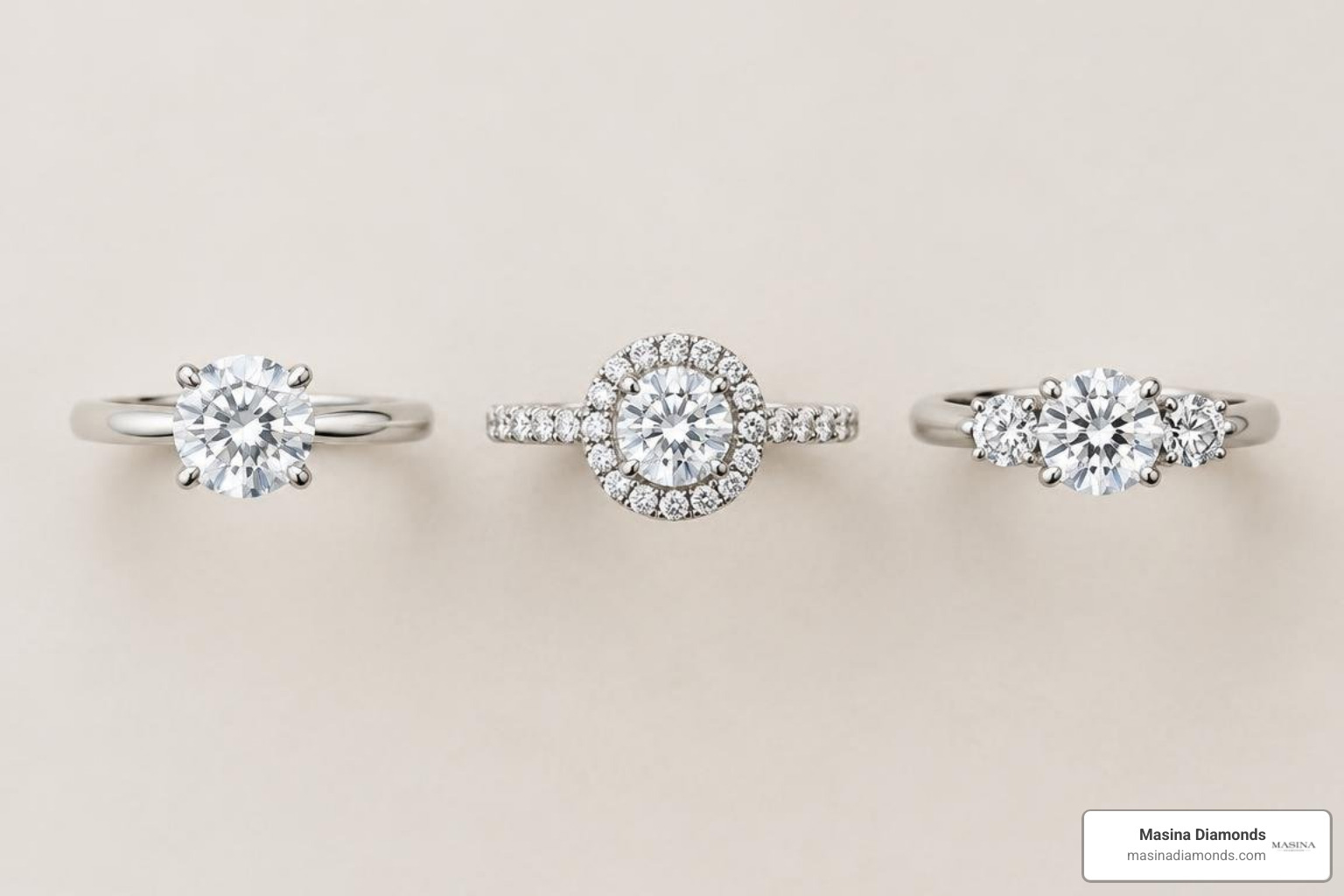
- Halo Rings: Halo designs surround the center diamond with a perimeter of smaller micropave diamonds. This can make the center stone appear up to half a carat larger to the naked eye. However, halos require more upkeep, as their tiny prongs can loosen over years of wear.
- Three-Stone Rings: Featuring a center gem flanked by two side stones, this style symbolizes a couple's past, present, and future. It provides broad finger coverage, but divides your budget across three primary stones instead of concentrating it into one larger centerpiece.
| Ring Style | Budget Allocation | Maintenance Needs | Visual Impact |
|---|---|---|---|
| Solitaire | 80–90% dedicated to center gem quality | Low (4 to 6 prongs or solid bezel) | Clean, elegant, and timeless focus |
| Halo | Balanced between center stone and pave melee | Moderate to High (inspecting accent prongs) | Maximized surface area and intense micro-sparkle |
| Three-Stone | Split across 3 primary gems | Moderate (multiple primary prong sets) | Broad finger coverage with deep symbolic meaning |
Pricing, Maintenance, and Modern Design Trends
The average cost of a solitaire engagement ring is around $5,500, with the center diamond accounting for roughly $3,500 of that total. Because the mounting is minimalist, you can direct the vast majority of your budget into acquiring a larger or higher-grade certified diamond.
Modern solitaire designs frequently incorporate subtle, customized accents that add personality without cluttering the profile:
- Hidden Halos and Under-Galleries: A discreet ring of micropave diamonds tucked directly beneath the center stone's girdle, visible only from profile angles.
- Knife-Edge Bands: A shank with a sharp, triangular cross-section that catches the light and makes the band appear thinner from above.
- East-West Orientations: Setting elongated fancy shapes—such as emerald, marquise, or oval diamonds—horizontally across the finger rather than vertically.
To keep your solitaire in pristine condition, soak it weekly in warm water mixed with mild dish soap and gently scrub around the prongs using a soft baby toothbrush. We also recommend bringing your ring to a professional bench jeweler once a year for ultrasonic cleaning and prong inspection to prevent stone loss. If you want to personalize subtle details from scratch, exploring our custom jewelry design process is the perfect way to craft an heirloom-quality ring.
Frequently Asked Questions About Solitaire Rings
What is the most popular diamond shape for a solitaire?
The round brilliant cut remains the clear favorite, accounting for roughly 60% of all solitaire diamond sales due to its unrivaled light reflection. Oval cuts follow closely behind, prized for their finger-elongating proportions and large surface tables.
How much should you spend on a solitaire engagement ring?
There is no universal rule for ring spending. The best approach is to choose a comfortable overall budget, select your preferred precious metal band, and allocate the rest toward a diamond that balances cut, clarity, and carat weight to your standards.
How do you pair a wedding band with a solitaire ring?
Solitaires pair easily with almost every band style. High-set prong mountings sit flush alongside straight diamond eternity bands. Low-profile bezel rings pair beautifully with contoured curved bands or open gap spacers, as detailed in our engagement ring and wedding band pairing guide.
Conclusion
A solitaire engagement ring remains an unbeatable symbol of love, combining timeless elegance, easy daily wear, and design versatility. By choosing the right mounting security, metal alloy, and center stone dimensions, you can create a ring that will look just as stunning decades from now as it does on the day of your proposal.
At Masina Diamonds, our family brings over four decades of bench craftsmanship to every custom piece we build in our Atlanta showroom. Using our interactive 3D Ring Builder, we work side-by-side with you to visualize every prong, contour, and setting angle before our jewelers bring it to life. Contact our team today or explore our custom collection of solitaire engagement rings in Atlanta to craft your one-of-a-kind ring.