February's Birthstone Is Amethyst
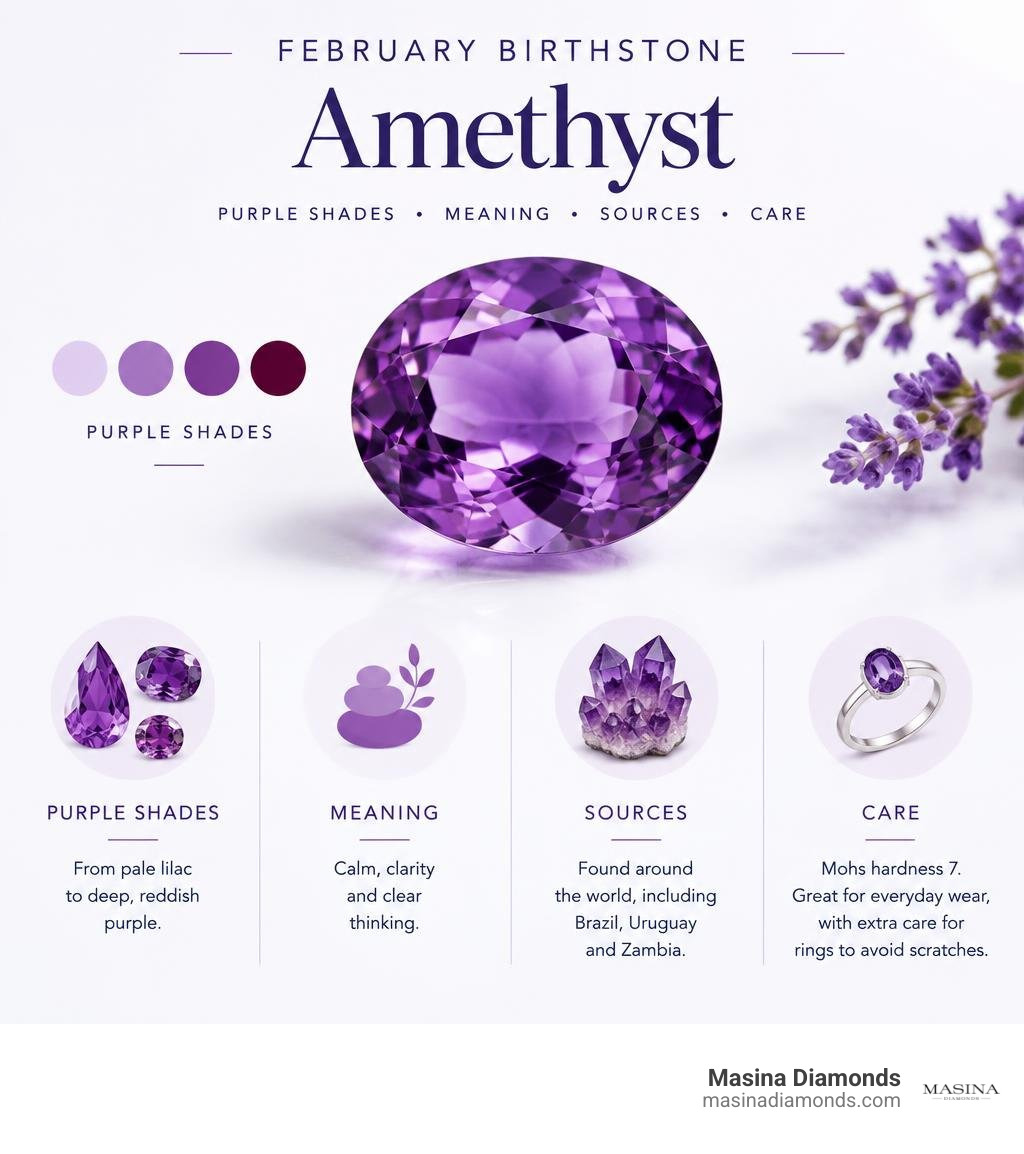
The birthstone for the month of February is amethyst, a purple variety of quartz. Its color ranges from pale lilac to deep, reddish purple. It has a Mohs hardness of 7, so it can be worn in jewelry, though rings need some care to avoid scratches.
Amethyst has long been linked with calm and clear thinking. Once prized by royalty, it is now widely available in shades that suit many styles.
At Masina Diamonds, we bring over 40 years of Atlanta fine-jewelry experience to explaining the birthstone for the month of February. Here is a quick look at its color, meaning, sources, and care before we explore each in detail.
What Is the Birthstone for the Month of February?
Amethyst is the February birthstone in both the traditional and modern lists. Chemically, it is quartz, which means silicon dioxide. What makes it purple is a bit of iron that sneaks into the crystal as it grows, plus natural irradiation underground that creates purple color centers. More iron and longer irradiation generally mean a deeper purple.
Amethyst is also the gem traditionally given for the sixth wedding anniversary, so February birthdays and anniversaries share a favorite stone. If you want a deeper look at the stone itself, our February birthstone guide covers it, and GIA's amethyst birthstone overview offers a laboratory perspective.
What color is the birthstone for the month of February?
Amethyst comes in a lovely range:
- Light lilac: soft and airy. Very pale stones are sometimes called rose de France.
- Royal purple: the classic, rich shade most people picture.
- Reddish purple: deep, wine-like stones, often the most prized.
Amethyst can show color zoning, which means bands or patches of deeper and lighter purple inside one crystal. In general, vivid, well-saturated color is more valuable than pale color. Some stones from Siberia's historic sources became famous for deep purple with flashes of blue and red, and the trade still uses "Siberian" to describe that look, even when a stone comes from elsewhere. For more shades across every month, see our February birthstone colors guide.
How durable is the birthstone for the month of February?
At 7 on the Mohs scale, amethyst is sturdy enough for everyday jewelry. It is softer than diamond (10) and ruby (9), though, so it can pick up scratches from harder materials and may eventually need repolishing. Here is what to keep in mind:
- Pointed corners: protect the sharp edges of faceted stones from knocks.
- Heat and light: excessive heat or long exposure to strong light can fade color or remove it entirely.
- Natural and lab-created: both are real amethyst with the same properties (more on that below).
- Heat treatment: this is the most common enhancement, and the color change is permanent. Heat-treated amethyst may be slightly more brittle.
Amethyst Meaning, History, Symbolism, and Folklore

The name comes from the Greek amethystos, often translated as "not drunk" or a remedy against drunkenness. The wine-like color tied the stone to Bacchus, the Roman god of wine. Ancient Greeks reportedly drank from amethyst goblets, hoping to stay clear-headed at the party. Not a bad party trick, though we cannot promise it works on modern cocktails.
A charming Greek legend tells of a maiden, Amethyste, who was turned into a clear stone by Artemis to escape Dionysus. He poured wine over the stone in frustration, and it blushed purple.
Over the centuries, people believed amethyst kept wearers quick-witted in battle and business, and Renaissance Europeans thought it calmed lovers overrun by passion. Ancient Egyptians used it in amulets for protection, medieval bishops wore amethyst rings as a sign of spiritual devotion, and Tibetan Buddhists used amethyst beads for meditation malas. Camillo Leonardi, an Italian writer of the period, claimed it sharpened the mind and chased away evil thoughts. Purple dye was once costly, so the color itself became a symbol of royalty.
Amethyst is linked to the zodiac signs Aquarius and Pisces. Today it is also associated with the third eye and crown chakras in crystal-healing circles. Those metaphysical claims are cultural beliefs rather than scientific facts, but they explain why many people find the stone meaningful. Other traditional February associations include the primrose as the month flower, the angel Barchiel, the apostle Andrew, and Chandrakanta as the Hindu month gem. Folklore even says dreaming of receiving an amethyst brings good luck.
The name February itself comes from the Latin februa, meaning to cleanse, tied to the Roman purification festival Lupercalia. A purifying stone for a purifying month is a tidy match.
What does the February birthstone mean?
Amethyst is most often tied to mental clarity, inner strength, and calm. An old birthstone poem promises the February-born sincerity and peace of mind, with freedom from passion and care for those who wear amethyst. Wearing it for a February birthday can be a personal symbol of empowerment, courage, and balance. What it means to you is up to you, and that is part of the charm.
Which royals wore amethyst?
Amethyst has a long royal résumé. Catherine the Great of Russia (1729-1796) adored it and wore amethyst necklaces, earrings, and other ornaments. Queen Elizabeth II is also noted for wearing it, and amethyst is among the gems in St. Edward's Crown, made in 1661 for the UK Crown Jewels. Several royal amethyst parures, including Queen Mary's, have since passed through auction houses.
In 1953, Wallis, Duchess of Windsor wore a lavish amethyst bib necklace to a gala in Versailles. It featured 28 step-cut amethysts, one oval faceted amethyst, a large heart-shaped amethyst, turquoise cabochons, and brilliant-cut diamonds on a rope-like gold chain. If that sparks ideas, our look at birthstone jewelry styles shows how to bring a bit of that drama into modern pieces.
Where Amethyst Is Found and What Are the February Birthstone Alternatives?

Russia was the major source of amethyst until the 19th century, when large deposits in Brazil changed everything. Amethyst had been as rare as ruby or emerald, and the new supply made it abundant and affordable. Today, the most important sources are in Africa and South America:
- Brazil (Rio Grande do Sul): amethyst often forms in geodes, hollow crystal-lined rocks created from gas bubbles in cooling lava. Some are big enough to stand in.
- Zambia (Kariba mine): one of the world's largest producers, known for richly saturated color.
- Bolivia (Anahí mine): source of ametrine, a bicolored amethyst and citrine crystal. Legend says a Spanish conquistador received the mine as dowry when he married a princess of the Ayoreo tribe in the 1600s. It was forgotten for about three centuries and rediscovered in the 1960s.
- Arizona (Four Peaks mine): located 46 miles (74 km) outside Phoenix, it yields fine dark purple and purplish red crystals from hot, remote terrain.
What are the alternative birthstones for February?
Amethyst is the widely recognized February stone, but some lists offer other choices:
- Bloodstone (heliotrope): a dark green chalcedony with red or orange hematite flecks, rooted in Tibetan astrological tradition. Many lists place it in March instead.
- Onyx: a chalcedony best known in black, though most is dyed. True onyx has black or white bands.
Lists differ because traditional birthstones took shape in Poland between the 16th and 18th centuries, and the National Association of Jewelers released a standardized modern list in 1912. Many people today pick from either list based on taste and budget. See our birthstones by month list for the full picture.
How can you choose an amethyst?
Think of these factors:
- Color saturation: vivid, even purple is most valuable. Pale stones cost less.
- Cut: a good cut shows off color and sparkle without leaving dark or washed-out areas.
- Clarity: amethyst is usually clean to the eye, so visible inclusions are worth questioning.
- Carat weight: amethyst does not see a dramatic jump in price per carat and is available in many sizes, so you can go bold.
- Setting: choose a design that protects corners and edges.
- Disclosure: ask whether the stone is natural or lab-created, and whether it has been heat treated. Merchants are required to tell you if a gem is natural or synthetic.
How to Choose, Wear, and Care for February Birthstone Jewelry
Amethyst works in rings, pendants, and earrings. Yellow, white, and rose gold all flatter it, and it pairs nicely with diamonds and pearls. A pendant or earrings face fewer knocks than a ring, which makes them great choices for daily wear. For a sixth-anniversary gift or a February birthday, a custom piece is a lovely way to make the stone personal. Our 3D Ring Builder lets you preview a design before it is made, and our family has crafted fine jewelry in Atlanta for over 40 years.
To keep amethyst looking its best:
- Clean it with a soft brush, mild soap, and lukewarm water. This is the safest method. An ultrasonic cleaner is generally fine, but never use steam.
- Avoid excess heat and prolonged sunlight, which can fade the color.
- Store it apart from diamonds, rubies, and sapphires so they do not scratch it.
- Skip wearing it to the beach every day, and guard pointed corners.
Our birthstone color guide can help you coordinate amethyst with other stones.
Frequently Asked Questions About the February Birthstone
Is amethyst suitable for everyday wear?
Yes. At Mohs 7, amethyst suits everyday use, including rings. Over time it may pick up scratches and need occasional repolishing, so remove it for rough tasks and store it carefully.
Can heat change amethyst's color?
Yes, and the change is permanent. Heat can turn some amethyst yellow (citrine), green (prasiolite), or colorless. It can lighten very dark stones and remove brownish tones, but it cannot make pale amethyst darker.
Is lab-created amethyst real amethyst?
Lab-created amethyst has the same chemical composition and physical properties as natural amethyst, and has been known since the 1970s. Telling them apart can take advanced gemological testing, which is why seller disclosure matters.
Conclusion
The February birthstone is amethyst: purple quartz in shades from soft lilac to deep reddish purple, rich with stories of sobriety, courage, calm, and royalty. It is durable enough for daily wear with sensible care, and affordable enough that nearly anyone can enjoy it. As a family-owned Atlanta jeweler, we are happy to help you choose or design a piece you will love. When you are ready to explore other months, explore the complete birthstones-by-month guide.