May Birthstone Colors: Emerald's Rich Green Spectrum
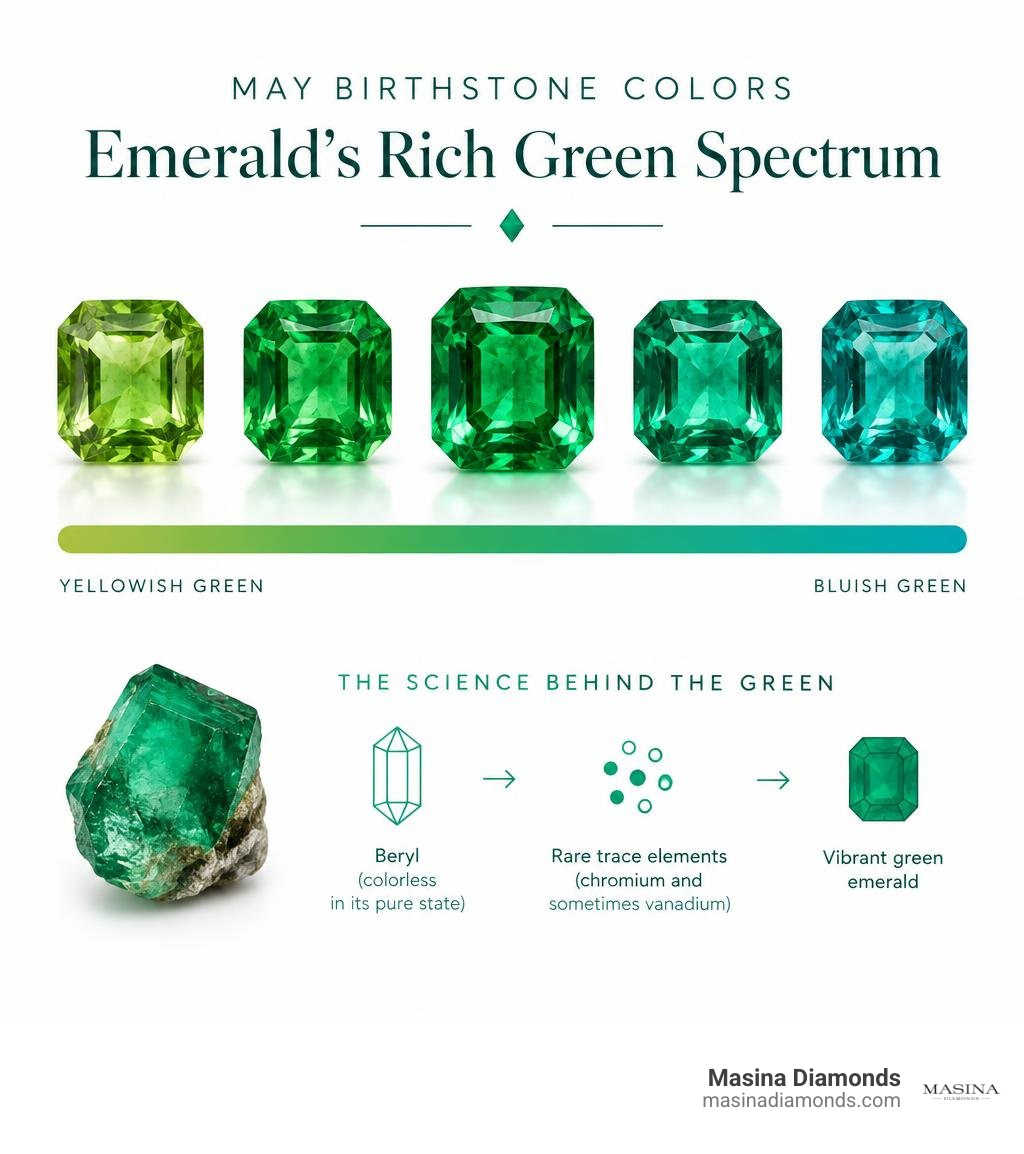
The official May birthstone is emerald, known for its rich green color. May birthstone colors can range from slightly yellowish-green to bluish-green, but the most prized emeralds show a vivid, strongly saturated green with a medium to medium-dark tone.
Emerald is a green variety of the mineral beryl. Tiny traces of chromium, and sometimes vanadium, give it its signature color. That lush hue has long made emerald a natural symbol of spring, renewal, love, and lasting commitment - a meaningful choice for a custom engagement ring or May birthday gift.
Unlike peridot's brighter, more yellow-green look, emerald usually has deeper color and may show natural internal features called jardin, the French word for garden. These inclusions are common in natural emeralds and are part of what makes every stone individual.
Masina Diamonds has created custom jewelry and engagement rings in Atlanta for more than 40 years. We help clients make sense of birthstone colors May is known for, from selecting an emerald's shade to choosing a setting that suits real-life wear.
Understanding the Official Birthstone Colors May Celebrates: The Emerald Spectrum
To understand what gives an emerald its legendary allure, it helps to look at the underlying science. Emerald belongs to the beryl mineral family—the exact same chemical group as aquamarine and morganite. In its pure state, beryl is completely colorless (goshenite). The vibrant green shades we celebrate during May happen only when rare trace elements infiltrate the crystal lattice during subterranean geological formation.
Chromium provides the primary vibrant green coloration. Vanadium also contributes rich green hues, while trace amounts of iron introduce subtle, cool blue undertones or warmer, yellowish modifiers. When evaluating gems across our comprehensive birthstone colors guide 2026, the ideal emerald exhibits an even, vibrant green with pure spectral dominance.
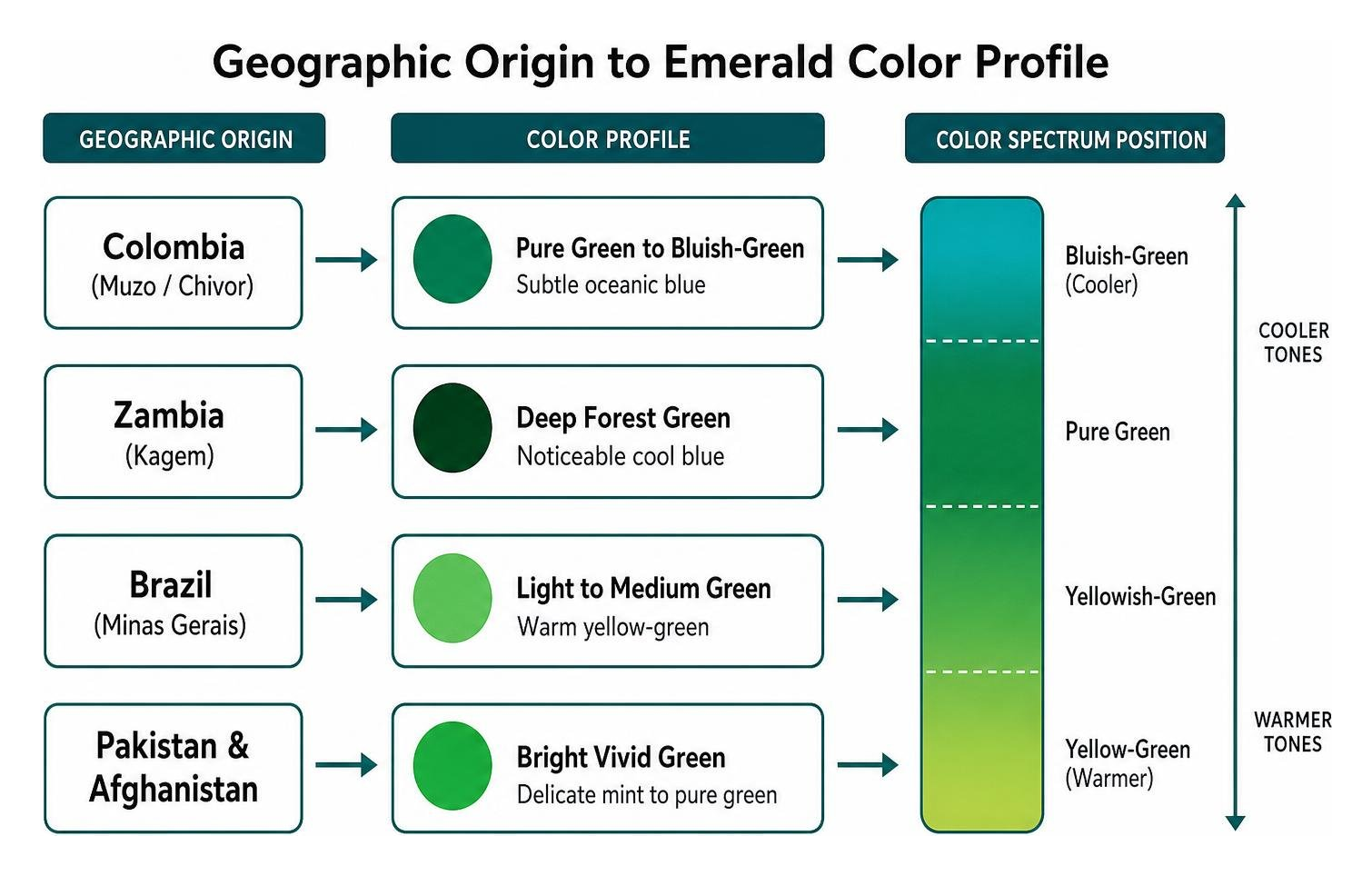
| Emerald Origin | Primary Hue | Secondary Undertone | Saturation Level | Notable Visual Characteristics |
|---|---|---|---|---|
| Colombia (Muzo / Chivor) | Pure Green to Bluish-Green | Subtle oceanic blue | Very High / Vivid | Intense saturation, exceptional glow, classic jardin |
| Zambia (Kagem) | Deep Forest Green | Noticeable cool blue | High to Very High | Greater clarity, darker tone, slightly cooler appearance |
| Brazil (Minas Gerais) | Light to Medium Green | Warm yellow-green | Moderate to High | Bright and fresh, lighter saturation, often very accessible |
| Pakistan & Afghanistan | Bright Vivid Green | Delicate mint to pure green | High | Strong color saturation, unique microscopic crystalline features |
How Geographic Origins Influence Birthstone Colors May Showcases
Where an emerald forms profoundly influences its final visual character. Geological conditions, tectonic pressures, and chemical availability vary widely across global mining regions.
- Colombia: Renowned as the global gold standard for over five centuries, Colombian mines produce gems with breathtaking warmth. The Muzo mine is famous for producing deep, saturated greens, while the Chivor mine yields stones with a distinct bluish-green hue. Coscuez is celebrated for producing bright, slightly yellowish-green stones.
- Zambia: Modern Zambian emeralds are celebrated for their rich, deep forest tones and superior eye-clean clarity. Their higher iron content introduces distinct bluish undertones that lend the stone a regal appearance under varied lighting.
- Brazil: Brazilian mines, such as those in Minas Gerais, typically yield softer, lighter green gems with gentle yellow undertones. These bright and lively stones offer a fresh, spring-like aesthetic.
For detailed geological and regional mining background, explore GIA May birthstone origin research on how world deposits influence fine gemstones.
Evaluating Tone and Saturation in Birthstone Colors May Lovers Prefer
When gemologists grade emerald color, they focus on three core parameters: hue, tone, and saturation.
- Hue refers to the stone’s basic color (green, bluish-green, or yellowish-green).
- Tone describes how light or dark the gemstone appears, on a spectrum from completely clear to near-black. The most desirable emeralds sit comfortably in the medium to medium-dark tone range. If an emerald is too light, it risks looking washed out; if it is too dark, it loses its lively internal fire.
- Saturation measures the strength, purity, and intensity of the hue. Top-tier emeralds exhibit vivid saturation without gray or brown masks dampening the radiance.
Light transmission interacts directly with an emerald’s natural inclusions, known as the jardin (French for "garden"). These microscopic veils, tiny gas bubbles, and crystal fractures are an integral part of natural emerald growth. Far from being simple flaws, a delicate jardin softens light throughout the stone, producing the velvety glow that defines fine emerald jewelry.
History, Symbolism, and the Evolution of May's Gemstone
The word emerald traces its lineage back to the ancient Greek word smaragdos, which translates simply to "green gem." Humanity’s fascination with this glowing green beryl spans thousands of years of recorded history.
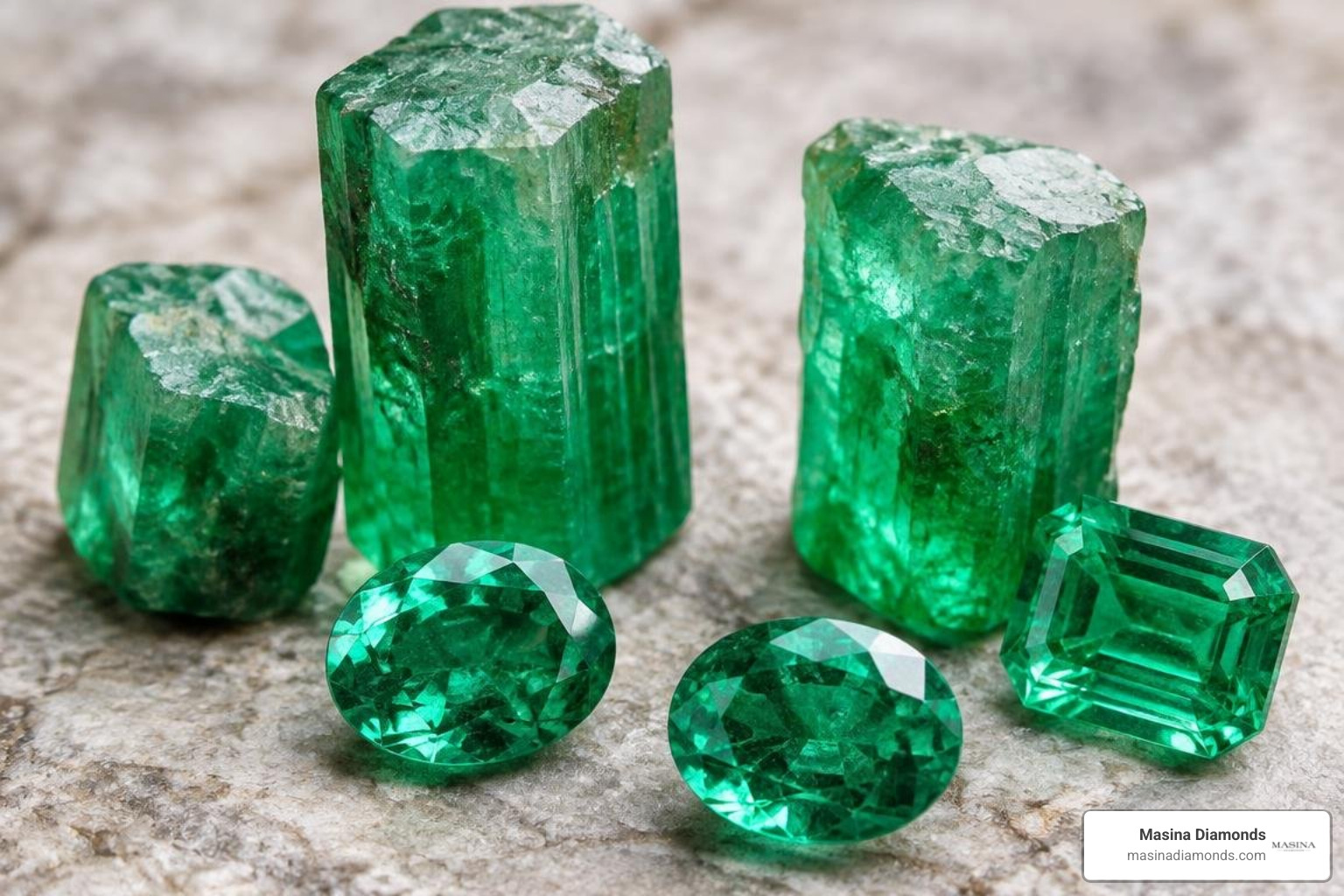
Ancient Egyptian emerald mines, situated near the Red Sea and active as early as 330 BC, supplied the royal courts of the pharaohs. Queen Cleopatra famously adorned herself with emeralds and gifted carved talismans of her likeness to visiting dignitaries. To the Romans, emerald was sacred to Venus, the goddess of love, fertility, and beauty. Roman natural historian Pliny the Elder wrote that nothing greens more than an emerald, noting that gem cutters rested their tired eyes by gazing upon its soothing shade.
Centuries later, the American National Retail Jewelers Association standardized the official monthly birthstone list in 1912, confirming emerald as the sole modern birthstone for May. To trace the evolution of these assignments across different cultures, read this historical birthstone chart overview.
Traditional vs. Modern May Birthstone Selections
Before the 1912 standardization, traditional calendar lists assigned different minerals to the month of May based on availability and cultural folklore. Traditional selections frequently included opaque or translucent stones like green agate, chalcedony, or chrysoprase.
While these traditional stones carry historical charm, the modern jewelry era transitioned toward transparent, brilliant crystalline gemstones. Emerald took center stage because of its unmatched optical depth and enduring luxury. Exploring our guide to essential stones for birthday months reveals how historic selections evolved into the modern birthstone collections we craft today.
Emerald Symbolism: Love, Wisdom, and Renewal
Emerald’s green hue aligns naturally with the blossoming peak of spring. Throughout folklore and modern traditions, the gemstone represents:
- Rebirth and Renewal: Reflecting the awakening of nature after winter, emerald serves as an emblem of fresh beginnings and personal growth.
- Unconditional Love and Loyalty: Associated with Venus, emerald has long been considered a stone of romantic harmony, emotional openness, and lasting fidelity. It is the traditional milestone gift for the 20th and 35th wedding anniversaries.
- Wisdom and Intuition: Ancient folklore suggested that holding an emerald sharpened the intellect, unmasked deception, and granted foresight.
- Serenity and Emotional Balance: The calming green hue is believed to soothe mental fatigue, reduce stress, and restore inner peace.
Comparing Emerald to Other Green Gemstones
Green is one of the most expressive colors in the gem kingdom, but every green mineral carries unique physical and optical traits.

- Emerald vs. Peridot: Peridot is the birthstone for August and derives its color from iron. Unlike the deep, velvety green of an emerald, peridot displays a golden, lime-green hue. Peridot also ranks lower on the Mohs hardness scale (6.5 to 7), making it softer than emerald.
- Emerald vs. Tsavorite Garnet: Tsavorite garnet displays an intense, highly saturated green that rivals fine emeralds. However, tsavorite exhibits a higher refractive index, creating sharp, diamond-like dispersion rather than the soft, glowing luster characteristic of emerald beryl.
- Emerald vs. Green Tourmaline (Verdelite): Green tourmaline offers deep, rich green hues, but it often carries strong olive or brownish undertones and shows noticeable pleochroism (displaying different shades from different viewing angles).
To see how all twelve months compare in color, durability, and character, review our complete birthstones by month list.
Essential Care, Treatments, and Durability for Emerald Jewelry
Emerald ranks between 7.5 and 8 on the Mohs hardness scale. While this makes it resistant to surface scratches, its natural network of internal fissures (jardin) means it requires mindful wear and gentle care.
Because natural fissures reach the surface of most rough crystals, the vast majority of natural emeralds undergo traditional clarity enhancement. The global industry standard involves infusing the gem with colorless natural cedarwood oil or stable clarity-grade resins. This treatment fills microscopic voids, improving light transmission and enhancing overall color uniformity.
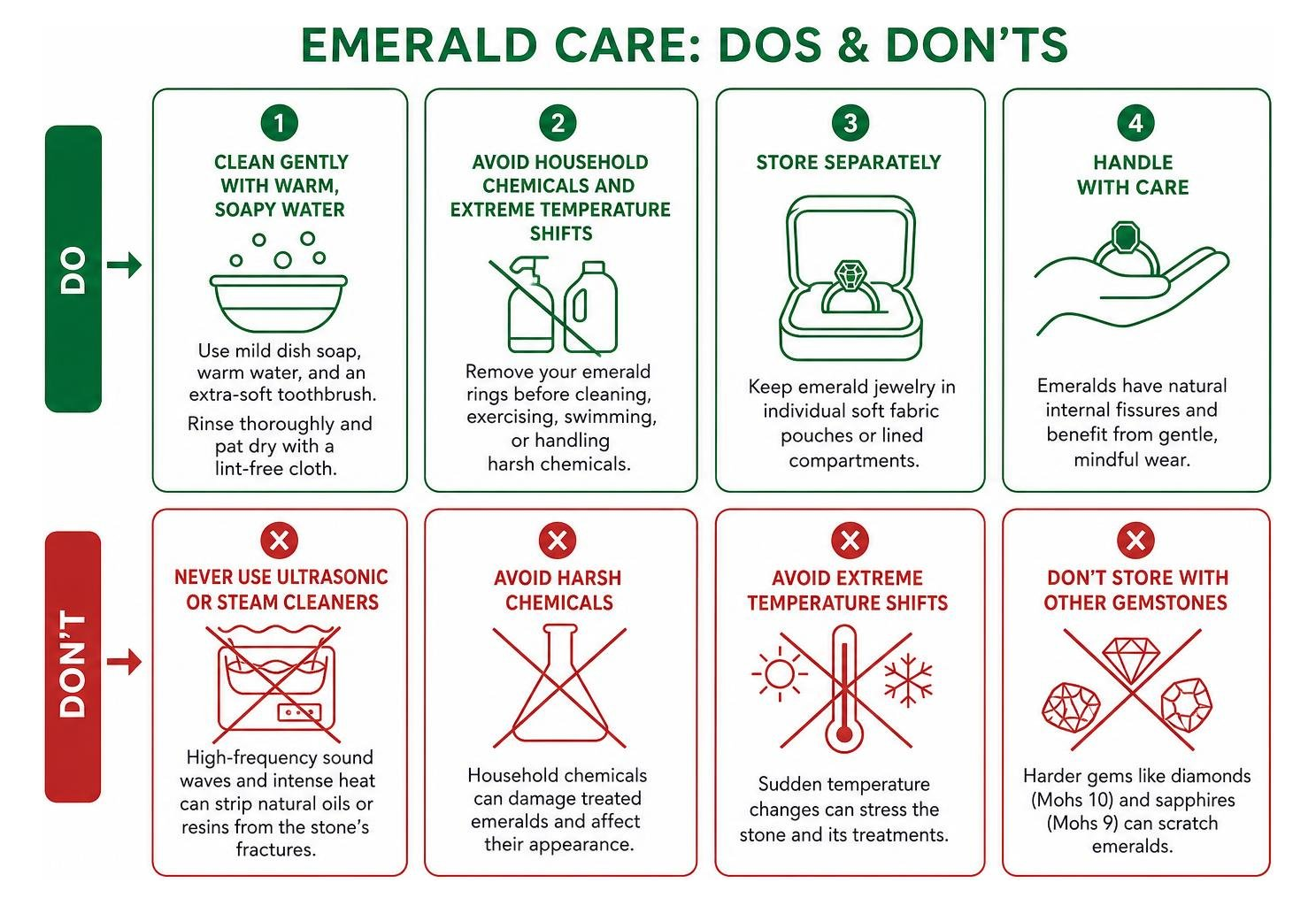
To preserve the beauty and structural integrity of your emerald jewelry:
- Never use ultrasonic or steam cleaners: High-frequency sound waves and intense heat can strip the natural oils or resins from the stone's fractures.
- Clean gently with warm, soapy water: Use mild dish soap, warm water, and an extra-soft toothbrush to lightly brush behind the setting. Rinse thoroughly and pat dry with a lint-free cloth.
- Avoid household chemicals and extreme temperature shifts: Remove your emerald rings before cleaning, exercising, swimming, or handling harsh chemicals.
- Store separately: Keep emerald jewelry in individual soft fabric pouches or lined compartments so harder gems, like diamonds (Mohs 10) and sapphires (Mohs 9), do not scratch them.
Selecting May Birthstone Jewelry: Popular Cuts and Styles
Choosing the right cut and setting for an emerald balances aesthetic beauty with long-term protection.
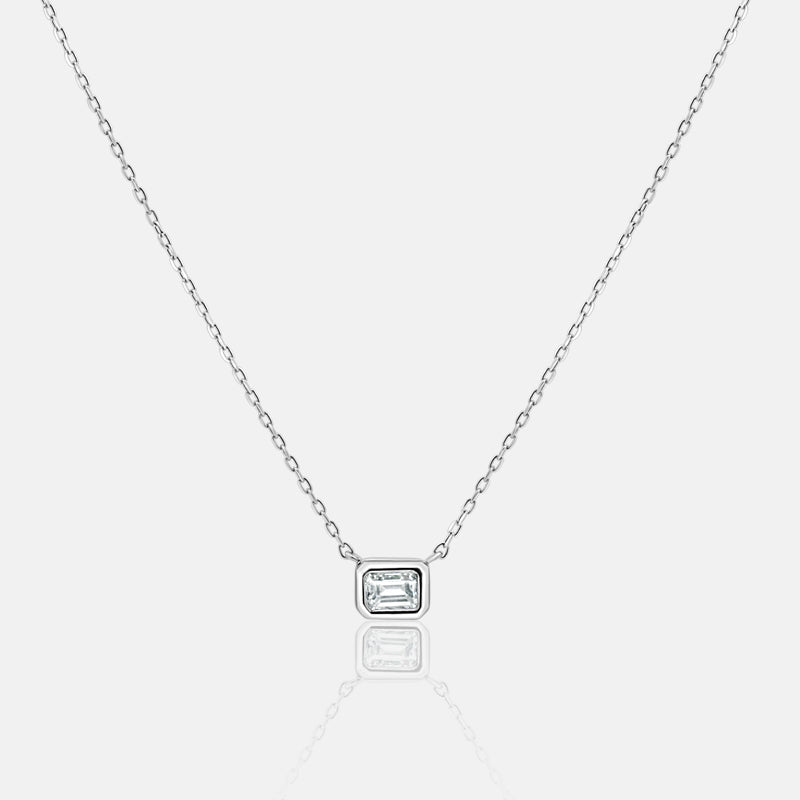
- The Iconic Emerald Cut: Developed specifically for this beryl variety, the step-cut emerald shape features cropped corners and broad, open facets. This architecture minimizes structural pressure points during the setting process and highlights the depth of the stone's color.
- Protective Bezel and Semi-Bezel Settings: A delicate metal rim enclosing the perimeter shields the emerald's girdle from accidental knocks during daily activities.
- Diamond Halo and Vintage Accents: Surrounding a center emerald with brilliant-cut diamonds creates a high-contrast frame that accentuates the lush green tone, making it a standout design for custom engagement rings and anniversary gifts.
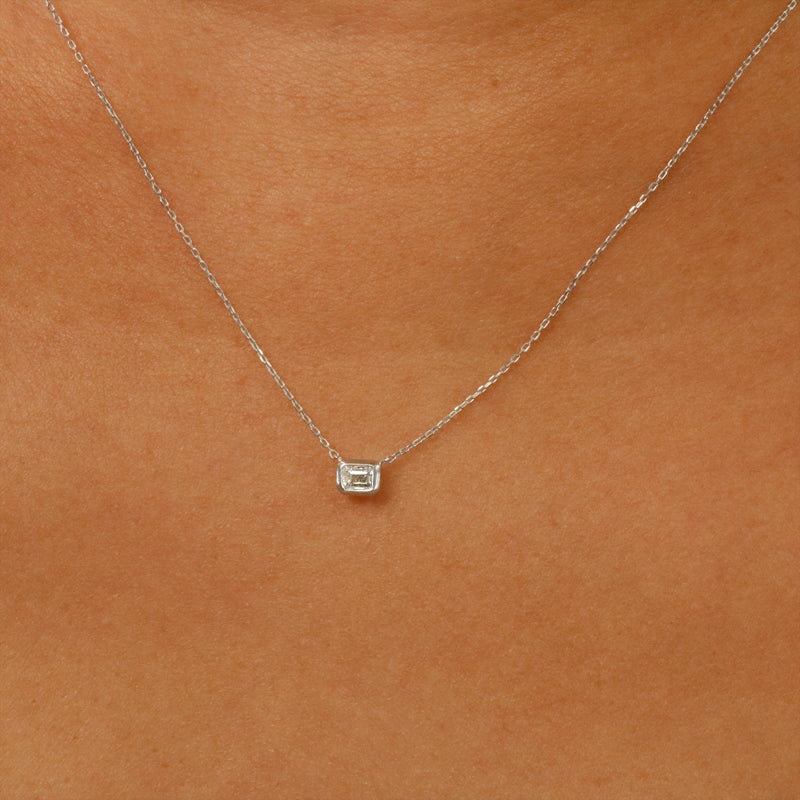
- Everyday Pendants and Studs: Solitaire pendants and bezel-set earrings keep the gemstone close to the body while shielding it from the everyday hand impacts experienced by rings.
Frequently Asked Questions About May Birthstone Colors
What is the primary color of the May birthstone?
The primary color is a vivid, saturated green. Emerald achieves this signature shade through trace amounts of chromium and vanadium within its beryl crystal lattice, with the finest stones displaying a medium-dark tone that allows maximum brilliance.
Why do some May emeralds look slightly bluish or yellowish?
Variations in color stem from the unique geological chemistry of each mining location. Trace amounts of iron introduce cool, bluish undertones (common in Colombian and Zambian gems), while lower chromium levels or specific mineral environments produce brighter, yellowish-green hues (frequently seen in Brazilian deposits).
Is emerald the only official birthstone for May?
Yes. Since the standardization of the modern birthstone chart in 1912 by the American National Retail Jewelers Association, emerald has stood as the sole official modern birthstone representing May. Historical lists occasionally included agate or chrysoprase, but emerald remains the singular global standard today.
Conclusion
From vibrant yellow-greens to royal bluish-green depths, the spectrum of May birthstone colors offers a timeless tribute to the vitality of spring. Whether you are celebrating a May birthday, commemorating a 20th or 35th wedding anniversary, or designing a bespoke engagement ring, emerald brings unmatched character, history, and elegance to fine jewelry.
At Masina Diamonds in Atlanta, we combine four decades of custom jewelry expertise with innovative design tools. Explore our interactive 3D Ring Builder or schedule a one-on-one consultation with our master jewelers to hand-select the perfect emerald. For more inspiration on celebrating milestone moments with meaningful gemstones, explore our detailed guide to birthstone meanings and custom jewelry.