Why a 1/3 Carat Diamond Engagement Ring Is Worth a Closer Look
Searching for a 1 3 ct diamond engagement ring? If you mean 1/3 carat, you're looking for a diamond that weighs about 0.33 carat, not 1.3 carats. That small difference in how the weight is written makes a big difference in size.
A 1/3 carat ring can feel delicate without feeling plain. It can be comfortable for everyday wear and leave room in your budget for the cut and custom details you care about most. Start by checking the diamond's stated weight, then look at how it sits in the setting.
We're Masina Diamonds, a family-owned Atlanta jeweler with over 40 years of experience crafting custom engagement rings, including delicate designs for shoppers seeking a 1 3 ct diamond engagement ring. Here's the size distinction to keep in mind as you explore your options.
What Does a 1 3 Ct Diamond Engagement Ring Mean?
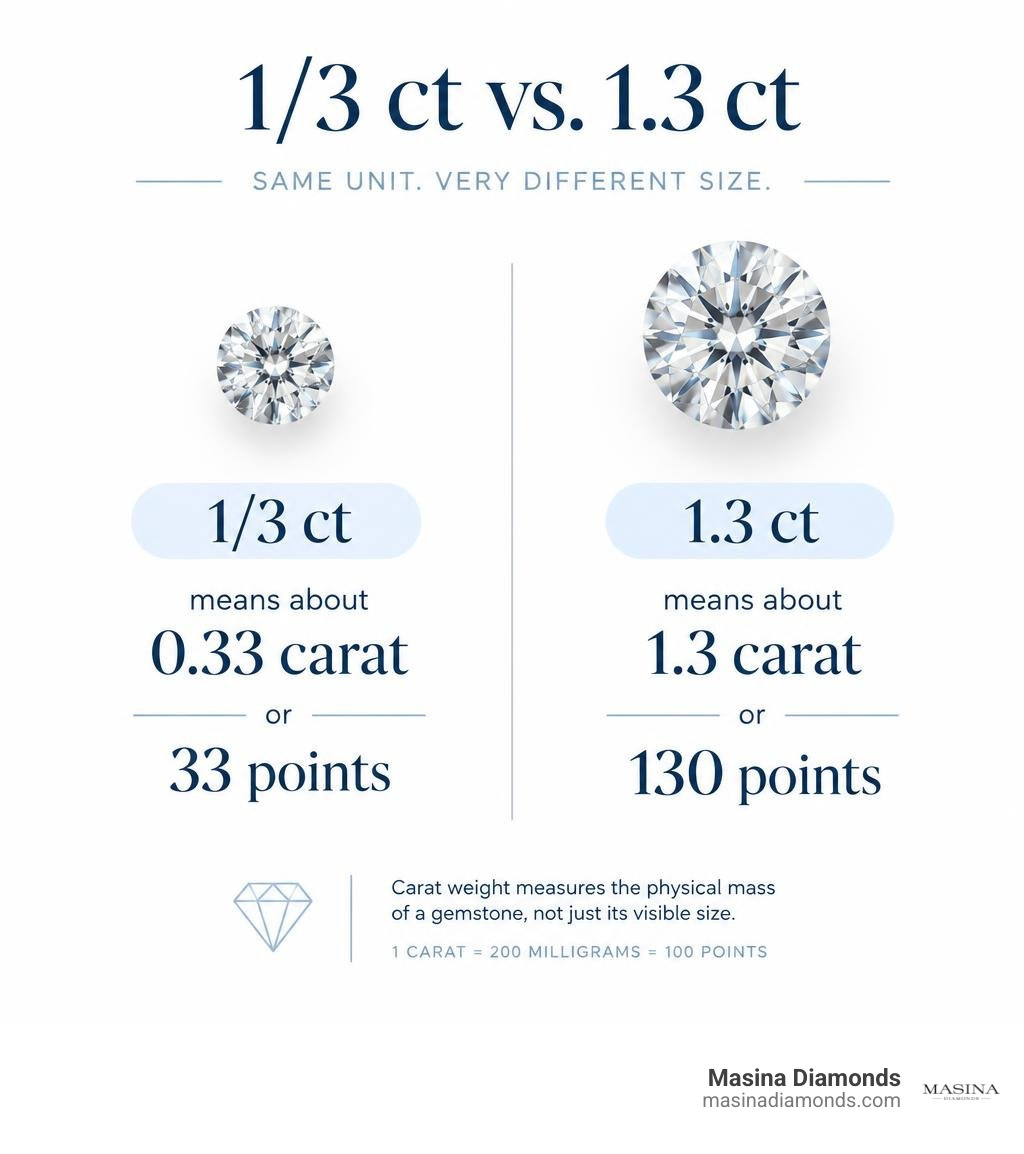
When you see the phrase "1 3 ct diamond engagement ring" in a search or catalog, it almost always points to one of two things: a fractional 1/3 carat (0.33 ct) gem or a decimal 1.3-carat stone. In retail jewelry listings, slashes and decimals are frequently dropped, leading to natural confusion.
To properly compare your choices, understanding diamond carat weight is the first step. Carat weight measures the physical mass of a gemstone rather than its visible top-down dimensions alone. One complete carat equals 200 milligrams or 100 "points."
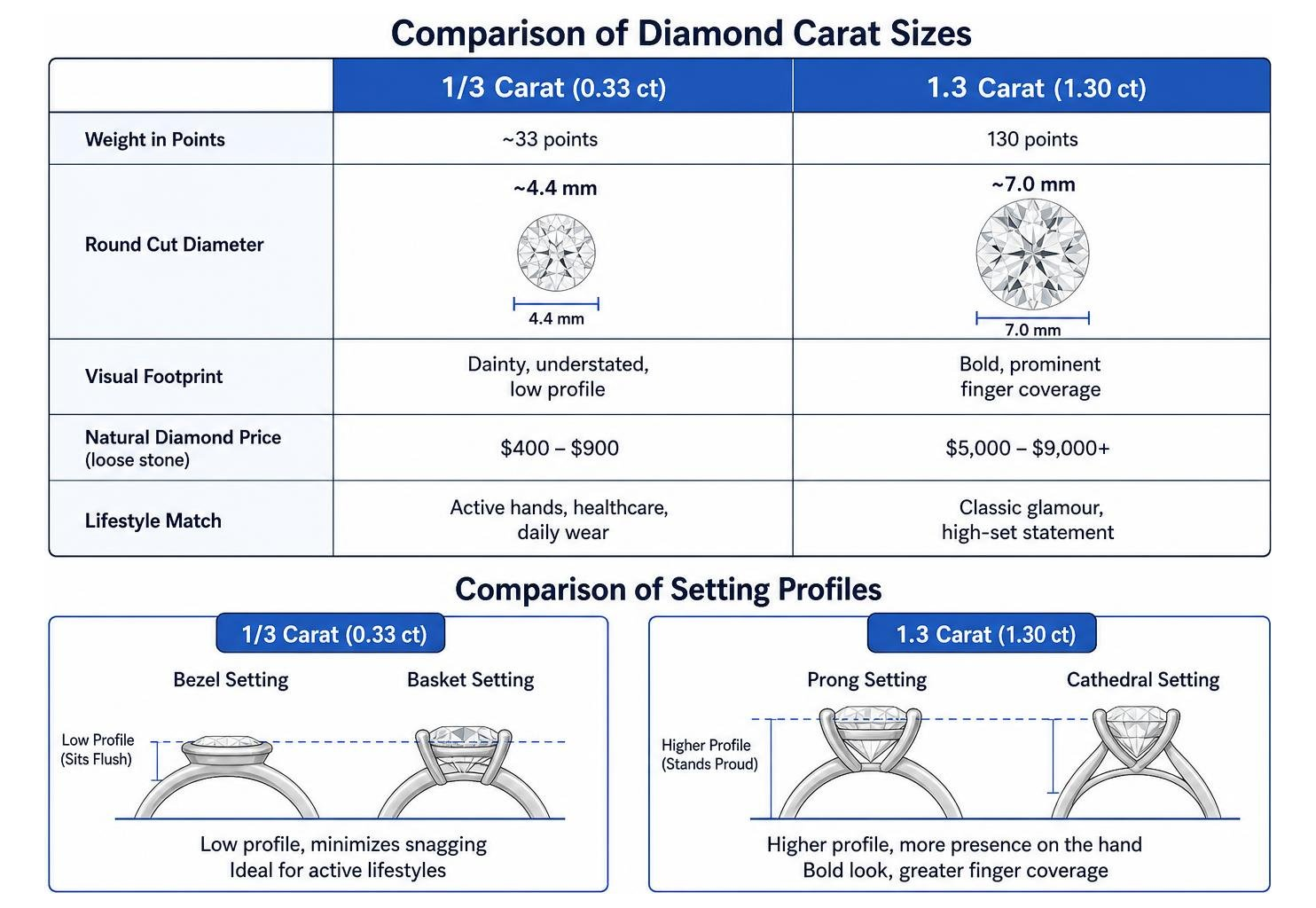
A 1/3-carat center stone weighs roughly 33 points (0.30 to 0.36 ct), measuring around 4.4 mm in diameter when cut into a standard round brilliant shape. By contrast, a 1.3-carat diamond weighs 130 points and measures roughly 7.0 mm across.
| Feature | 1/3 Carat (0.33 ct) | 1.3 Carat (1.30 ct) |
|---|---|---|
| Weight in Points | ~33 points | 130 points |
| Round Cut Diameter | ~4.4 mm | ~7.0 mm |
| Visual Footprint | Dainty, understated, low profile | Bold, prominent finger coverage |
| Natural Diamond Price | $400 – $900 (loose stone) | $5,000 – $9,000+ (loose stone) |
| Lifestyle Match | Active hands, healthcare, daily wear | Classic glamour, high-set statement |
Distinguishing a 1/3 Ct Diamond Engagement Ring from 1.3 Carat Stones
Jewelry trade terminology relies on point systems to guarantee precision. If you are shopping for a dainty design, confirming that the stone weighs approximately 33 points prevents accidental overspending on a stone four times heavier.
A 1.3-carat diamond offers noticeable presence on the hand—surpassing the standard 1.0-carat mark (6.5 mm)—and commands a substantial budget due to rarity premiums. On the other hand, a 1/3-carat diamond offers refined minimalism, sitting flush against the hand while maintaining brilliant fire.
Why the 0.33 Carat Size Appeals to Modern Couples
Modern engagement ring shoppers are breaking away from the belief that bigger is automatically better. A 0.33-carat diamond offers quiet luxury that fits seamlessly into active routines. Healthcare workers, artists, athletes, and anyone who wears gloves love low-profile stones that do not snag, scratch, or knock against surfaces.
Delicate center gems also pair effortlessly with nested bands and textured rings, making selecting versatile engagement ring styles an exciting creative process rather than a quest for maximum carat size.
Evaluating the 4 Cs for Dainty Diamond Rings
When working with a delicate center stone, balancing the Gemological Institute of America (GIA) 4 Cs—Cut, Color, Clarity, and Carat—differs from buying a massive gem. Smaller stones naturally conceal tiny imperfections, allowing you to prioritize light performance over flawless clarity.
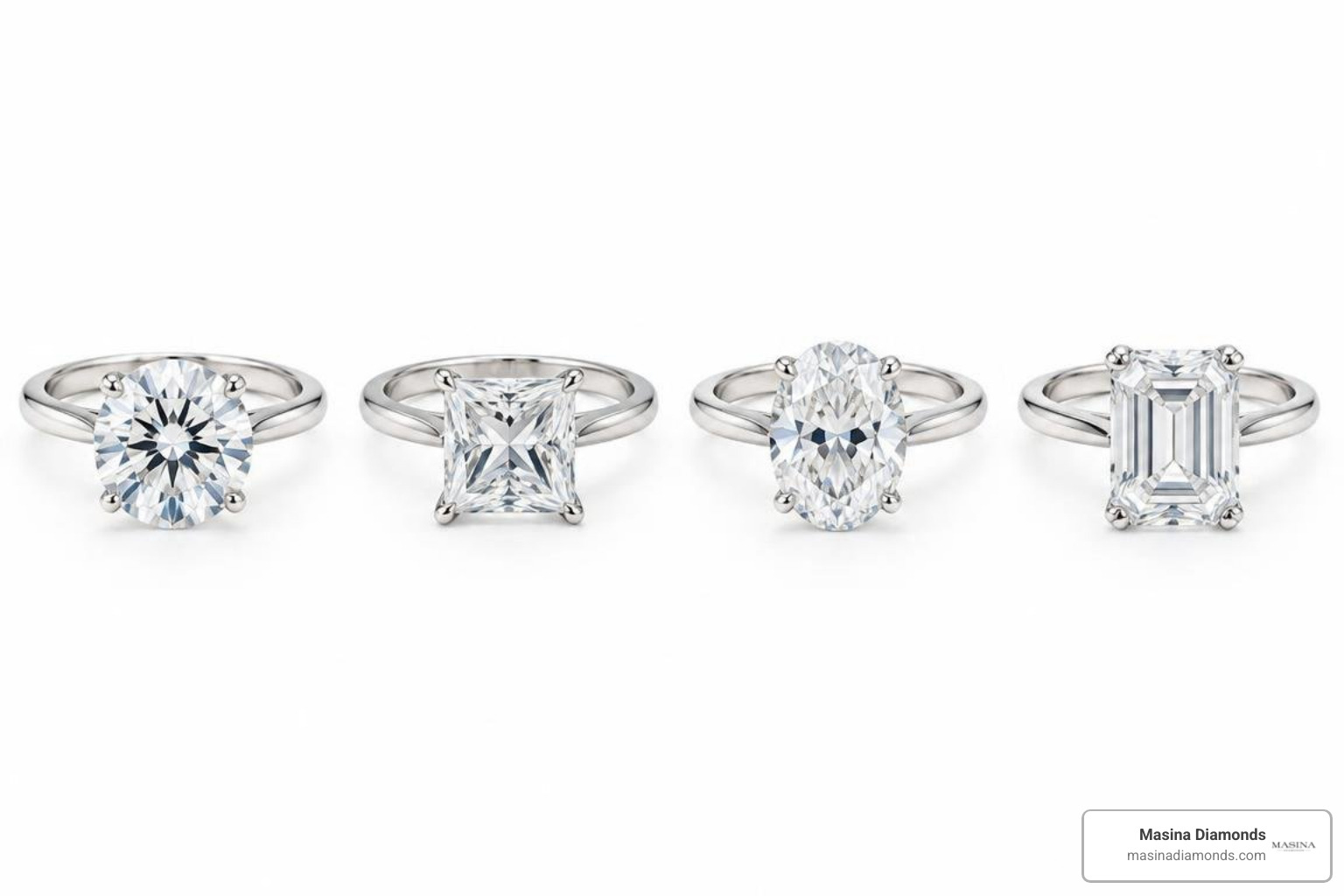
When reviewing our guide to selecting center stones, you will find that optimizing proportions is the single best way to make a 1/3-carat ring stand out across any room.
Maximizing Sparkle in a 1/3 Ct Diamond Engagement Ring
Cut quality determines how effectively a diamond returns light to the viewer's eye. In a 0.33-carat gem, an Excellent or Ideal cut is non-negotiable.
Because the stone's physical surface area is compact, maximum sparkle ensures the ring catches light from every angle. Look for:
- Table Percentage: 54% to 57%
- Depth Percentage: 61% to 62.5%
- Optical Symmetry: High precision polish and symmetry to prevent light leakage through the bottom of the pavilion.
Smart Color and Clarity Choices on a Budget
In diamonds under 0.50 carats, inclusions are virtually invisible to the naked eye. Selecting a VS2 or SI1 clarity grade gives you a completely eye-clean stone without the price hike of VVS or Flawless ratings.
For color, the near-colorless range (G to I) looks bright and ice-white to the naked eye, particularly when set in white metals. If you favor warm yellow or rose gold, you can comfortably step down to a J or K color grade while maintaining a seamless visual match. These strategic choices are essential when curating beautiful diamond rings that balance aesthetic beauty with sensible spending.
Best Settings and Metals for Delicate Diamonds
The right mounting turns a 1/3-carat diamond into an architectural centerpiece. Setting style, prong configuration, and metal tone all work together to frame the stone.
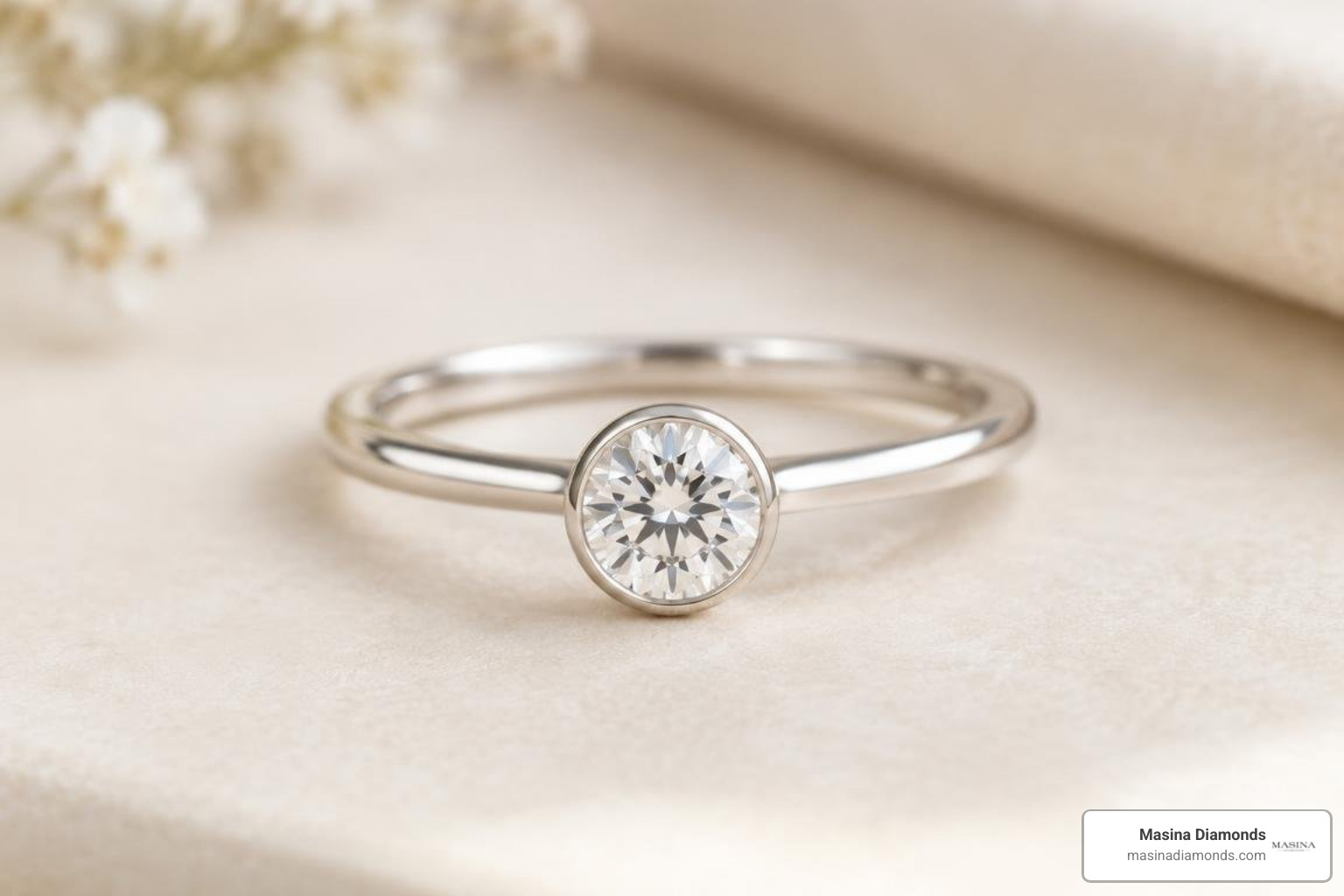
- Bezel Settings: A thin metal rim encircles the diamond, protecting its outer girdle while adding visual width and sleek modernity.
- Four-Prong Baskets: A classic four-prong mount allows light to enter through the sides, lifting the stone for crisp brightness.
- East-West Mounts: Setting fancy shapes like ovals, marquise, or emerald cuts horizontally creates an unexpected modern profile.
When considering metal options, exploring white gold engagement rings reveals how cool-toned metals blend with near-colorless diamonds to create a cohesive, radiant display. Additionally, understanding the benefits of 14k gold bands will help you choose a setting that withstands decades of everyday wear thanks to its superior scratch resistance and structural strength.
Design Techniques to Enhance Smaller Center Stones
If you love the delicate nature of a 1/3-carat diamond but want to maximize its visual impact, several custom design techniques create striking optical illusions:
- Ultra-Thin Bands: Choosing a 1.5 mm to 1.8 mm band makes the center gem appear noticeably larger by comparison.
- Tapered Shoulders: Bands that pinch inward as they approach the center stone draw the eye directly toward the diamond.
- Illusion Plates and Starburst Prongs: Engraved or faceted metal prongs bounce ambient light, mimicking the brilliance of additional facet edges.
- Delicate Halos or Hidden Halos: Micro-pave frames add dimension and brilliance without overpowering the center stone.
Using bespoke custom jewelry design options allows our Atlanta team to tailor every milligram of metal to your preferred proportions.
Pros and Cons of Choosing a 1/3 Carat Diamond
Deciding on a center stone weight comes down to aligning your design priorities, daily habits, and budget.
| Advantages (Pros) | Considerations (Cons) |
|---|---|
| Budget Friendly: Leaves ample room for premium metals or custom band work. | Subtle Finger Coverage: Lacks the bold presence of 1.0+ carat diamonds. |
| Supreme Comfort: Low profile prevents snags on clothing, gloves, and gear. | Limited Resale Margin: Value resides in sentiment and craftsmanship rather than raw stone weight. |
| Stacking Flexibility: Pairs cleanly with multiple wedding, anniversary, or eternity bands. | Detail Precision Required: Poor cut grades are quickly noticeable on small stones. |
| Understated Elegance: Ideal for minimalist or vintage-inspired tastes. | Optical Scaling: May look petite on broader fingers without accent stones. |
Frequently Asked Questions About 1/3 Carat Rings
How much does an average 1/3 carat diamond ring cost?
A complete natural 1/3-carat diamond engagement ring generally ranges between $800 and $2,200, depending on metal selection (such as 14k gold vs. platinum) and design complexity. A lab-grown alternative of identical size and quality typically ranges between $500 and $1,200.
What grading certifications are recommended for smaller diamonds?
For diamonds weighing 0.30 to 0.36 carats, look for a dossier report from reputable grading labs such as the GIA (Gemological Institute of America) or IGI (International Gemological Institute). A dossier verifies authentic cut, color, clarity, and exact carat weight without the higher administrative overhead of full grading plots.
Does a 1/3 carat diamond look too small on the hand?
Not at all. On ring sizes 4 through 6, a 1/3-carat diamond provides balanced, classic proportions. For larger finger sizes, pairing the stone with a tapered band, a micro-halo, or flanking side baguettes creates eye-catching presence while preserving its dainty charm.
Conclusion
Choosing a delicate engagement ring celebrates refined style, practical wearability, and smart value. A 1/3-carat center stone proves that elegance does not depend on heavy carat numbers—it shines through thoughtful proportions, master craftsmanship, and timeless design.
Whether you prefer a sleek modern bezel or an intricate vintage mounting, our Atlanta artisans are ready to bring your vision to life using our 3D Ring Builder and over four decades of custom design expertise. Take the next step in crafting your heirloom by discovering the perfect white gold engagement ring setting to complement your chosen diamond.