Why Choose a Bezel Setting with Side Stones?
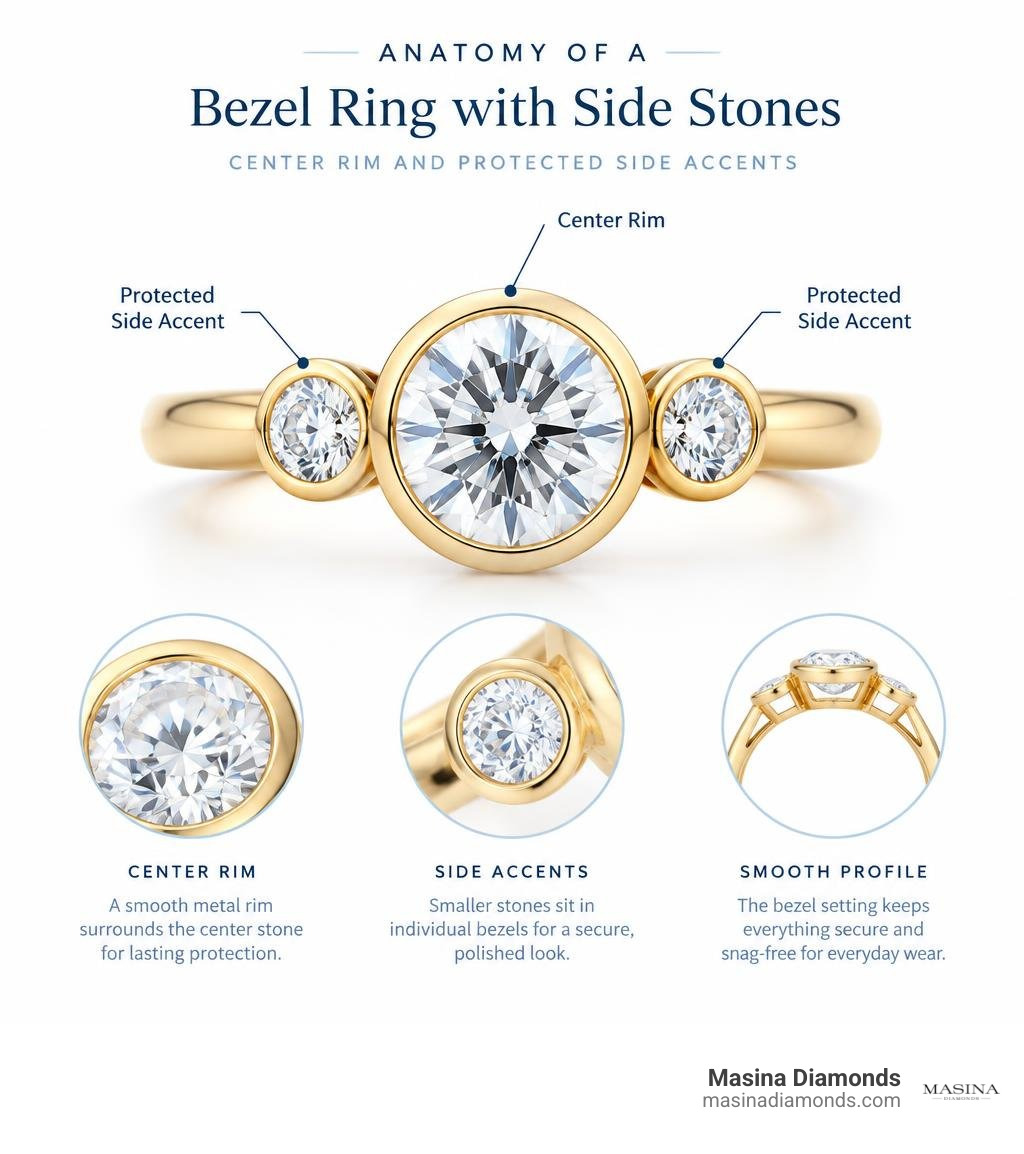
A bezel setting with side stones surrounds the center gem with a smooth metal rim and adds smaller stones beside it. It offers strong edge protection, a low-snag feel, and more sparkle than a plain bezel ring. For everyday wear, consider side stones set in individual bezels or a channel to keep the ring's profile smooth. A full bezel gives more coverage; a half-bezel leaves more of the center stone exposed to light.
We are Masina Diamonds, a family-owned Atlanta jeweler with over 40 years of experience crafting engagement rings. We bring that experience to each custom bezel setting with side stones, balancing the look you want with a ring made for daily life.
What Is a Bezel Setting with Side Stones?
A bezel setting is one of the oldest known jewelry settings in the world. Instead of gripping a diamond with small metal claws, a bezel holds a gemstone by surrounding its girdle with a custom-fitted metal collar. This metal perimeter is burnished and pressed gently over the outer perimeter of the stone, locking it into place.
When you incorporate side stones into the design, you transform a minimalist silhouette into a dynamic, multi-dimensional piece of fine jewelry. Whether featuring a three-stone layout, tapered accent stones on the shoulders, or a band lined with delicate gems, a bezel setting keeps the center gem protected while expanding sparkle across your finger.
According to the protective gem setting guide from the International Gem Society, enclosing a gem within a dedicated metal wall shields the fragile edges of the stone from accidental bumps and chips. You can explore a variety of classic bezel setting designs to see how this smooth framework works with both modern aesthetics and antique-inspired styles.
How Side Accents Transform Bezel Engagement Rings
While a solitary bezel exudes clean minimalism, adding side stones changes how the ring captures light and flatters the hand:
- Visual Balance: Side accents create a gentle visual transition from a prominent center gem down to the band, avoiding a top-heavy look.
- Amplified Sparkle: Bezels naturally cover the outer sides of a center diamond. Adding side stones introduces extra facets to catch ambient light from different angles.
- Perceived Diamond Size: Flanking the center stone with tapered baguettes, pears, or trapezoids expands the horizontal footprint of the ring, making the center stone appear larger.
- Framing and Contrast: Accent stones can frame fancy diamond shapes or introduce colored gemstones like emeralds or sapphires to highlight the white brilliance of the center diamond.
Full Bezel vs. Half-Bezel Configurations
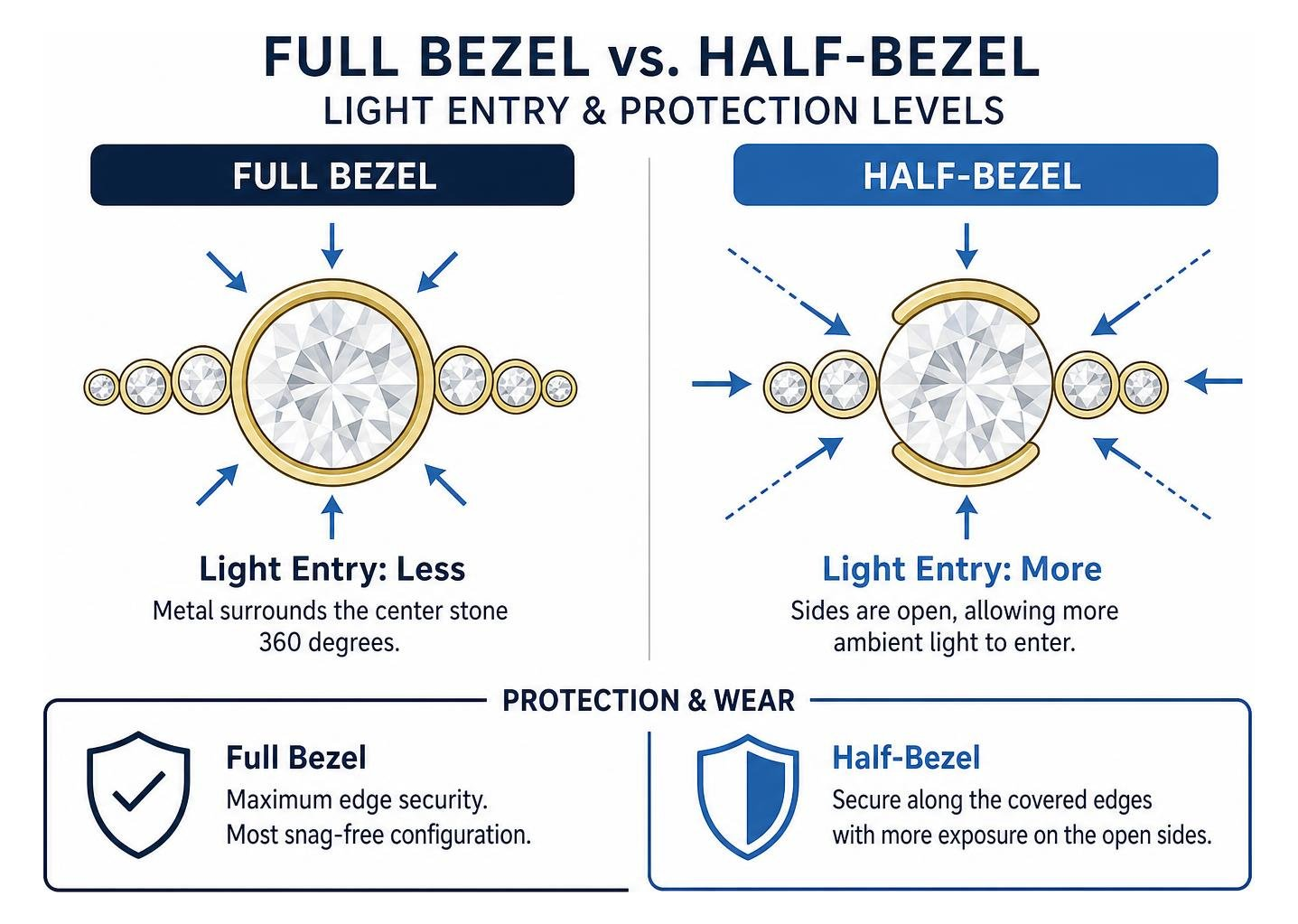
When designing a bezel setting with side stones, you have two primary mounting styles for the center gem:
- Full Bezel: A complete metal collar encircles the diamond 360 degrees. This provides maximum edge security and a bold, modern border. Because it fully wraps the perimeter, it is the most snag-free configuration possible.
- Half-Bezel (Semi-Bezel): A half-bezel holds the gemstone by wrapping metal around only two opposing sides (such as the top and bottom or the east and west flanks), leaving the other sides open. This allows more ambient light to enter the gem from the sides while maintaining dependable security along the secured edges.
Key Benefits and Considerations for Everyday Wear
A bezel ring with side stones balances luxury and practicality. As outlined in our complete bezel set rings guide for 2026, modern ring buyers prioritize wearable designs that fit seamlessly into their active daily routines without requiring constant worry.
| Feature | Bezel Setting with Side Stones | Traditional Prong Setting | Channel Setting (Band Only) |
|---|---|---|---|
| Snag Risk | Virtually zero; ultra-smooth exterior | Moderate to high; prongs catch knits | Extremely low; gems set flush |
| Edge Protection | Complete protection along the girdle | Minimal; stone edges remain exposed | High protection for small stones |
| Maintenance | Very low; no loose prongs to re-tip | Requires prong tightening checks | Low; metal channels hold accents tight |
| Light Entry | Top-down reflection and side sparkle | 360-degree light entry | Top-down light through open table |
| Cleaning Ease | Fast wipe down; fewer dirt traps | Traps lint, dust, and lotions easily | Easy cleaning along channel grooves |
Why Active Lifestyles Benefit from a Bezel Setting with Side Stones
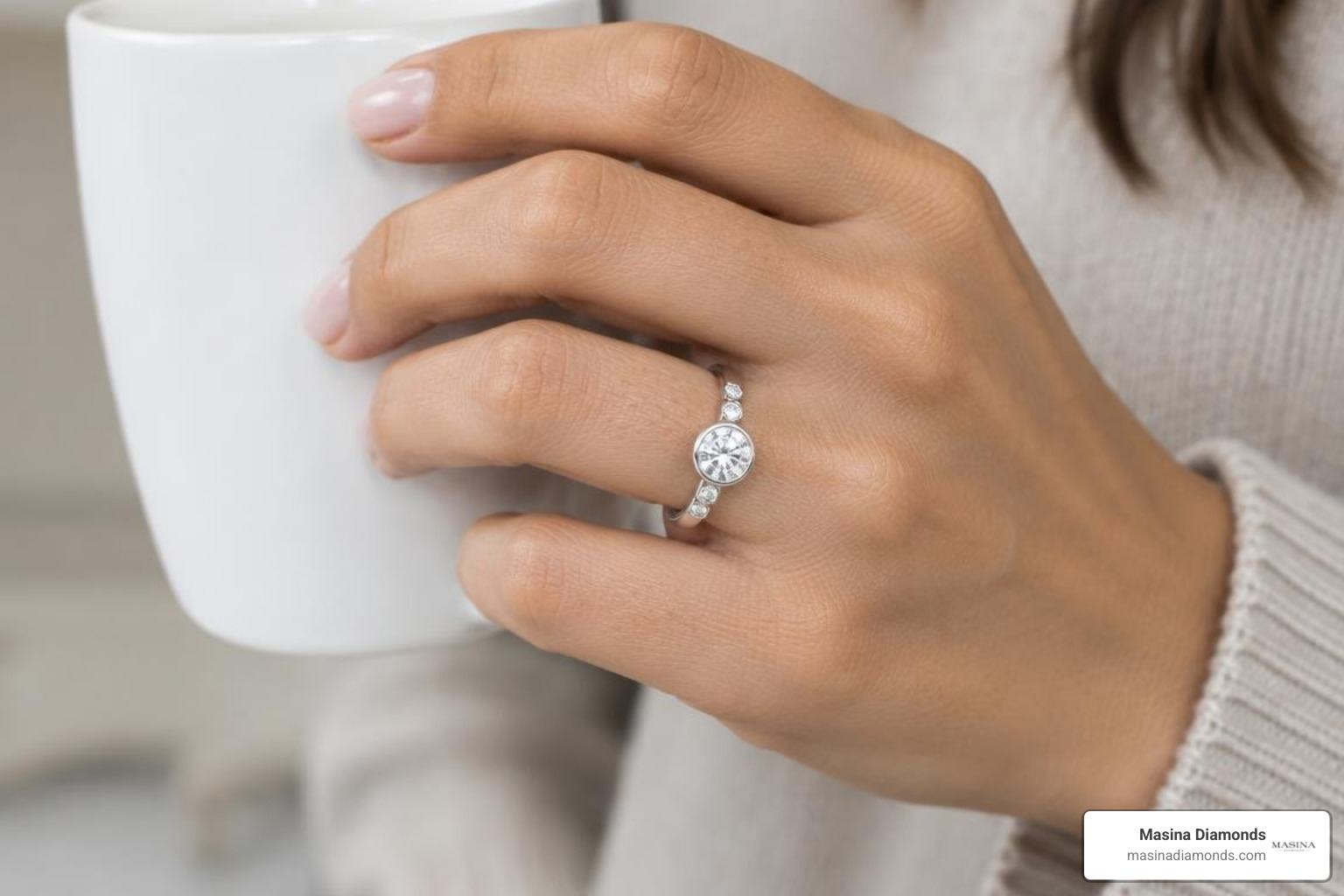
If your daily life involves fitness, hands-on work, frequent hand sanitizing, or wearing knitwear and gloves, traditional prong mountings can snag on threads or catch on pockets.
A bezel setting with side stones eliminates exposed metal prongs that can bend or loosen over time. The solid metal perimeter keeps the center stone seated firmly, while flush-set, channel-set, or bezel-set side accents stay level with the surface of the band. You get the brilliance of a multi-stone diamond ring without the daily worry of catching fine fabrics or knocking a prong out of alignment.
Brilliance, Light Entry, and Cleaning Advantages
A common myth is that bezel settings make diamonds look dark. While it is true that metal covers the girdle, diamonds receive the vast majority of their light return through the top table facet, not through the sides. When a diamond is cut with ideal proportions, light enters from the top, bounces across the internal pavilion facets, and reflects straight back up to your eyes.
In addition, bezel-set rings stay brilliant longer between cleanings. Prong mountings feature tiny crevices behind open baskets where dead skin cells, hand creams, and soaps accumulate, dulling the diamond's fire. A bezel setting seals off the sides of the stone, giving dirt fewer places to settle and making routine maintenance as simple as a quick rinse with warm water and mild soap.
Stone Cuts, Metals, and Custom Ring Pairing Ideas
Bezel settings work well with a wide variety of diamond and gemstone shapes. For proper retention and clean fabrication, the stone should ideally feature a pavilion bevel angle between 55 and 75 degrees. This angle allows the jeweler to roll the bezel wall smoothly over the crown facets without creating metal wrinkles or gaps. Master jeweler insights on expert bezel fabrication techniques show that precision cutting, exact bezel height calibration, and careful metal annealing are essential for a smooth, rattle-free fit.
When selecting center and accent gems, our engagement ring stones guide for 2026 can help you evaluate cut grades and hardness levels to find your ideal match:
- Emerald & Asscher Cuts: Step-cut diamonds feature sleek, geometric lines that naturally harmonize with the clean borders of a bezel frame.
- Oval & Pear Cuts: The curved lines of an oval or pear look striking inside a bezel collar, which shields the vulnerable pointed tips of pear shapes from chipping.
- Round Brilliant Diamonds: Classic round brilliants deliver maximum scintillation, which pairs neatly with channel-set or pavé side stones on the shoulders.
Popular Design Variations for a Bezel Setting with Side Stones

Whether you love vintage heirlooms or ultra-clean modern jewelry, bezel settings adapt to your personal aesthetic:
- Three-Stone Architectural Bezels: A center bezel-set emerald cut flanked by two bezel-set trapezoid or baguette side stones creates a structured, Art Deco-inspired profile.
- Colored Gemstone Accents: Using rich blue sapphires, rubies, or emeralds as side accents introduces striking contrast against a bright white diamond center.
- Vintage Milgrain & Filigree: Adding fine milgrain beading along the metal edges of the bezel provides texture and vintage character, as highlighted in our guide to curating beautiful diamond rings in 2026.
- Pavé Shoulders: Pairing a smooth center bezel with a micro-pavé band delivers a balance of contemporary edge security and traditional diamond fire.
Combining Bezels with Prongs, Baskets, and Side Bands
You do not have to choose strictly between all-bezel or all-prong styles. Many custom engagement rings blend setting techniques to create distinct visual interest:
- Hybrid Settings: You can explore combining a bezel with prongs by using a bezel on the center stone while securing the side stones with delicate claw prongs.
- Open Gallery Baskets: Incorporating a custom ring with basket setting beneath a bezel collar opens up the underside of the mounting, allowing extra light to wash underneath the stones.
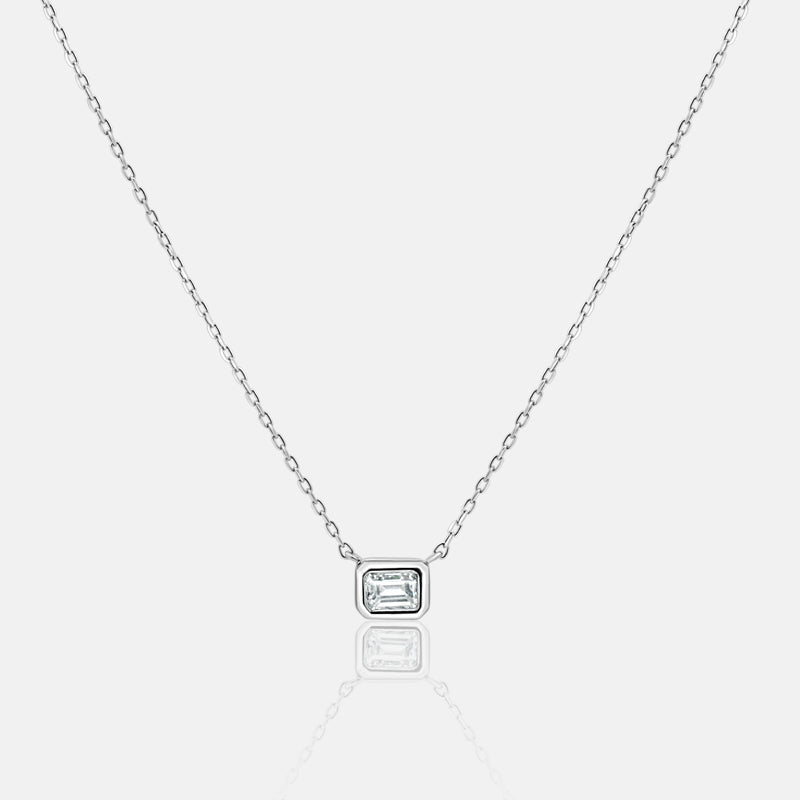
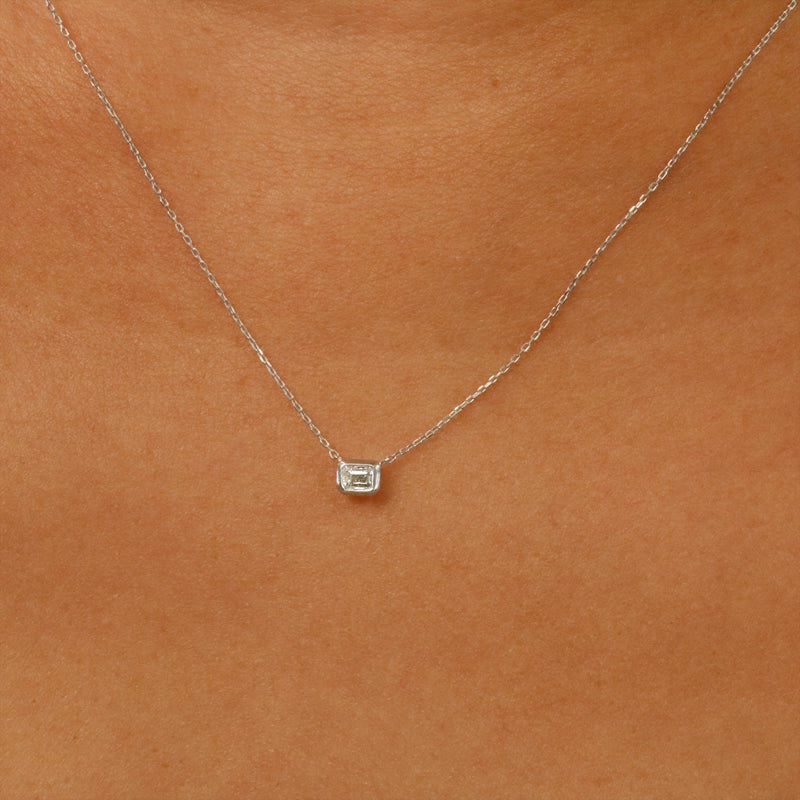
- East-West Orientation: Setting an oval or emerald-cut stone horizontally in a bezel and adding round accent stones along the band creates a fresh, low-profile look that sits comfortably against a wedding band.
Frequently Asked Questions About Bezel Rings with Side Stones
How do side stones stay secure in a bezel ring?
Side stones can be secured using several methods depending on the design. They can be enclosed in their own individual mini-bezels, set flush into the surface of the metal band, or seated inside a secure channel. Each of these techniques encloses the edges of the accent stones in metal, preventing them from catching on clothes or popping loose from bumped prongs.
Do bezel settings make diamonds look smaller or bigger?
A bezel setting can actually make a diamond look larger. Because the metal collar wraps around the outer girdle, it extends the visible diameter of the setting. When crafted in white gold or platinum, the polished white metal blends with the diamond's facets, creating the illusion of a larger center stone.
Can soft gemstones be used as side stones in a bezel ring?
Yes. In fact, bezel settings are one of the safest mounting options for softer gemstones like opals, tanzanites, or pearls. The solid metal wall acts as a protective bumper that absorbs impact and prevents the delicate edges of softer gems from scratching or chipping during daily wear.
Conclusion: Crafting Your Perfect Bezel Ring
A bezel setting with side stones provides lasting durability, a comfortable snag-free profile, and radiant sparkle across the finger. Whether you prefer an Art Deco three-stone ring or a modern, low-profile solitaire with channel-set diamond shoulders, this setting style is built to withstand the demands of daily wear while looking effortlessly refined.
At Masina Diamonds in Atlanta, our team combines over four decades of bench craftsmanship with modern 3D design technology to help you create your dream ring. If you are deciding between setting styles, review our comparison comparing bezel protection against engagement ring prongs to find the right mounting for your lifestyle and taste.
Why Choose a Bezel Setting with Side Stones?
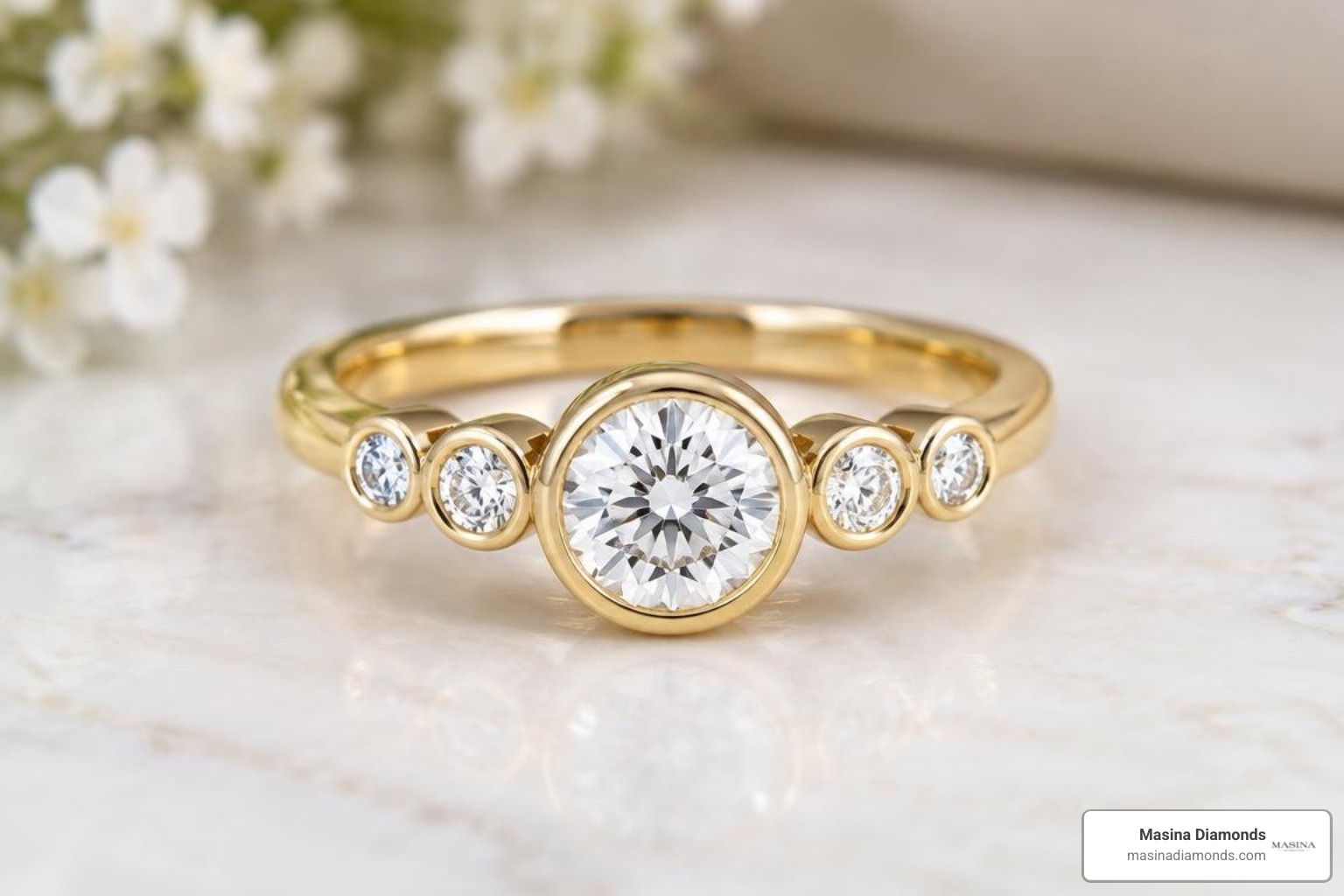
A bezel setting with side stones surrounds the center gem with a smooth metal rim and adds smaller stones beside it. It offers strong edge protection, a low-snag feel, and more sparkle than a plain bezel ring. For everyday wear, consider side stones set in individual bezels or a channel to keep the ring's profile smooth. A full bezel gives more coverage; a half-bezel leaves more of the center stone exposed to light.
We are Masina Diamonds, a family-owned Atlanta jeweler with over 40 years of experience crafting engagement rings. We bring that experience to each custom bezel setting with side stones, balancing the look you want with a ring made for daily life.
What Is a Bezel Setting with Side Stones?
A bezel setting is one of the oldest known jewelry settings in the world. Instead of gripping a diamond with small metal claws, a bezel holds a gemstone by surrounding its girdle with a custom-fitted metal collar. This metal perimeter is burnished and pressed gently over the outer perimeter of the stone, locking it into place.
When you incorporate side stones into the design, you transform a minimalist silhouette into a dynamic, multi-dimensional piece of fine jewelry. Whether featuring a three-stone layout, tapered accent stones on the shoulders, or a band lined with delicate gems, a bezel setting keeps the center gem protected while expanding sparkle across your finger.
According to the protective gem setting guide from the International Gem Society, enclosing a gem within a dedicated metal wall shields the fragile edges of the stone from accidental bumps and chips. You can explore a variety of classic bezel setting designs to see how this smooth framework works with both modern aesthetics and antique-inspired styles.
How Side Accents Transform Bezel Engagement Rings
While a solitary bezel exudes clean minimalism, adding side stones changes how the ring captures light and flatters the hand:
- Visual Balance: Side accents create a gentle visual transition from a prominent center gem down to the band, avoiding a top-heavy look.
- Amplified Sparkle: Bezels naturally cover the outer sides of a center diamond. Adding side stones introduces extra facets to catch ambient light from different angles.
- Perceived Diamond Size: Flanking the center stone with tapered baguettes, pears, or trapezoids expands the horizontal footprint of the ring, making the center stone appear larger.
- Framing and Contrast: Accent stones can frame fancy diamond shapes or introduce colored gemstones like emeralds or sapphires to highlight the white brilliance of the center diamond.
Full Bezel vs. Half-Bezel Configurations
When designing a bezel setting with side stones, you have two primary mounting styles for the center gem:
- Full Bezel: A complete metal collar encircles the diamond 360 degrees. This provides maximum edge security and a bold, modern border. Because it fully wraps the perimeter, it is the most snag-free configuration possible.
- Half-Bezel (Semi-Bezel): A half-bezel holds the gemstone by wrapping metal around only two opposing sides (such as the top and bottom or the east and west flanks), leaving the other sides open. This allows more ambient light to enter the gem from the sides while maintaining dependable security along the secured edges.
Key Benefits and Considerations for Everyday Wear
A bezel ring with side stones balances luxury and practicality. As outlined in our complete bezel set rings guide for 2026, modern ring buyers prioritize wearable designs that fit seamlessly into their active daily routines without requiring constant worry.
| Feature | Bezel Setting with Side Stones | Traditional Prong Setting | Channel Setting (Band Only) |
|---|---|---|---|
| Snag Risk | Virtually zero; ultra-smooth exterior | Moderate to high; prongs catch knits | Extremely low; gems set flush |
| Edge Protection | Complete protection along the girdle | Minimal; stone edges remain exposed | High protection for small stones |
| Maintenance | Very low; no loose prongs to re-tip | Requires prong tightening checks | Low; metal channels hold accents tight |
| Light Entry | Top-down reflection and side sparkle | 360-degree light entry | Top-down light through open table |
| Cleaning Ease | Fast wipe down; fewer dirt traps | Traps lint, dust, and lotions easily | Easy cleaning along channel grooves |
Why Active Lifestyles Benefit from a Bezel Setting with Side Stones
If your daily life involves fitness, hands-on work, frequent hand sanitizing, or wearing knitwear and gloves, traditional prong mountings can snag on threads or catch on pockets.
A bezel setting with side stones eliminates exposed metal prongs that can bend or loosen over time. The solid metal perimeter keeps the center stone seated firmly, while flush-set, channel-set, or bezel-set side accents stay level with the surface of the band. You get the brilliance of a multi-stone diamond ring without the daily worry of catching fine fabrics or knocking a prong out of alignment.
Brilliance, Light Entry, and Cleaning Advantages
A common myth is that bezel settings make diamonds look dark. While it is true that metal covers the girdle, diamonds receive the vast majority of their light return through the top table facet, not through the sides. When a diamond is cut with ideal proportions, light enters from the top, bounces across the internal pavilion facets, and reflects straight back up to your eyes.
In addition, bezel-set rings stay brilliant longer between cleanings. Prong mountings feature tiny crevices behind open baskets where dead skin cells, hand creams, and soaps accumulate, dulling the diamond's fire. A bezel setting seals off the sides of the stone, giving dirt fewer places to settle and making routine maintenance as simple as a quick rinse with warm water and mild soap.
Stone Cuts, Metals, and Custom Ring Pairing Ideas
Bezel settings work well with a wide variety of diamond and gemstone shapes. For proper retention and clean fabrication, the stone should ideally feature a pavilion bevel angle between 55 and 75 degrees. This angle allows the jeweler to roll the bezel wall smoothly over the crown facets without creating metal wrinkles or gaps. Master jeweler insights on expert bezel fabrication techniques show that precision cutting, exact bezel height calibration, and careful metal annealing are essential for a smooth, rattle-free fit.
When selecting center and accent gems, our engagement ring stones guide for 2026 can help you evaluate cut grades and hardness levels to find your ideal match:
- Emerald & Asscher Cuts: Step-cut diamonds feature sleek, geometric lines that naturally harmonize with the clean borders of a bezel frame.
- Oval & Pear Cuts: The curved lines of an oval or pear look striking inside a bezel collar, which shields the vulnerable pointed tips of pear shapes from chipping.
- Round Brilliant Diamonds: Classic round brilliants deliver maximum scintillation, which pairs neatly with channel-set or pavé side stones on the shoulders.
Popular Design Variations for a Bezel Setting with Side Stones
Whether you love vintage heirlooms or ultra-clean modern jewelry, bezel settings adapt to your personal aesthetic:
- Three-Stone Architectural Bezels: A center bezel-set emerald cut flanked by two bezel-set trapezoid or baguette side stones creates a structured, Art Deco-inspired profile.
- Colored Gemstone Accents: Using rich blue sapphires, rubies, or emeralds as side accents introduces striking contrast against a bright white diamond center.
- Vintage Milgrain & Filigree: Adding fine milgrain beading along the metal edges of the bezel provides texture and vintage character, as highlighted in our guide to curating beautiful diamond rings in 2026.
- Pavé Shoulders: Pairing a smooth center bezel with a micro-pavé band delivers a balance of contemporary edge security and traditional diamond fire.
Combining Bezels with Prongs, Baskets, and Side Bands
You do not have to choose strictly between all-bezel or all-prong styles. Many custom engagement rings blend setting techniques to create distinct visual interest:
- Hybrid Settings: You can explore combining a bezel with prongs by using a bezel on the center stone while securing the side stones with delicate claw prongs.
- Open Gallery Baskets: Incorporating a custom ring with basket setting beneath a bezel collar opens up the underside of the mounting, allowing extra light to wash underneath the stones.
- East-West Orientation: Setting an oval or emerald-cut stone horizontally in a bezel and adding round accent stones along the band creates a fresh, low-profile look that sits comfortably against a wedding band.
Frequently Asked Questions About Bezel Rings with Side Stones
How do side stones stay secure in a bezel ring?
Side stones can be secured using several methods depending on the design. They can be enclosed in their own individual mini-bezels, set flush into the surface of the metal band, or seated inside a secure channel. Each of these techniques encloses the edges of the accent stones in metal, preventing them from catching on clothes or popping loose from bumped prongs.
Do bezel settings make diamonds look smaller or bigger?
A bezel setting can actually make a diamond look larger. Because the metal collar wraps around the outer girdle, it extends the visible diameter of the setting. When crafted in white gold or platinum, the polished white metal blends with the diamond's facets, creating the illusion of a larger center stone.
Can soft gemstones be used as side stones in a bezel ring?
Yes. In fact, bezel settings are one of the safest mounting options for softer gemstones like opals, tanzanites, or pearls. The solid metal wall acts as a protective bumper that absorbs impact and prevents the delicate edges of softer gems from scratching or chipping during daily wear.
Conclusion: Crafting Your Perfect Bezel Ring
A bezel setting with side stones provides lasting durability, a comfortable snag-free profile, and radiant sparkle across the finger. Whether you prefer an Art Deco three-stone ring or a modern, low-profile solitaire with channel-set diamond shoulders, this setting style is built to withstand the demands of daily wear while looking effortlessly refined.
At Masina Diamonds in Atlanta, our team combines over four decades of bench craftsmanship with modern 3D design technology to help you create your dream ring. If you are deciding between setting styles, review our comparison comparing bezel protection against engagement ring prongs to find the right mounting for your lifestyle and taste.