Find Your Edge with a Diamond and Black Diamond Engagement Ring
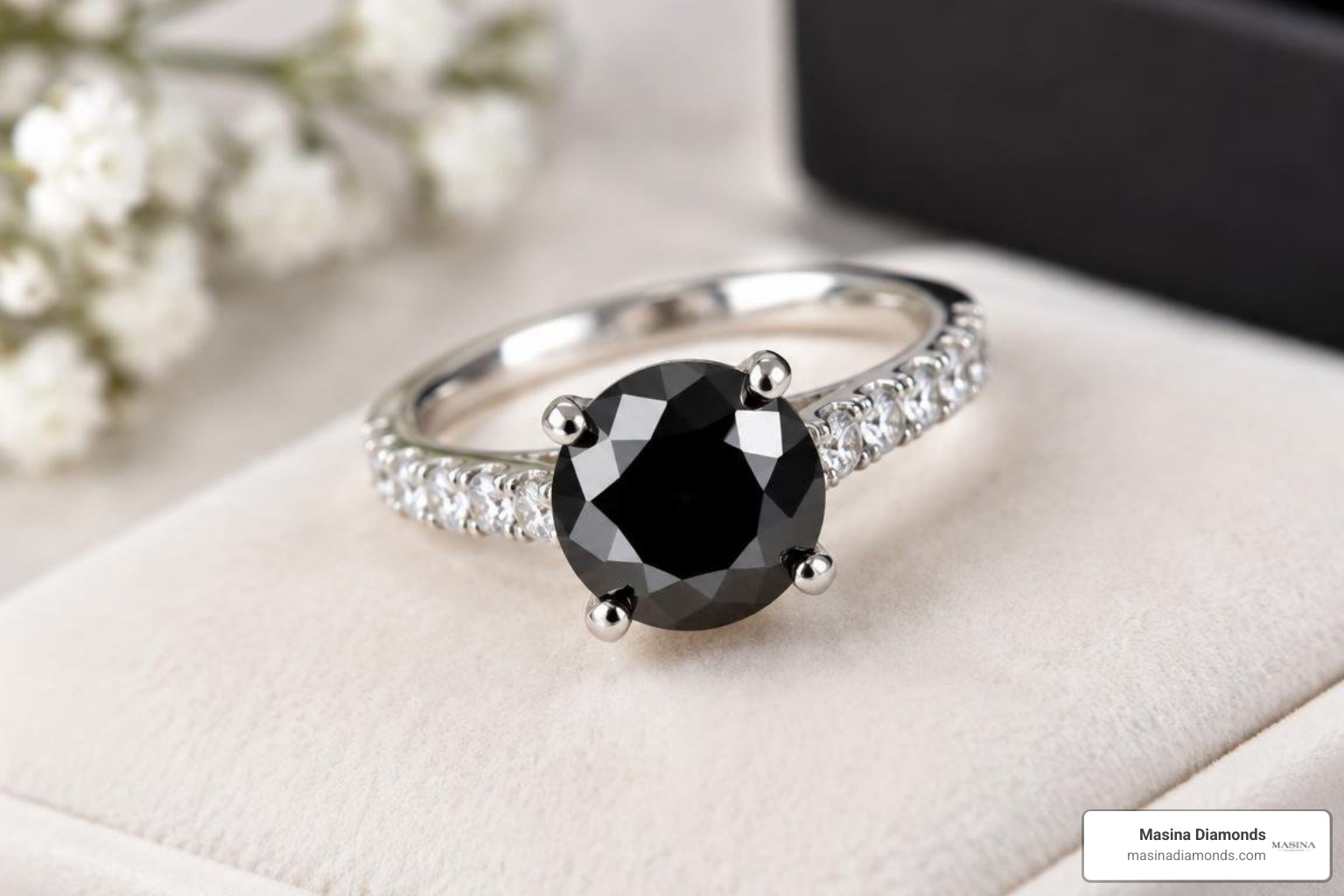
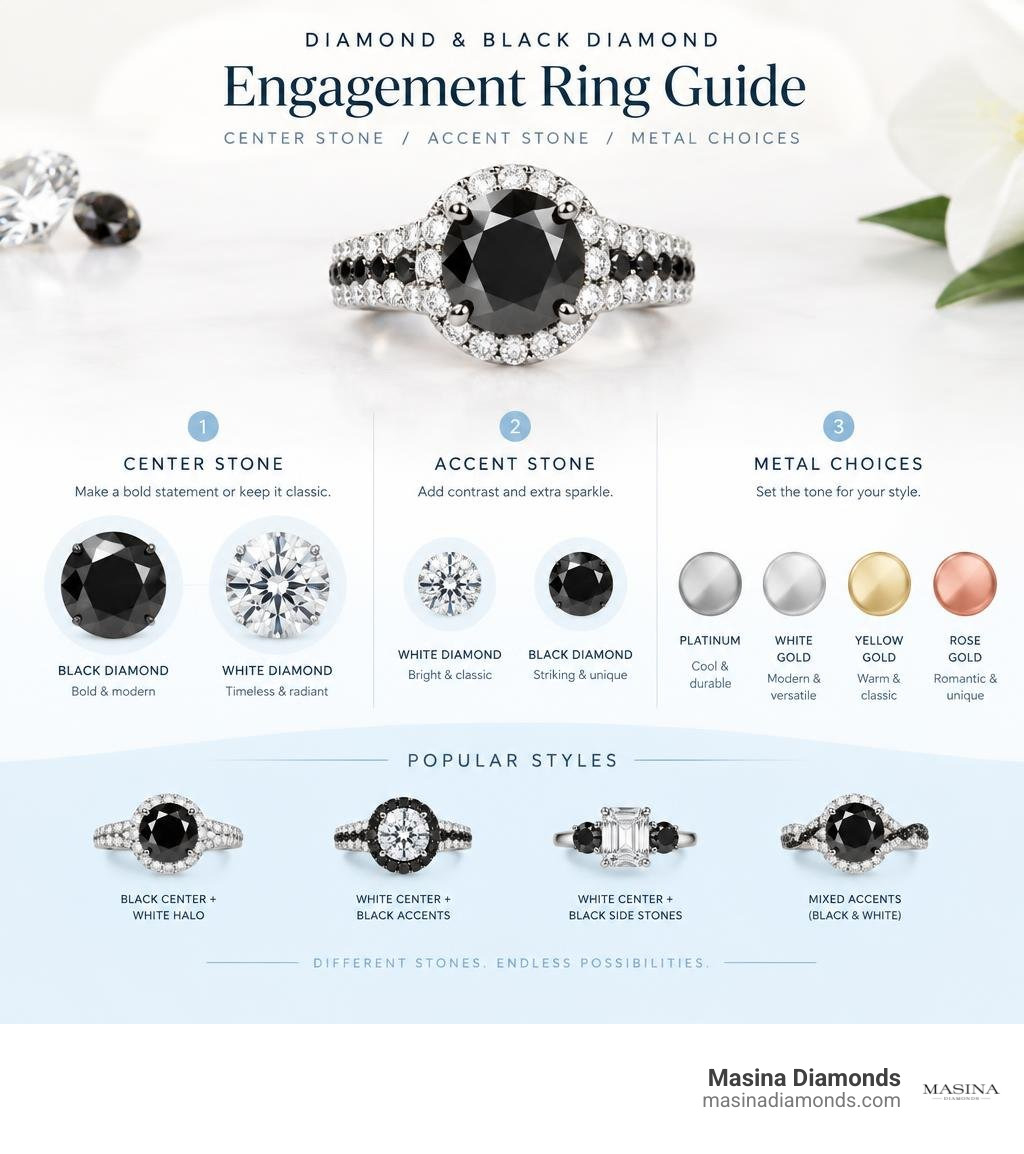
A diamond and black diamond engagement ring pairs the bright sparkle of a white diamond with the bold contrast of a black one. For a modern look, start with a black center stone and a white diamond halo. For a subtler look, choose a white center stone with black diamond accents. Ask whether the black diamonds are natural-color or treated before you buy.
We are Masina Diamonds, a family-owned Atlanta jeweler with over 40 years of experience crafting custom engagement rings. Our interactive 3D Ring Builder can help you explore a diamond and black diamond engagement ring that feels like yours; use this quick guide to narrow down your style first.
Why Choose a Diamond and Black Diamond Engagement Ring?
Bridal jewelry is evolving rapidly. While classic solitaires will always have a place in our hearts, roughly 1 in 5 couples now choose colored gemstones or non-traditional stones to reflect their individuality. Choosing a monochrome pairing—blending the brilliance of colorless diamonds with the enigmatic depth of black diamonds—creates an unmistakable aesthetic edge.
To appreciate their allure, it helps to understand what makes black diamonds unique at an atomic level. Unlike classic white diamonds, which are single crystals of pure carbon formed deep within the Earth's mantle, natural black diamonds (often called "carbonados") feature a polycrystalline structure. This means they are composed of millions of microscopic diamond crystals bonded together, packed with dense graphite, hematite, and amorphous carbon inclusions that absorb light rather than refract it.
Because of this composition, natural black diamonds do not sparkle in the traditional sense; instead, they display a rich, lustrous surface sheen known as an adamantine luster. Both stones share a rating of 10 on the Mohs hardness scale, making them exceptionally tough, though their internal structures create different visual personalities.
For couples exploring non-traditional centerpieces, learning about different engagement ring stones helps clarify how carbonados compare with other colored options.
| Feature | Traditional White Diamond | Natural Black Diamond (Carbonado) |
|---|---|---|
| Crystal Structure | Single-crystal carbon | Polycrystalline aggregate |
| Color Cause | Trace elements (or pure clarity) | Dense graphite and carbon inclusions |
| Light Performance | High brilliance, fire, and scintillation | Opaque, reflective adamantine surface luster |
| Mohs Hardness | 10 | 10 |
| Primary Sourcing | Worldwide (Botswana, Canada, etc.) | Brazil (~90%) and Central African Republic |
| Relative Cost | Baseline premium pricing | Typically 30% to 40% less expensive |
Symbolism and Meaning Behind Dual-Stone Designs
Combining black and white diamonds in a single setting carries profound symbolism. Throughout history, traditional white diamonds have represented purity, eternity, and enduring devotion. Black diamonds, conversely, are associated with inner strength, resilience, charisma, and unconventional passion.
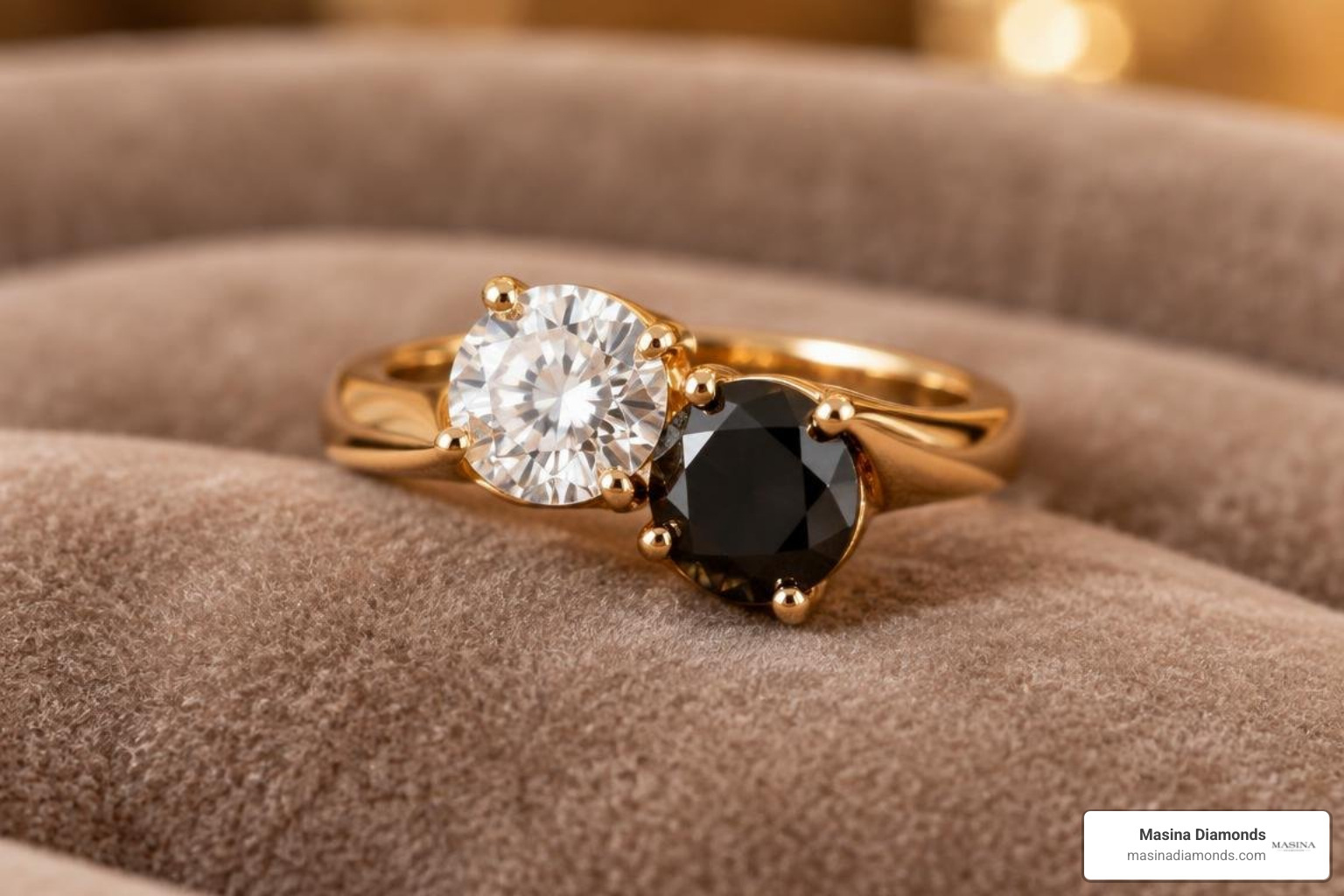
When set side-by-side in a "Toi et Moi" (You and Me) ring or as a center stone surrounded by contrasting accent stones, the design represents a harmonious balance of opposites. Much like the concept of yin and yang, two distinct personalities come together to build a strong, unified bond.
Price and Carat Value Comparison
With the global diamond engagement ring market valued at over $39 billion, budget efficiency is a major priority for many couples. The average engagement ring in the United States costs around $5,500, with a standard center stone size hovering around 1.0 carat.
Because black diamonds typically cost 30% to 40% less than colorless diamonds of comparable carat weight, you can secure a significantly larger center stone without exceeding your planned budget. It is common to see black diamond center stones ranging from 1.5 to 2.5 carats at price points comparable to a 1.0-carat white diamond.
When balancing stone size and cost across your setting, our guide on maximizing diamond carat size offers helpful strategies. If you want to maximize your budget for the white diamond elements of your ring, exploring 2 carat lab diamond options can also help you achieve striking proportions with exceptional clarity.
Top Settings and Styles for Black and White Diamond Rings
The stark contrast between black and white gems opens up creative design possibilities. Whether your taste leans vintage, minimalist, or avant-garde, specific settings highlight the unique geometry of these contrasting stones.
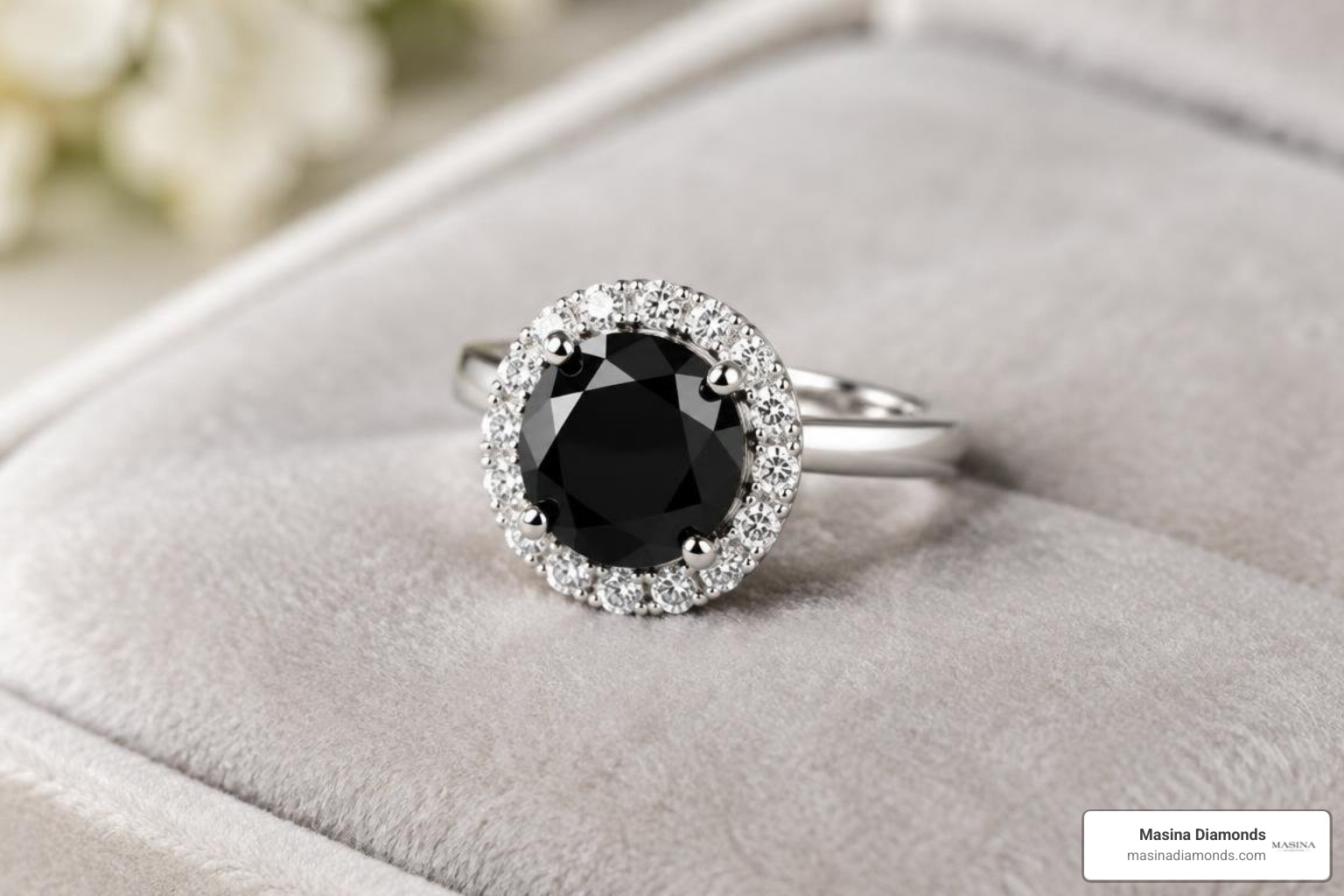
Here are the most sought-after styles for black and white pairings:
- Contrasting Halo Settings: Surrounding a black center stone with a halo of brilliant white micropavé diamonds creates a striking spotlight effect. Conversely, placing a halo of black diamonds around a bright white center stone provides a dramatic, vintage-inspired frame.
- Three-Stone Layouts: A prominent black diamond flanked by two white side stones—such as trilliant, baguette, or round cuts—creates a balanced, sophisticated silhouette.
- Eternity & Pavé Accent Bands: Using alternating black and white diamonds along the shank gives the band dynamic rhythm and texture.
- Split Shank & Interlocking Bands: Modern architectural bands weave strands of white diamonds and black diamonds around one another.
For individuals with active lifestyles, protective bezel set ring designs encase the perimeter of the stone in metal, securing the edges of black diamonds while accentuating their silhouettes. Exploring examples of beautiful diamond rings can give you inspiration on how setting architecture transforms colored stones.
Popular Cuts for a Diamond and Black Diamond Engagement Ring
The cut of a black diamond serves a different purpose than that of a white diamond. While white diamonds are faceted to maximize internal light refraction (fire and brilliance), black diamonds are faceted to showcase surface reflections and external luster.
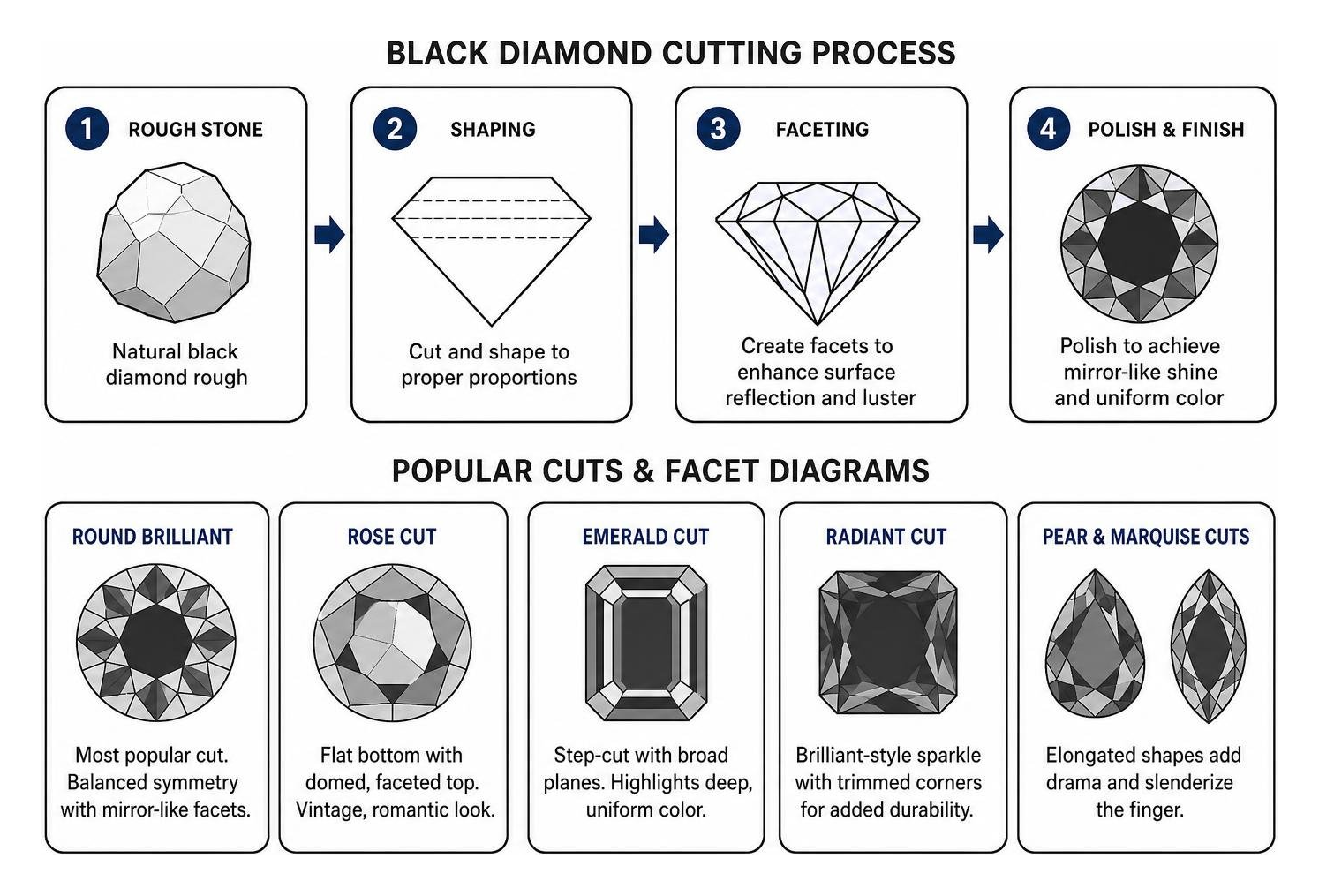
- Round Brilliant: The most popular cut, offering balanced symmetry that highlights the stone's mirror-like facets.
- Rose Cut: A vintage cut featuring a flat bottom and a domed, faceted top. Rose cuts look stunning on black diamonds, creating a romantic, gothic aesthetic reminiscent of antique heirlooms.
- Emerald & Radiant Cuts: Step-cut emerald shapes create broad, reflective planes that highlight the stone's deep, uniform color.
- Pear & Marquise Cuts: Elongated shapes add drama and help slenderize the finger, pairing well with contrasting halos.
To dive deeper into how facet geometry impacts stone appearance, review our guide to different types of diamond cut.
Best Precious Metals to Pair with Black Diamonds
The metal you choose sets the mood for your ring:
- White Gold & Platinum: Platinum and white gold deliver a crisp, modern monochrome look. To explore alloy options, browse our guides on 14k white gold band settings and classic white gold engagement rings.
- Rose Gold: The warm, pink undertones of rose gold create a high-contrast pairing against inky black diamonds, giving the ring a warm, romantic edge.
- Yellow Gold: Yellow gold offers a regal, timeless contrast that feels both ancient and modern.
- Black Rhodium Plating: For an edgy, all-black aesthetic, some bands feature black rhodium plating over gold to blend seamlessly with black accent stones.
Buying Guide: Authenticity, Sourcing, and Ring Care
When shopping for black diamonds, it is essential to understand the difference between natural-color carbonados and treated diamonds:
- Natural Fancy Black Diamonds (Carbonados): Naturally formed with dense graphite clusters, these stones originate almost exclusively in Brazil and the Central African Republic. They are rare and prized for their organic character.
- Treated Black Diamonds: These are natural white or off-color diamonds that undergo high-temperature, low-pressure (HTLP) heating or irradiation to induce a deep, uniform black-green hue. They offer a smooth, consistent finish at an accessible price point.
- Lab-Grown Black Diamonds: Cultured in controlled environments, providing a sustainable, modern alternative.
Always insist on independent lab grading from reputable institutions such as the Gemological Institute of America (GIA) to verify whether the color origin is natural or treated.
Caring for Your Ring
While black diamonds score a 10 on the Mohs hardness scale, their polycrystalline nature means they can have minute surface-reaching fissures. Proper maintenance ensures they stay pristine:
- Cleaning: Clean your ring using warm water, mild liquid dish soap, and a soft-bristle toothbrush. Gently pat dry with a microfiber cloth.
- Avoid Ultrasonic Cleaners: If your black diamond has surface-reaching inclusions or fractures, avoid ultrasonic or steam cleaners, as high-frequency vibrations can stress the stone.
- Safe Storage: Store your ring in a fabric-lined compartment separate from other jewelry to prevent harder stones from scratching softer precious metals.
Customizing Your Diamond and Black Diamond Engagement Ring
Off-the-shelf rings rarely capture every nuance of your personal style. Custom design allows you to hand-select your center stone, adjust contrast ratios, and refine the profile to match your exact vision.
At Masina Diamonds, our Atlanta showroom combines four decades of family craftsmanship with modern digital design tools. Through our interactive 3D Ring Builder, you can view your setting from every angle, adjust metal weights, and balance black and white gemstones in real time before our master jewelers cast the piece.
To learn more about commissioning a custom piece, explore our custom jewelry design process alongside our comprehensive engagement ring guide.
Frequently Asked Questions About Black Diamond Rings
Are black diamonds real diamonds?
Yes. Natural black diamonds share the same fundamental carbon chemical composition and 10 Mohs hardness rating as colorless diamonds. Their color and opacity come from high concentrations of microscopic graphite and amorphous carbon inclusions formed during subterranean crystallization.
Can black diamonds be worn every day?
Yes. Black diamonds are durable enough for daily wear. Because natural carbonados have a polycrystalline structure with microscopic surface fissures, protective settings like bezels or low-profile prongs are ideal for shielding the stone from sharp, direct impacts.
How do I verify a natural black diamond from a treated one?
The most reliable verification is a gemological grading report from an accredited laboratory like the GIA. Under high magnification and fiber-optic illumination, gemologists inspect the color origin, distinguishing natural graphite clusters from the dark green or brown undertones characteristic of radiation- or heat-treated stones.
Conclusion
Choosing a black and white diamond ring is an intentional departure from the ordinary. By balancing brilliance and depth, these contemporary designs deliver modern sophistication, everyday durability, and meaningful symbolism.
Whether you prefer a bold carbonado center stone or delicate black accents woven into a white gold band, our team at Masina Diamonds is ready to bring your concept to life. Visit our Atlanta showroom or use our 3D Ring Builder to begin designing your dream custom engagement rings in Atlanta.