Timeless 1 Carat Solitaire Diamond Ring Designs
The best 1 carat solitaire diamond ring designs let the center stone stand out while fitting your style and daily life. A four-prong setting gives the diamond an open look; six prongs add security; and a bezel creates a smooth, modern edge. Choose a round diamond for classic sparkle, an oval for an elongated look, or a princess cut for clean, square lines.
We’re Masina Diamonds, a family-owned Atlanta jeweler with over 40 years of experience in custom engagement rings. We help you explore 1 carat solitaire diamond ring designs and shape the details into a ring that feels like yours.
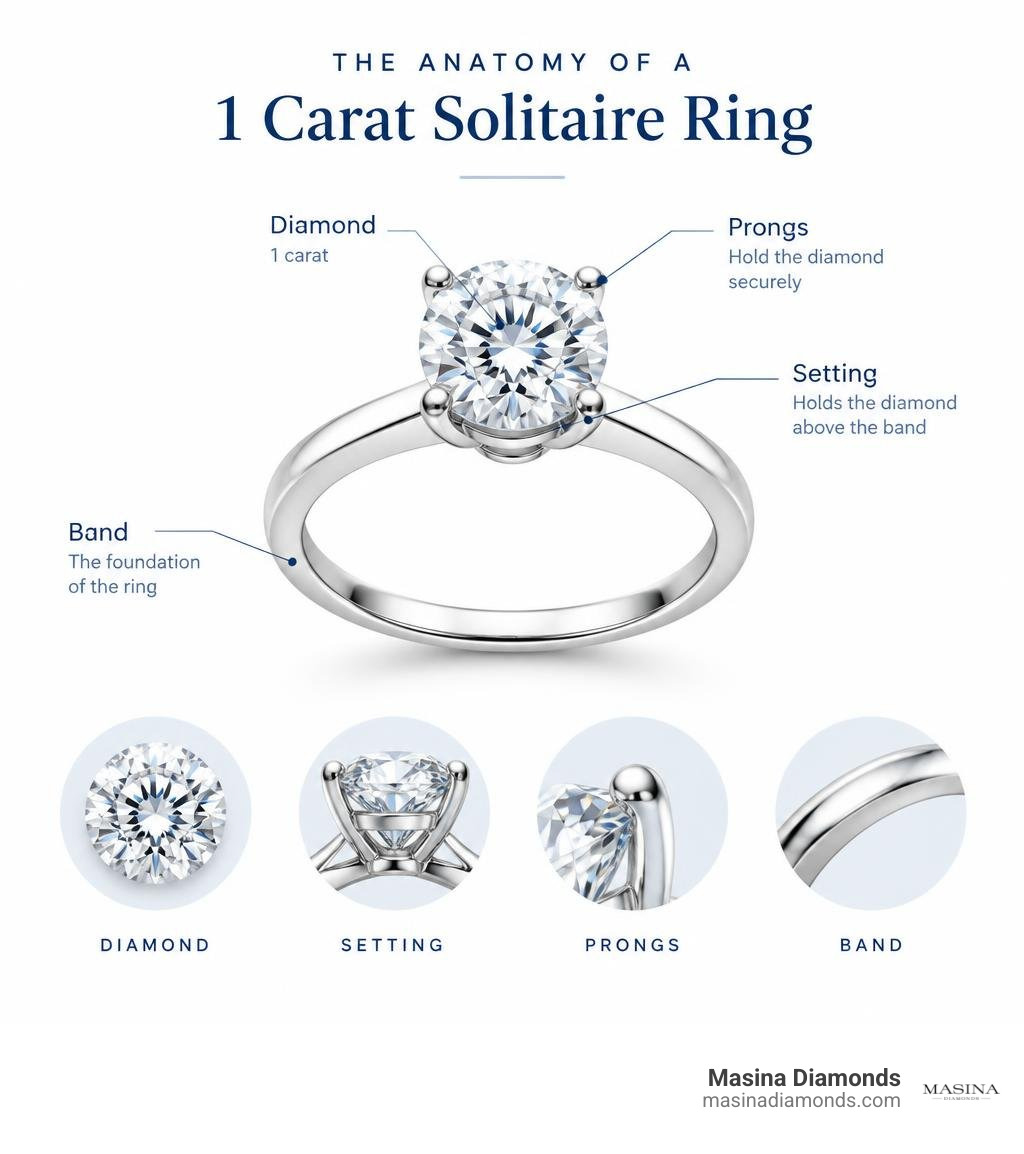
Across the United States, the 1.0-carat milestone remains the gold standard for engagement rings. In fact, roughly 70% of engagement rings feature a solitaire setting, with 1 carat being the most requested center stone size. Solitaires appeal to modern and traditional couples alike because they strip away unnecessary distractions. They place every ounce of attention on the center gem, celebrating its fire, clarity, and silhouette.
As we look at the trends defining 2026, solitaire settings continue to evolve. Subtle architecture, refined prongs, and mixed-metal accents give this heritage style a fresh feel. Whether you lean toward minimalist chic or intricate vintage artistry, there is a solitaire mount crafted to elevate your daily style.
Top 1 Carat Solitaire Diamond Ring Designs for Every Aesthetic
A solitaire might feature a single center stone, but the mount holding it offers endless design choices. Every curve of the metal, height of the gallery, and style of the prong changes the ring's character. Finding the right mounting ensures your ring fits your personal aesthetic while keeping your stone safe for decades.
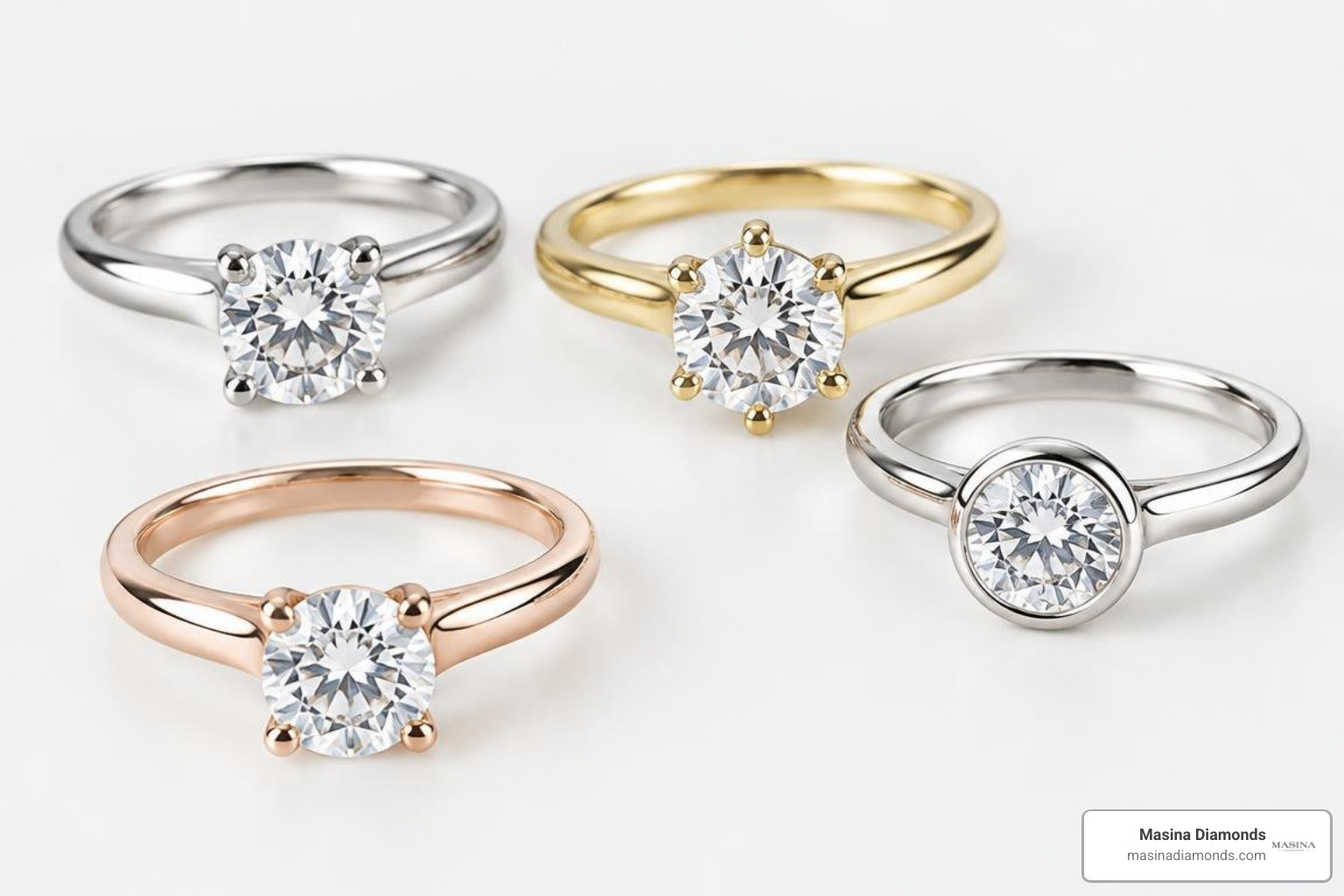
When selecting among beautiful diamond rings, you can tailor every element from the profile height to the claw shape. Below are the most beloved solitaire design categories today.
Classic Four-Prong and Six-Prong 1 Carat Solitaire Diamond Ring Designs
The traditional prong mount is the undisputed queen of solitaire designs. By holding the diamond above the finger with minimal metal interference, prongs invite light to enter from every angle, maximizing fire and scintillation.
- Classic Four-Prong Mount: This design exposes more of the diamond's pavilion and girdle. It creates an airy, diamond-forward presentation where the stone appears slightly larger and boxier (or squarer, if using rounded corners). Four prongs are especially popular for fancy shapes and couples wanting maximum brilliance.
- Classic Six-Prong Mount: This classic six-prong style creates a secure, round frame around the diamond. This setting emphasizes the circular contour of a round brilliant cut—a shape that represents over 60% of all diamond sales. While it covers slightly more diamond surface, the extra security brings unmatched peace of mind.
Modern Bezel and Half-Bezel Settings
For anyone with an active lifestyle, hands-on career, or a love for mid-century modern minimalism, the bezel setting is an exceptional choice. Rather than using prongs, a bezel wraps the diamond’s perimeter in a smooth, custom-shaped collar of precious metal.
Explore our bezel set rings guide to see how protective this aesthetic can be. Because there are no metal claws to snag on knitwear or loosen over time, the stone stays safe and flush against accidental bumps. A half-bezel (or semi-bezel) secures only two sides of the gem, opening up the top and bottom flanks for added light entry while retaining that sleek architectural border.
Hidden Halo and Pavé Band Enhancements
If you love the pure, single-stone look of a solitaire from the top view but want a hint of extra brilliance, modern hybrid solitaires deliver the best of both worlds.
- Hidden Halos: A delicate ring of micro-diamonds hugs the base of the center stone's basket or under-gallery. It remains completely invisible from directly above, revealing an unexpected shimmer when viewed from the side profile.
- Petite Pavé Bands: Setting micro-pavé diamonds along the shank creates a glittering runway leading directly to your 1-carat center stone. The contrast between smaller accent gems and the central solitaire makes the main diamond appear larger and more prominent.
- Cathedral Shoulders: Sweeping arches of metal rise from the shank to frame the central basket, adding dramatic height, stability, and vintage-inspired elegance.
Nature-Inspired and Twisted Band 1-Carat Solitaire Diamond Ring Designs
You don't have to choose a straight band to maintain a solitaire's clean focus. Sculptural bands add organic texture and personal symbolism to an otherwise classic ring.
- Bypass Shanks: The two ends of the band curve around opposite sides of the center stone rather than meeting in a straight line, creating fluid movement across the finger.
- Twisted Vines and Braids: Entwined bands of polished metal or alternating pavé strands introduce romantic depth and texture.
- Floral and Leaf Prongs: Prongs shaped like delicate petals or budding leaves offer a subtle nod to the natural world.
If you have a unique vision that combines multiple structural elements, working through our custom jewelry design process lets you tailor every curve in an interactive 3D environment before casting.
Choosing the Best Diamond Shape and Cut for Your Solitaire
The shape of your diamond establishes the foundation of your ring's personality. While "shape" describes the outline of the stone (round, oval, emerald), "cut" refers to how well the diamond's facets reflect internal light.
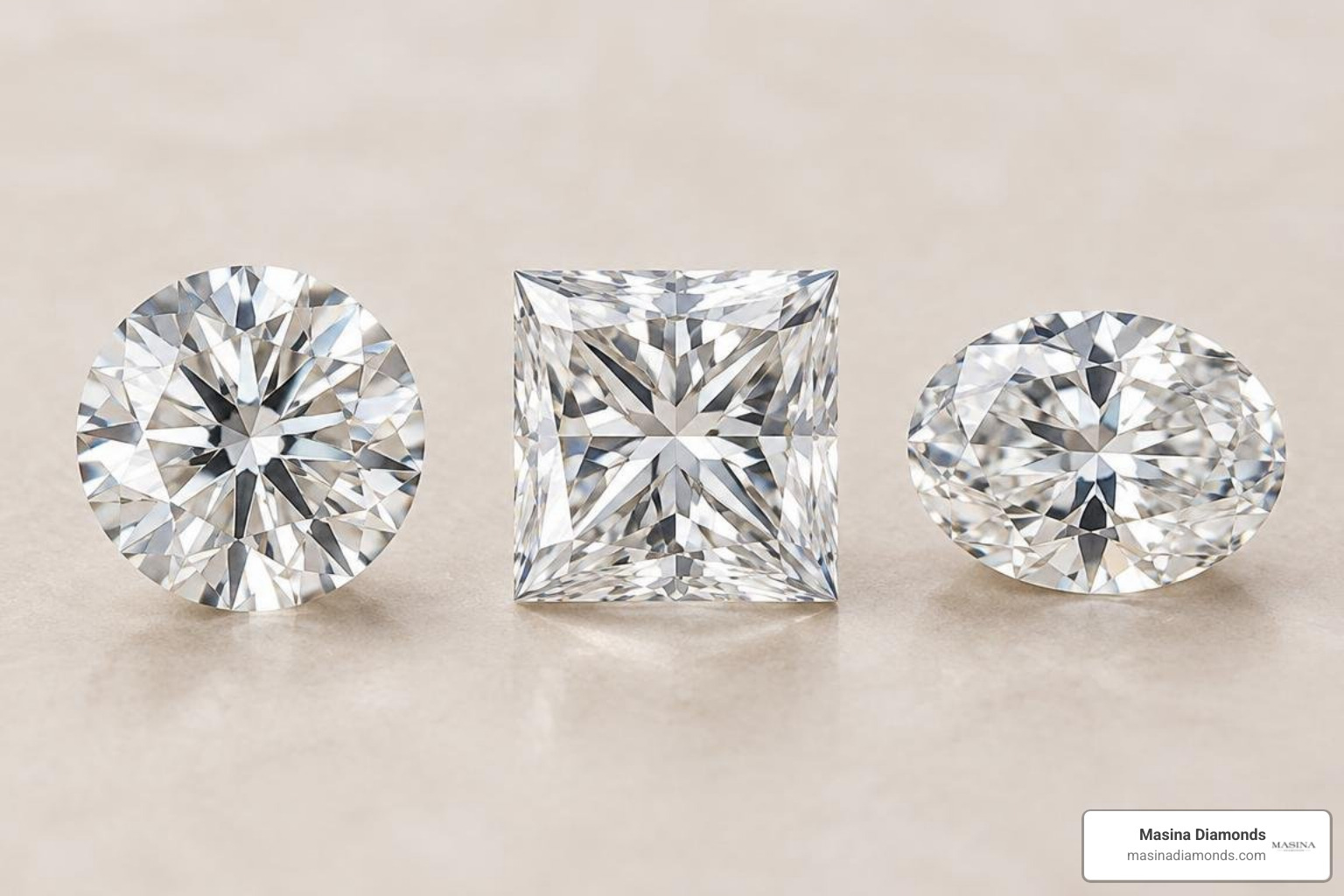
Understanding the different types of diamond cut is essential when choosing a solitaire, because there are no side stones to distract from the center diamond's optical performance.
Round Brilliant vs. Fancy Shapes
Every shape brings distinct proportions, brilliance levels, and finger-coverage advantages to a 1-carat ring:
- Round Brilliant Cut: Engineered with 57 or 58 facets to maximize light return, the round brilliant offers unmatched sparkle. It commands the highest market share because its optical geometry hides minor color tints and inclusions better than almost any other shape.
- Oval Cut: Oval diamonds offer the brilliant sparkle of a round cut but with an elongated profile. This elongation creates an optical slimming effect on the wearer’s hand and yields a larger visible surface area (spread) than a round diamond of identical carat weight.
- Princess Cut: Featuring sharp, 90-degree corners and deep geometric brilliance, the princess cut offers a clean, contemporary alternative for lovers of modern square lines.
- Emerald & Radiant Cuts: Step-cut emerald shapes showcase diamond transparency with an understated "hall-of-mirrors" flash, while radiant cuts combine the rectangular emerald silhouette with brilliant-style facet patterns for fiery scintillation.
| Diamond Shape (1.00 Carat) | Average Face-Up Surface Area | Sparkle Style | Best Setting Pairing |
|---|---|---|---|
| Round Brilliant | ~33.2 mm² (6.5 mm diameter) | Maximum fire & brilliance | 6-prong or 4-prong classic |
| Oval | ~36.8 mm² (7.7 x 5.7 mm) | Elongated, high brilliance | 4-prong or hidden halo |
| Princess | ~29.5 mm² (5.5 x 5.5 mm) | Crisp, geometric sparkle | V-prong or modern bezel |
| Emerald | ~35.0 mm² (7.0 x 5.0 mm) | Subtle, linear step flashes | Bezel or double-prong basket |
For a deeper dive into gemological standards across silhouettes, consult the official GIA Guide to Diamond Engagement Ring Shapes.
Impact of the 4Cs on a 1 Carat Solitaire
When selecting a 1-carat stone for a solitaire mount, the quality of the diamond is front and center. Understanding the 4Cs helps you allocate your budget toward what matters most visually.
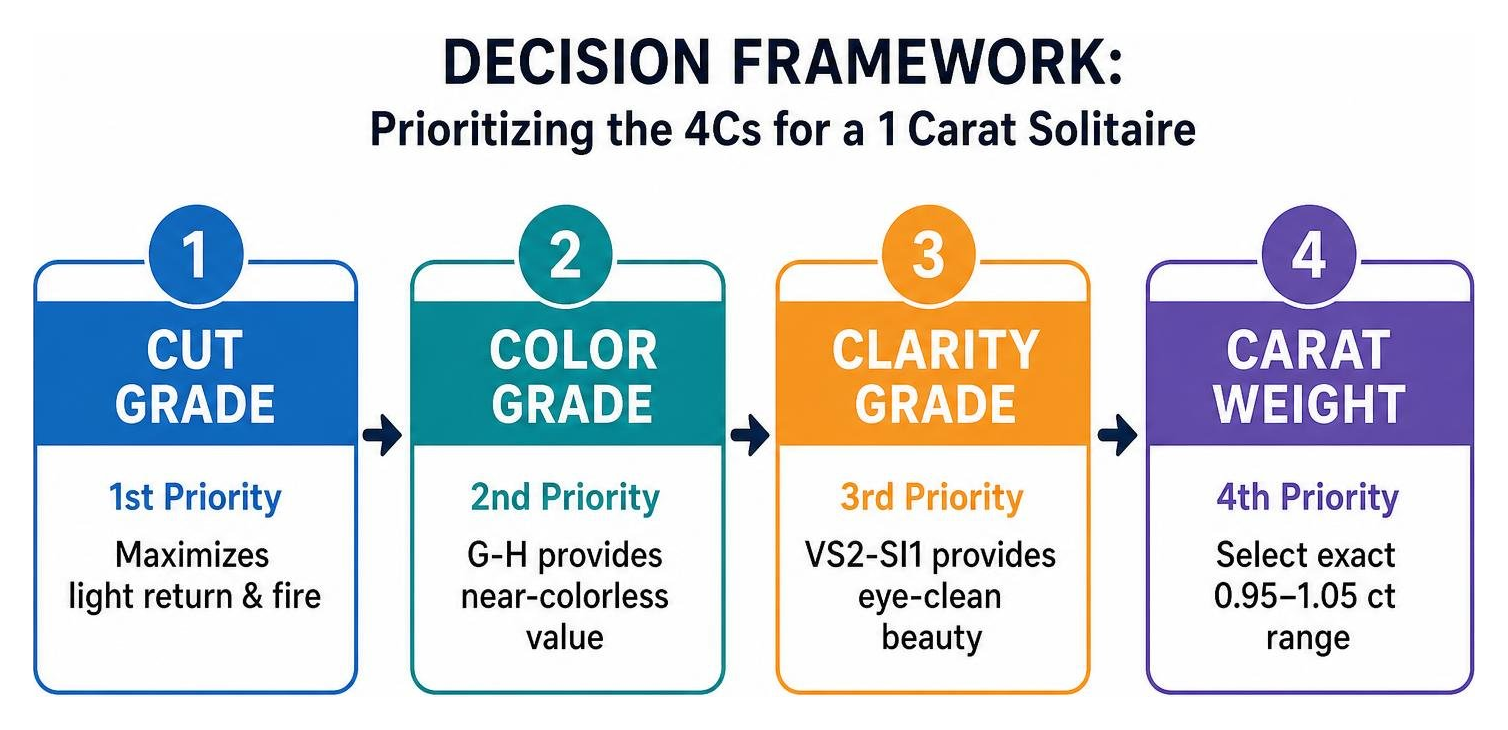
- Cut: Cut is the single most important C. A 1-carat diamond with an 'Excellent' cut grade can command up to 30% more in price than a 'Good' cut stone because it reflects virtually all light back to the eye. A poorly cut stone will appear dull and can look smaller because excess weight is trapped in a deep pavilion.
- Color: For white metals like platinum or white gold, stones graded in the G to H range appear bright white while costing far less than D–F colorless diamonds. For yellow gold or rose gold bands, you can comfortably drop to I or J color grades, as the warm metal masks subtle warmth in the stone.
- Clarity: Solitaires do not require a Flawless (FL) or Internally Flawless (IF) clarity grade to look stunning. Choosing a Very Slightly Included (VS1 or VS2) or an eye-clean Slightly Included (SI1) stone ensures no visible inclusions are noticeable to the naked eye.
- Carat: A true 1.00-carat diamond is weighed to 200 milligrams. For smart budgeting, explore our diamond carat complete guide to see how buying "under-size" stones (such as 0.95 ct to 0.98 ct) can yield substantial savings with no perceptible difference in physical dimensions.
Metal Pairings and Band Proportions for 1 Carat Solitaires
The precious metal you choose serves as both structural support and the stylistic canvas for your 1-carat solitaire diamond.
Precious Metals: Platinum, White Gold, and Yellow Gold
- Platinum: Naturally hypoallergenic, dense, and exceptionally durable, platinum does not wear away over time; instead, it develops a soft, satin patina. Its natural icy-white sheen will never require replating, making it ideal for holding white diamonds securely.
- White Gold: White gold offers an identical bright silver aesthetic at a lower upfront cost. Learn the specifics in our 14k white gold diamond ring guide and explore alloy durability through our 14kt engagement rings guide. White gold relies on a bright rhodium plating that can easily be refreshed over time.
- Yellow Gold: Traditional yellow gold provides a rich, warm contrast that makes white diamonds stand out. It is also forgiving of lower diamond color grades, making it both stylish and cost-effective.
- Rose Gold: Rose gold gets its pink tone from a copper-gold alloy, lending a romantic, vintage feel that flatters almost every skin tone.
Band Width and Proportion Balance
The width of your ring's band changes how large your 1-carat diamond appears on the hand.
- Dainty Bands (1.5mm – 1.8mm): A slender band creates an optical illusion that makes a 1-carat diamond look significantly larger than it is. However, bands under 1.8mm require mindful wear to prevent bending over time.
- Balanced Proportions (1.8mm – 2.2mm): This sweet spot offers optimal structural integrity for lifelong wear while keeping the visual spotlight directly on your solitaire center stone. For more mounting insights, review our engagement ring ultimate guide.
Common Mistakes to Avoid When Buying a 1 Carat Solitaire
Investing in a solitaire ring is an exciting milestone, but small oversights can affect your ring's durability and sparkle. Here are common pitfalls to avoid:
- Sacrificing Cut Grade for Carat Weight: Never compromise on cut quality just to reach a 1.00-carat mark. A well-proportioned 0.75 carat diamond with an 'Excellent' cut will sparkle with greater intensity and often look larger than a poorly cut 1.0-carat stone.
- Overpowering the Stone with Bulky Mountings: Extra-thick bezels, heavy prongs, or wide bands can dwarf a 1-carat diamond. Keep metalwork refined to highlight the gem.
- Ignoring Independent Lab Certification: Always ensure your natural or lab-grown diamond is certified by respected, independent gemological authorities such as the GIA or IGI.
- Misallocating Your Total Budget: Spend the bulk of your funds on the center stone's optical performance and a durable mounting. If your heart is set on larger proportions, compare options in our 1.3 ct diamond engagement ring guide to find the right balance for your budget.
Frequently Asked Questions About 1 Carat Solitaire Rings
How much does an average 1 carat solitaire diamond ring cost?
The average price of a natural 1 carat solitaire diamond ring ranges from $4,000 to $6,000, depending on cut quality, color, and clarity. Opting for premium colorless (D–F) and flawless clarity grades can push prices higher.
If you want to maximize your budget without sacrificing size or sparkle, lab-created diamonds are an attractive alternative. Review our 2 carat lab diamond guide to see how lab options deliver identical chemical, optical, and physical properties at accessible price points.
Which setting makes a 1 carat diamond look the biggest?
A thin, tapered band (around 1.8mm) paired with a four-prong setting or a high cathedral mount makes a 1-carat diamond appear largest. Tapered bands narrow slightly as they reach the diamond, creating an optical contrast that emphasizes the stone's diameter. Elongated shapes, such as oval or marquise cuts, also deliver a larger visual spread across the finger than round stones of equal carat weight.
Is a 4-prong or 6-prong setting better for a 1 carat solitaire?
Neither setting is objectively better; they balance style and security differently:
- Choose 4 Prongs if you prefer a modern, open look that exposes more of the diamond's profile to maximize light entry.
- Choose 6 Prongs if your priority is ultimate security for your diamond, or if you love the classic, circular contour of a traditional six-prong solitaire.
Conclusion
The 1 carat solitaire diamond ring remains an enduring symbol of elegance and devotion. By combining the right diamond shape, precision cut quality, and a thoughtfully balanced metal mount, you create an heirloom piece that will shine for generations.
At Masina Diamonds, our family has spent over four decades helping couples turn their dream rings into reality. Whether you want to customize your ring using our interactive 3D builder or visit us in Atlanta for a one-on-one consultation, we are here to guide you every step of the way.
Explore our complete collection of solitaire engagement rings in Atlanta and discover the perfect setting for your love story today.