Why a Channel Set Engagement Ring Suits an Active Lifestyle
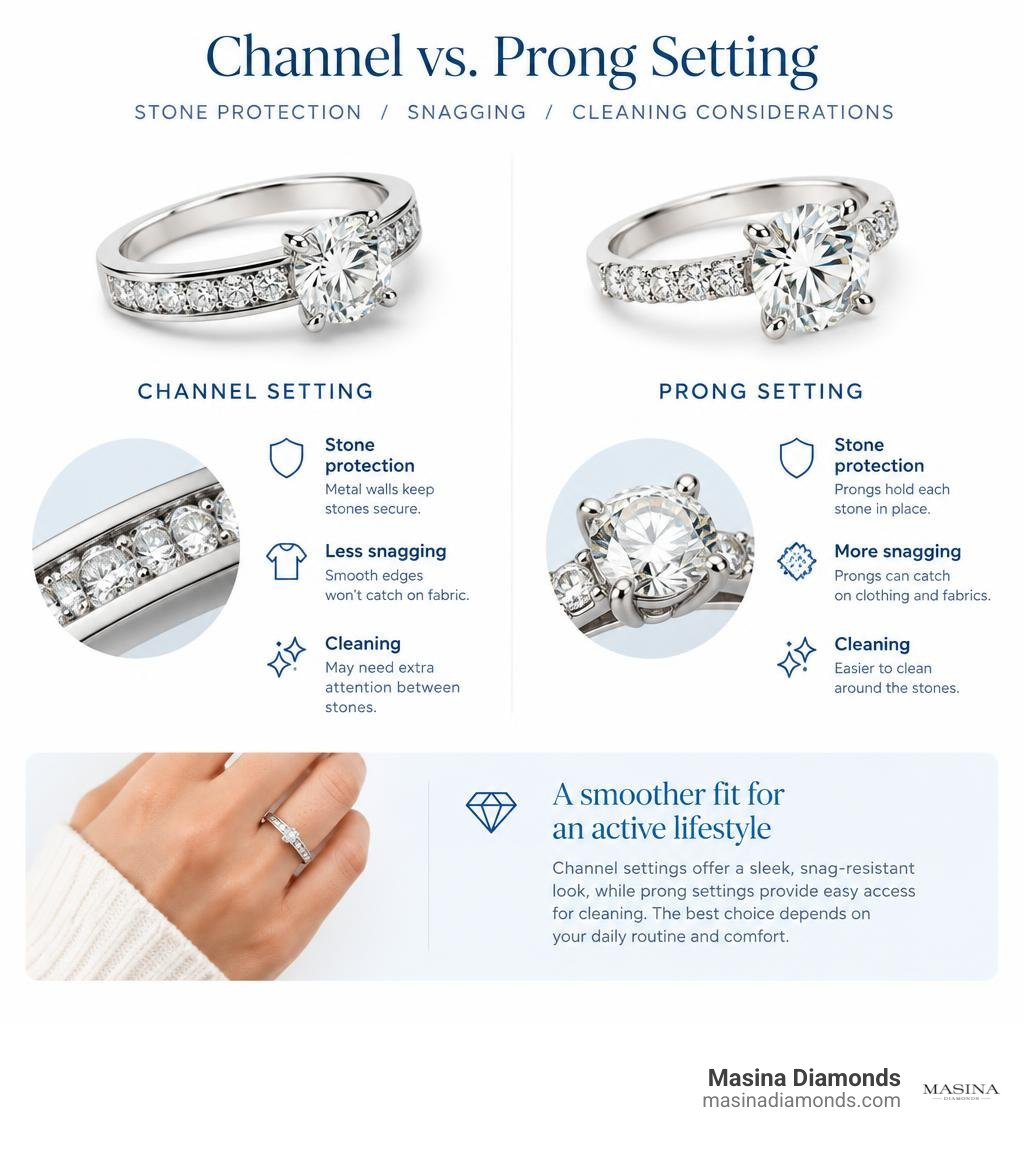
A channel set engagement ring holds a row of small diamonds or gemstones between two strips of metal, often along the band beside a center stone. The smooth edges are less likely to catch on clothing than exposed prongs, making this style worth considering if you use your hands a lot. The trade-off: dirt can collect between the stones, and a stone may loosen if the channel bends. Look for even stone spacing and secure metal edges, and remove the ring for workouts or other activities that could strike or bend it.
We are Masina Diamonds, a family-owned Atlanta jeweler with over 40 years of experience crafting engagement rings. We can help you weigh whether a channel set engagement ring fits your design and daily routine.
What Is a Channel Set Engagement Ring?
A channel setting secures a continuous row of diamonds or gemstones suspended between two parallel walls of precious metal. Unlike traditional settings where tiny metal claws hold each individual stone in place, a channel set piece suspends stones inside an engineered groove. Small ledges or tracks inside these metal walls support the girdles (the widest outer edges) of the gemstones, while the upper lip of the metal is carefully burnished over the stones to hold them securely.
Because the metal walls sit completely flush with or slightly above the tops of the gems, the entire perimeter remains completely smooth to the touch. This makes it an exceptional choice for anyone who wants high brilliance without catching delicate fabrics, scratching furniture, or worrying about bumped prongs during daily tasks.
When selecting stones for a channel, jewelers typically look for uniform proportions and specific cuts. Exploring the different types of diamond cut helps you visualize how shapes like round brilliants or step-cut baguettes sit within these metal channels.
How Channel Settings Protect Diamonds and Gemstones
The primary reason active people gravitate toward this design is physical protection. The outer edges of gemstones—particularly pointed corners on fancy shapes or thin outer girdles—are their most vulnerable points. In a channel setting, those edges are entirely encased within solid metal.
This protective barrier offers several real-world benefits:
- Direct Impact Resistance: If you accidentally bump your hand against a gym locker, desk edge, or car door, the metal channel absorbs the shock rather than the diamond's edge.
- Snag-Free Security: Knitted sweaters, athletic gear, gardening gloves, and medical gloves slide smoothly over the band without snagging.
- Long-Term Stone Retention: Because there are no individual prongs to thin out, snag, or bend over time, the risk of a side stone unexpectedly dropping out during daily wear is significantly reduced.
For wearers who prioritize durability across the entire ring, pairing channel shoulders with a bezel set center stone offers one of the most rugged, life-proof fine jewelry combinations available.
Comparing the Channel Set Engagement Ring to Prong, Pave, and Bezel Styles
Understanding how channel settings measure up against other popular mountings helps you decide which profile best matches your lifestyle.
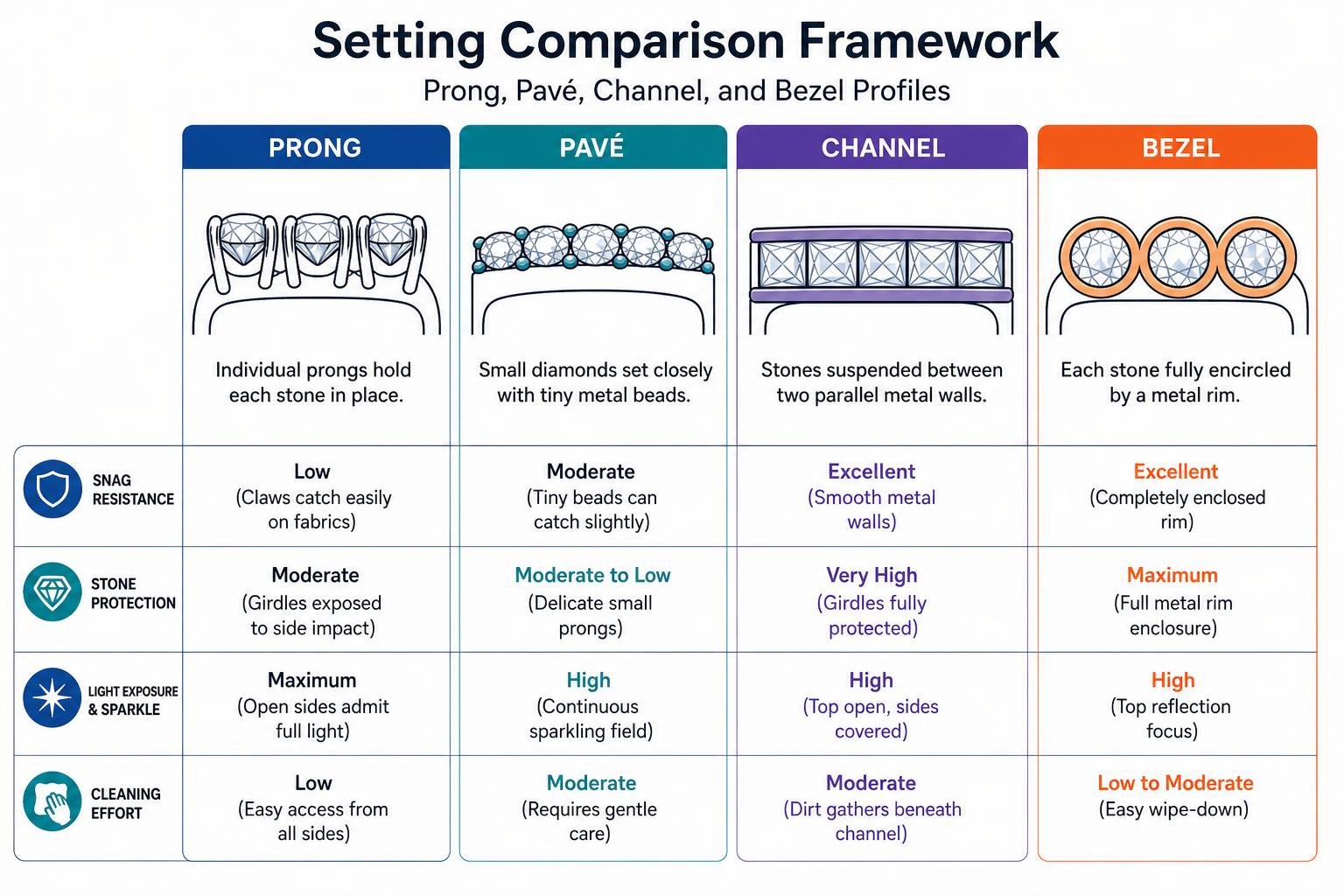
| Setting Style | Snag Resistance | Stone Protection | Light Exposure & Sparkle | Cleaning Effort |
|---|---|---|---|---|
| Channel | Excellent (Smooth metal walls) | Very High (Girdles fully protected) | High (Top open, sides covered) | Moderate (Dirt gathers beneath channel) |
| Prong | Low (Claws catch easily on fabrics) | Moderate (Girdles exposed to side impact) | Maximum (Open sides admit full light) | Low (Easy access from all sides) |
| Pavé | Moderate (Tiny beads can catch slightly) | Moderate to Low (Delicate small prongs) | High (Continuous sparkling field) | Moderate (Requires gentle care) |
| Bezel | Excellent (Completely enclosed rim) | Maximum (Full metal rim enclosure) | High (Top reflection focus) | Low to Moderate (Easy wipe-down) |
While a traditional bezel setting wraps a 360-degree rim of metal around individual gems, channel settings provide a similar standard of durability along an entire row of accent stones. By contrast, prongs maximize light entry from the sides but require regular inspection to avoid catching. If you love the open side profile of classic settings, you might explore a custom basket setting for your center stone while keeping the band channel-set for low-friction daily wear.
Pros and Cons of Channel Settings for Everyday Wear
Every ring architecture involves balancing security, maintenance, and aesthetics. Evaluating both sides of this setting style ensures it aligns with your expectations.
Key Advantages of Channel Settings
- Unmatched Daily Comfort: The absence of protruding metal prongs means the sides of adjacent fingers rest against smooth, polished metal, eliminating abrasive friction.
- Modern, Streamlined Aesthetic: Channel settings create clean, architectural lines that suit modern styles, Art Deco revivals, and minimalist tastes.
- Low Worry for Active Professions: Nurses, athletes, teachers, engineers, and outdoor enthusiasts can wear their rings with far greater peace of mind.
- Enduring Stone Alignment: Because stones are set shoulder-to-shoulder within a fixed channel, they cannot twist or shift out of alignment.
- Versatile Accent Combinations: Channel bands easily complement various center stone styles, including striking bezel rings with side accents.
Potential Drawbacks and Considerations
- Resizing Limitations: Because the metal channel relies on precise tension and structural straightness to secure the stones, resizing the ring more than one full size up or down can compress or widen the channel, potentially loosening the stones.
- Debris Accumulation: Lotions, oils, soaps, and dust can settle into the tiny crevices beneath the gemstones inside the channel, requiring intentional cleaning to maintain peak brilliance.
- Slightly Reduced Side Light: Since the sides of the stones are encased in solid metal, light only enters through the top table and crown facets.
- Higher Initial Metal Weight: The parallel metal walls require more precious metal (gold or platinum) than delicate wire prongs, which can slightly increase metal costs during custom jewelry design planning.
Best Metals and Gemstone Shapes for Channel Settings

Selecting the right combination of precious metal and diamond shape ensures your ring withstands decades of daily movement.
Metal Choices
- Platinum: The gold standard for durability. Platinum does not wear away when scratched; instead, the metal displaces (creating a natural patina), making the channel walls exceptionally secure over decades of wear.
- 14k Gold (White, Yellow, or Rose): Highly recommended for active wearers due to its alloy composition. 14k gold contains 58.3% pure gold combined with durable alloy metals, offering superior scratch and bend resistance compared to softer 18k gold.
- 18k Gold: Offers richer color and greater purity (75% pure gold). While perfectly suitable for fine jewelry, the metal channel lips may require occasional inspection over time if exposed to heavy abrasive forces.
Gemstone Shapes
The cut of your accent stones changes both the visual character and light performance of a channel band:
- Princess Cuts (Square): Princess cut diamonds fit flush against one another with zero space between them, creating a solid "ribbon" of continuous diamond fire.
- Baguette Cuts: Step-cut rectangular baguettes offer an elegant, vintage geometric look that highlights clarity and mirror-like reflections.
- Round Brilliant Cuts: Round stones leave tiny triangular metal spaces at their contact points, producing a classic polka-dot sparkle pattern with exceptional light return.
- Colored Gemstones: Incorporating durable gems like sapphires or rubies alongside diamonds adds rich personal color. When planning your design, our engagement ring stones guide provides insights on mineral hardness and gemstone longevity.
Quality Factors, Pricing, and Maintenance for Active Wearers
Understanding craftsmanship standards helps you choose a ring engineered to last. A high-quality channel should show uniform wall thickness, perfectly leveled stones, and no visible solder marks or uneven seams.
To explore the broader process of ring selection, browse our comprehensive engagement ring guide for essential tips on budgeting, grading, and design.
How to Clean and Maintain Your Channel Set Engagement Ring
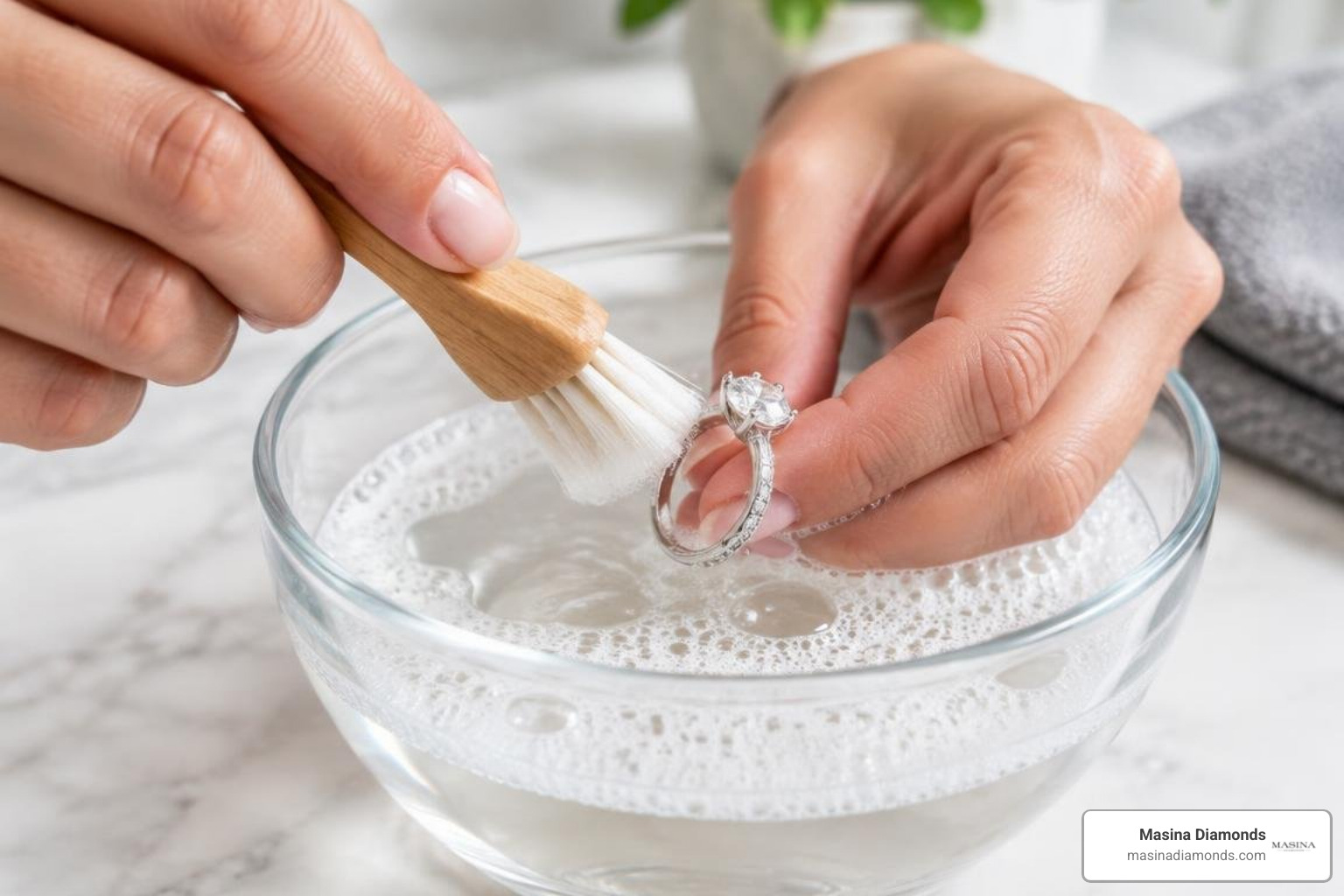
Because channel tracks have enclosed sides, maintaining their brilliance requires regular cleaning at home:
- Warm Soapy Soak: Soak your ring for 15–20 minutes in a small bowl of warm water mixed with a few drops of mild dishwashing liquid.
- Gentle Brushing: Use an extra-soft baby toothbrush to gently clean behind the channel and between the stone tables. Avoid hard bristles that could scratch precious metals.
- Rinse and Dry: Rinse thoroughly under warm running water (ensure the drain is securely covered!) and dry with a lint-free microfiber cloth.
- Professional Ultrasonic Cleaning: Bring your ring in for professional ultrasonic and steam cleaning once or twice a year to safely clear out deep-seated debris and verify that the channel lips remain tight and secure.
Selecting a High-Quality Ring Setting
When evaluating a channel setting in person or via 3D rendering, check for these hallmarks of expert craftsmanship:
- Consistent Metal Lip: The upper border of metal securing the stones should be straight, smooth, and uniform in thickness across the full length of the channel.
- Uniform Table Height: All stone tables (top flat facets) must sit at the exact same height and angle. A wavy or uneven stone line indicates rushed assembly.
- Tight Fit: There should be no irregular gaps between princess or baguette stones.
- Flush Profile: The metal channel walls should transition smoothly into the shank of the ring so it stacks comfortably when pairing with wedding bands.
Frequently Asked Questions About Channel Set Rings
Can a channel set ring be easily resized?
Minor resizings (within one-half to one full size) are generally achievable by an experienced bench jeweler. However, significant adjustments alter the curvature of the ring band. Bending the band outward to increase size can widen the channel walls and loosen stones, while compressing it can pinch stones against each other, risking chipping. If substantial size shifts are needed, options like sizing beads or custom shank adjustments can preserve the integrity of the channel.
Do channel set diamonds sparkle as much as prong settings?
Channel set diamonds sparkle brilliantly when viewed from the top, where most ambient light enters and reflects back to the eye. While prong settings allow light to enter through the sides of the stone as well, high-cut-grade channel stones still deliver remarkable fire and scintillation. Choosing stones with excellent proportions ensures your diamond ring design maximizes every beam of light.
Are channel set rings more expensive than traditional rings?
Channel settings can carry a slight premium in labor and metal weight compared to simple prong mountings. Cutting the internal seat, aligning multiple diamonds perfectly by hand, and burnishing the metal channel evenly requires precise artisanal labor. However, this modest initial investment often pays for itself by reducing long-term prong repairs and retipping costs.
Conclusion
A channel set ring combines practical durability with timeless fine jewelry elegance. By encasing precious stones within smooth protective metal walls, it allows you to hit the gym, manage a busy career, and tackle everyday life without constantly checking for bent prongs or lost stones.
At Masina Diamonds, our family has spent over four decades handcrafting custom fine jewelry in Atlanta. Whether you wish to build a bespoke ring from the ground up using our interactive 3D Ring Builder or explore custom bands crafted for your lifestyle, we are here to help. Discover our selection of custom engagement rings in Atlanta and create an heirloom built to keep up with every step of your journey.